
Freeride Japan – Powder Skiing and Japow Adventure
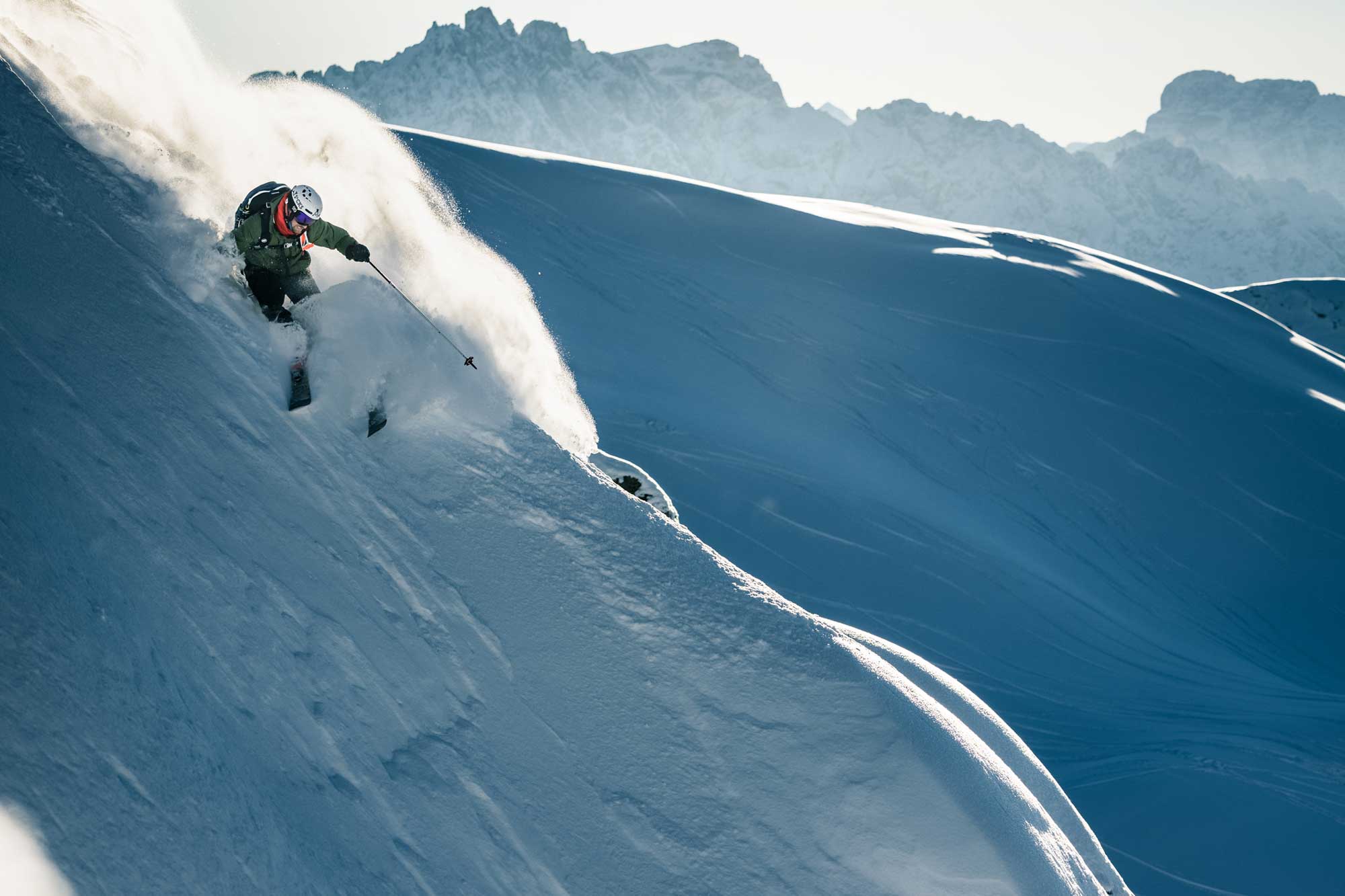
A freeride trip to Japan offers legendary powder snow, regular fresh snowfall, varied forest descents, and tours on volcanoes.
Our freeride trips to Japan take you exactly where Japow is born. Light, dry snow that is unmatched anywhere in the world and usually falls in large quantities. Always combined with unique local Japanese cuisine and culture.
Our Freeride Trips in Japan
What Makes Freeriding in Japan Special
Japan is considered one of the most snow-sure freeride areas in the world. Cold air masses from Siberia meet moist air from the sea, often leading to abundant daily snowfall.
The so-called “Japow” is particularly light and dry, making even very deep snow easy to ride. Even on days with heavy fresh snow, riding remains playful and controllable. It’s not comparable to the Alps, where you often get stuck if it’s too flat.
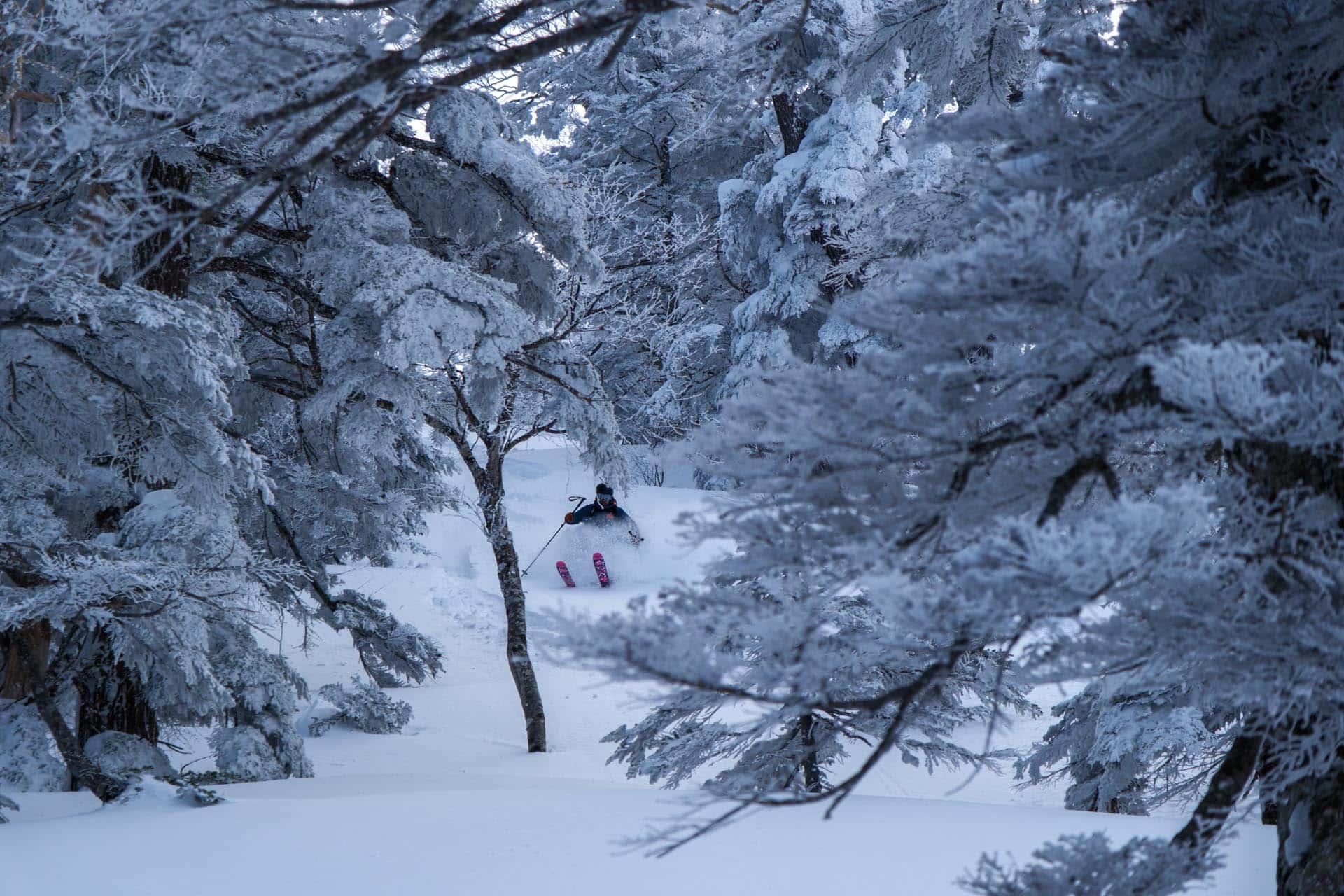
The terrain is ideal for freeriders and deep powder skiers: open slopes alternate with perfectly grown forests that offer optimal spacing for fluid skiing. This creates varied descents that are both technically interesting and incredibly fun.
Freeriding in Japan – What to Expect
A freeride trip to Japan means one thing above all: plenty of powder and tree riding. Instead of hoping for individual powder days, fresh snow is the rule here, not the exception. Exceptions, of course, prove the rule, and even in Japan, it can happen that it doesn’t snow for a few days. But that’s not a problem either; in that case, the Japan deep powder trip simply becomes a bit more touring-focused.
The terrain is varied, and you should definitely have experience freeriding off-piste. Because we spend a lot of time in tree runs, Japan is not beginner terrain with wide slopes without obstacles. You must enjoy powder riding in the forest.
In Japan, the focus is not only on skiing, but on the entire experience: foreign culture, exceptional food, and a unique atmosphere make this trip much more than just another ski trip.

Our Freeride Concept in Japan
Our Freeride Japan trips are designed to help you get the most out of the conditions. Instead of rigid programs, we rely on flexibility and local expertise.
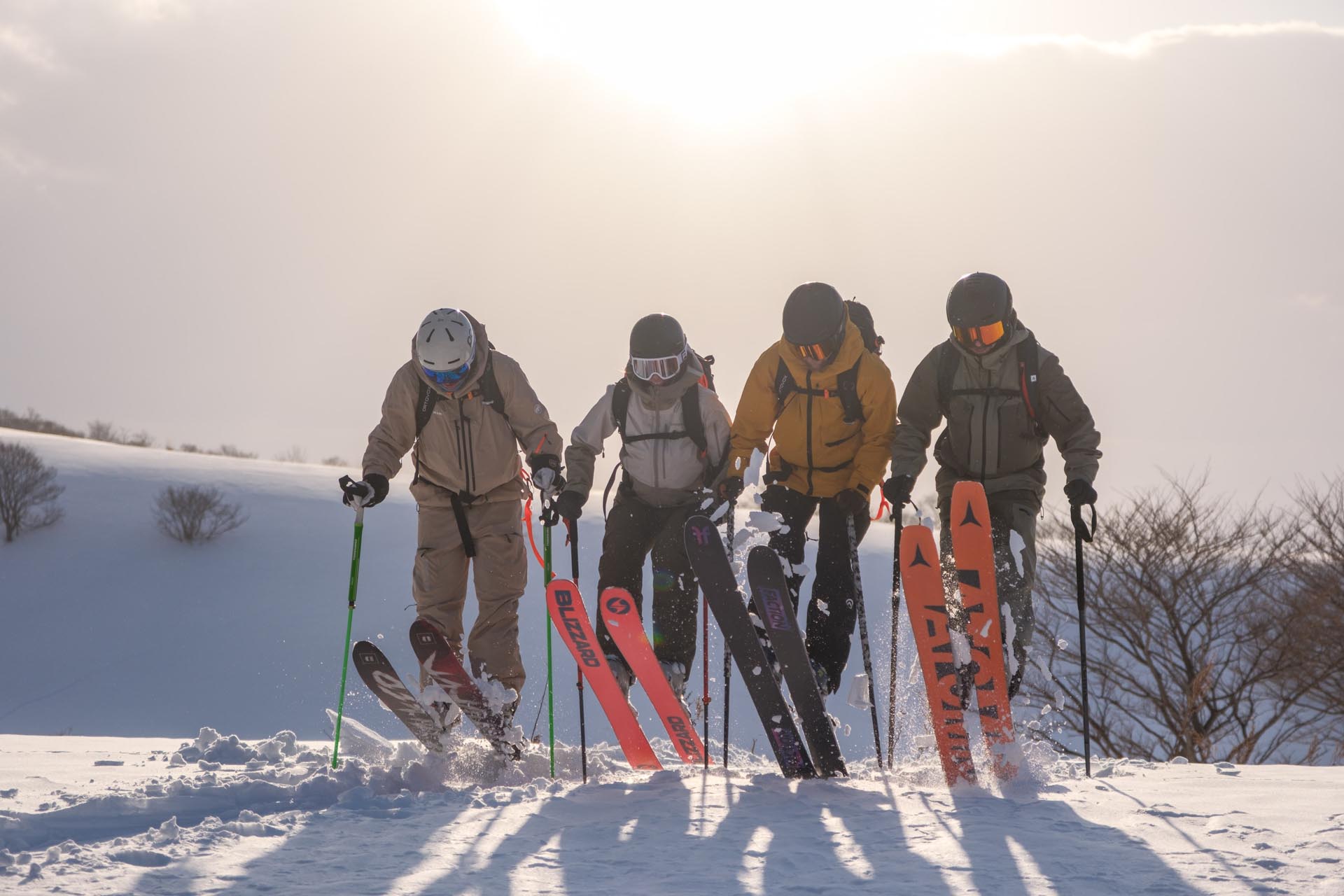
We select the best spots daily based on weather, snow conditions, and terrain. This ensures you’re in fresh Japow as often as possible. Our focus is always on deep powder descents, but if touring conditions are significantly better than in the resorts, the trip can become very touring-heavy. In principle, we favor the smaller, lesser-known resorts to avoid standing in lift lines.
Small groups and experienced guides create a relaxed and maximally flexible atmosphere where you can fully concentrate on riding. At the same time, we ensure that the terrain matches your skill level, so you can ride safely and have a lot of fun.
Freeriding in Japan – Powder in the Land of the Rising Sun
In recent years, Japan has developed into one of the world’s most popular freeride destinations. Anyone who has experienced the legendary Japanese powder – or Japow – quickly understands why: meters of the finest fresh snow, dense forests with perfect tree runs, volcanic terrain, and a unique combination of nature, tranquility, and efficiency make freeride trips to Japan an unforgettable winter adventure.
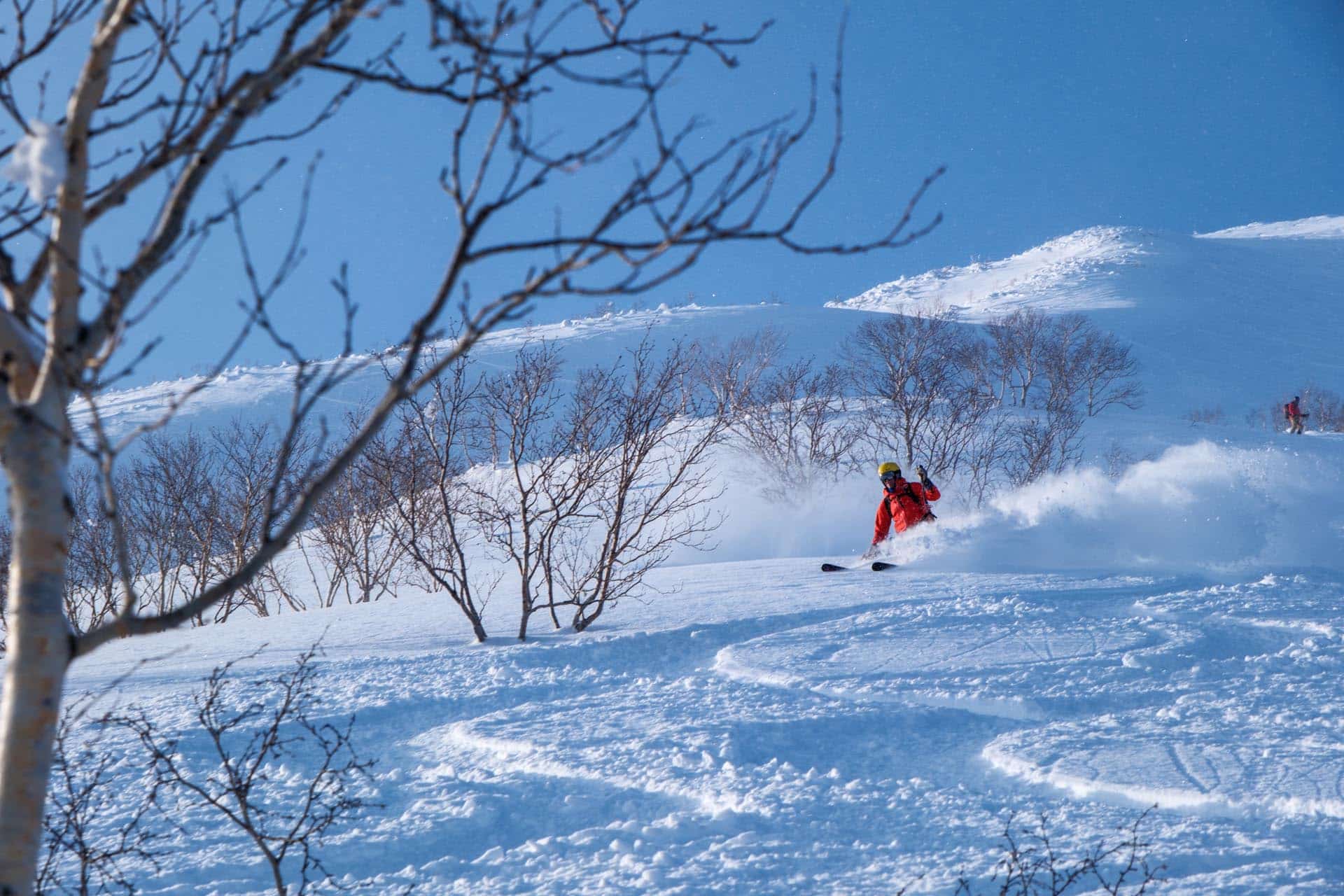
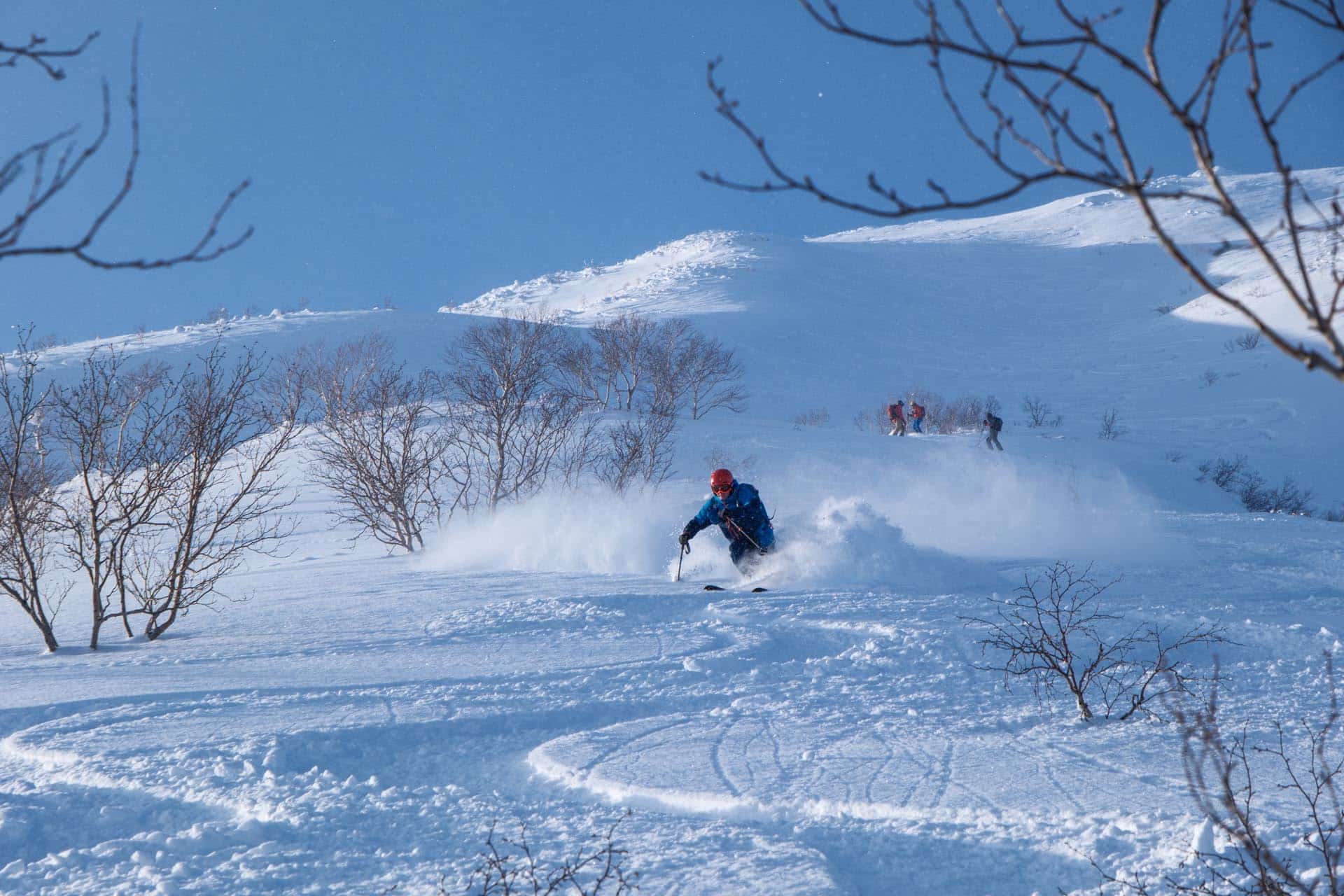
Especially the northern island of Hokkaido as well as selected regions on Honshu like Myoko, Hakuba or Nozawa Onsen offer excellent conditions for powder. Many resorts beyond the well-known names are significantly less crowded than their European counterparts and provide access to powder terrain with short ascents that remains untouched days after the last snowfall. Whether by lift or touring skis, freeriding in Japan means: numerous tree runs, fresh deep snow, and maximum fun, at least as long as you don’t hit a tree. Because they are hard.







Why Book with Flat Sucks?

What is Japow? The legendary powder snow from Japan
Japow is more than just a term – it’s a seal of quality. The snow conditions in Japan are among the best in the world. This is due to a unique weather situation: cold, dry air masses from Siberia move over the warm Sea of Japan, become saturated with moisture, and then hit the Japanese mountain ranges. The result: extremely heavy snowfall at very low temperatures – in regions like Niseko, Kiroro, or Myoko, up to 15 meters of snow can fall per season.
What makes the snow special is its exceptional dryness and lightness. Due to the low humidity and consistently cold temperatures, the finest powder is created, which is perfect for freeriding. Especially in the wooded areas of the Japanese resorts. The tree runs offer appealing and playful runs even in poor visibility conditions.
Tip: If you are traveling in Japan, you should choose skis with at least 105 mm center width or a corresponding snowboard – the snow is deep, and you want to take advantage of that.
Who is a Freeride Japan Trip Suitable For?
A freeride trip to Japan is more than just skiing. It’s the combination of deep powder, exceptional scenery, and a completely different culture. So you must be willing to embark on a real journey. At the same time, solid freeride and touring skills are required. To optimally enjoy our program, you need several years of off-piste experience, as well as fitness for up to 700 vertical meters spread throughout the day.
Technically, you don’t have to fear steep icy couloirs in Japan, but you must be comfortable with some tighter forest passages. Many who have been here once come back, not just for the snow, but for the entire experience.
General information about arrival and best time to travel
Getting to Japan is easier than many think. Several airlines offer daily connections from Frankfurt, Munich, or Vienna to Tokyo or Sapporo (New Chitose Airport), often with no or only one stopover. From there, you can take a domestic flight, train, or shuttle bus to the freeride areas on Hokkaido or Honshu.
If you want to go to Hokkaido (e.g., Otaru, Niseko, Furano, Asahidake), the ideal airport to land at is Sapporo. For Myoko, Hakuba, or Nozawa Onsen on Honshū, Tokyo Narita or Haneda are good destination airports.
The best time to travel for freeride and powder trips to Japan is between early January and mid-February. During this period, it snows almost daily, often overnight, with consistently cold temperatures. This phase guarantees the best chances for deep, fresh powder snow. From mid-February, the weather often becomes a bit clearer – perfect for longer tours or runs above the tree line.
Ski or Snowboard for Freeriding in Japan?
Both types of equipment have their advantages in Japan. Snowboarders are often quicker and more agile in the forest, while skiers have enormous advantages, especially in flat sections and when traversing. We offer both in separate groups, so please send us an email.
Questions, inquiries, and individual trips
Whether general information, travel inquiries, or a personally guided day in the powder: We are happy to help and plan tours according to expectations and goals. Private guiding from 650 Euros per day. More information about our freeride offers can be found here.
Contact form

Frequently Asked Questions
Between January and mid-February, when snowfall is most consistent.
Japow refers to the exceptionally light and dry powder snow found in Japan.
No, si eres principiante fuera de pista, te recomendamos que primero vayas a uno de nuestros Basic Freeride Camps en los Alpes.
Yes, we can arrange that. BUT it makes more sense and is cheaper to bring your own gear. Airlines often transport ski luggage free of charge. And if you want to travel light before or after the freeride trip in Japan, you can store your skis at the airport or send them inexpensively with a time delay to hotels or airports using
Yes, standard avalanche equipment like an avalanche transceiver, probe, and shovel is essential for off-piste riding. We prioritize safety on our trips and are happy to advise you on suitable gear.
Both are possible. In Japan, both skiers and snowboarders get their money’s worth. What matters most is experience in powder and off-piste terrain. We run dedicated groups for snowboarders.
A typical day starts early to make the most of the conditions. We choose the area flexibly depending on the snow and weather. The goal is always to spend as much time as possible in fresh powder. After skiing, you’ll head to an onsen (hot springs) followed by dinner at small local restaurants.
Una buena forma física de base ayuda, ya que estarás varios días seguidos fuera de pista. No tienes que ser un atleta de élite, pero deberías ir preparado a nivel de resistencia y poder hacer sin problema unos 500 m de desnivel positivo con pieles en la subida.
In principle, yes, but a guide is recommended. Local knowledge, safety considerations, and choosing the best spots play a big role in getting the most out of your trip. Japan doesn’t have a mountain rescue system like the Alps!
Our trips last between 8 and 12 days. So you’ll definitely get your money’s worth in terms of powder. However, it’s recommended to plan a few extra nights before or after to check out Tokyo, for example.
Yes, definitely—and there are numerous accidents every year. Especially involving tourists, since Japanese skiers and riders themselves go off-piste less often. So choosing the right terrain is essential—especially because there isn’t proper mountain rescue, either.
In winter, Japan is 8 hours ahead of Central Europe. So, you’ll be finished with your powder session just as everyone back home is starting work.
We recommend a waist width of 105mm and up. 110 to 116 would be ideal. Narrower is possible in principle, but you won’t be doing yourself any favors. In Japan, it’s primarily soft snow and powder, so a wider ski only has advantages because it floats better and you need less backseat positioning.