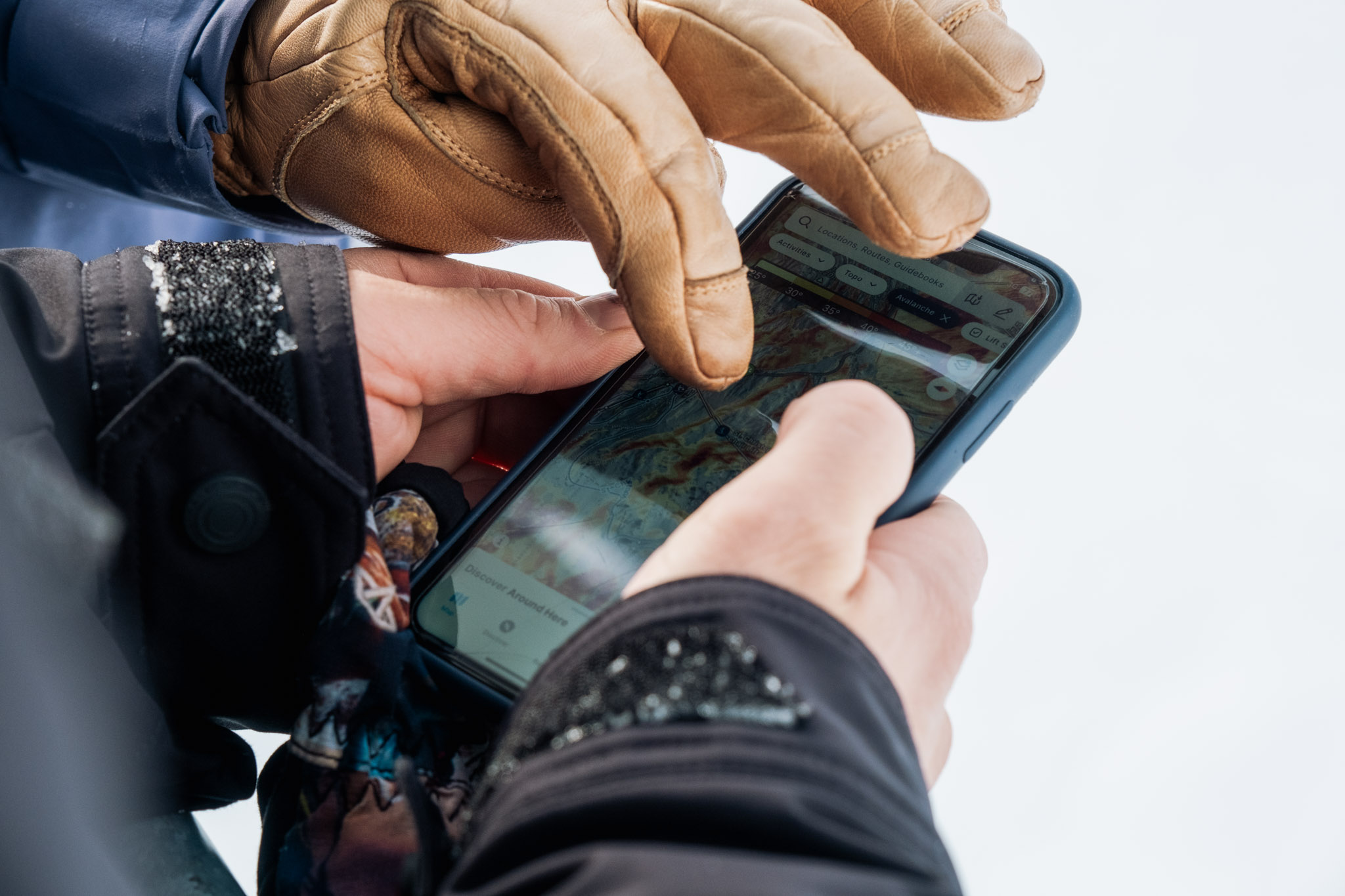
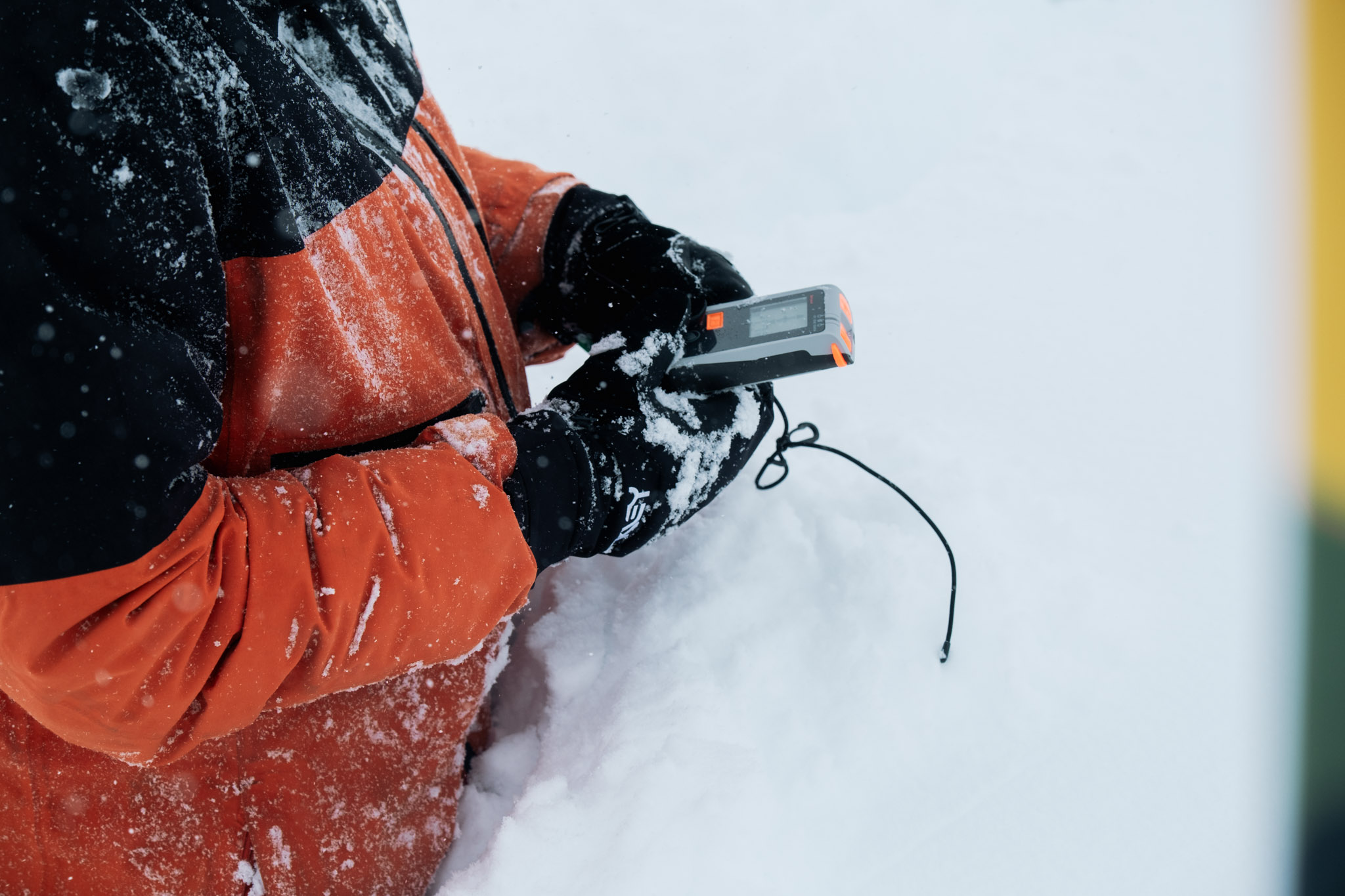
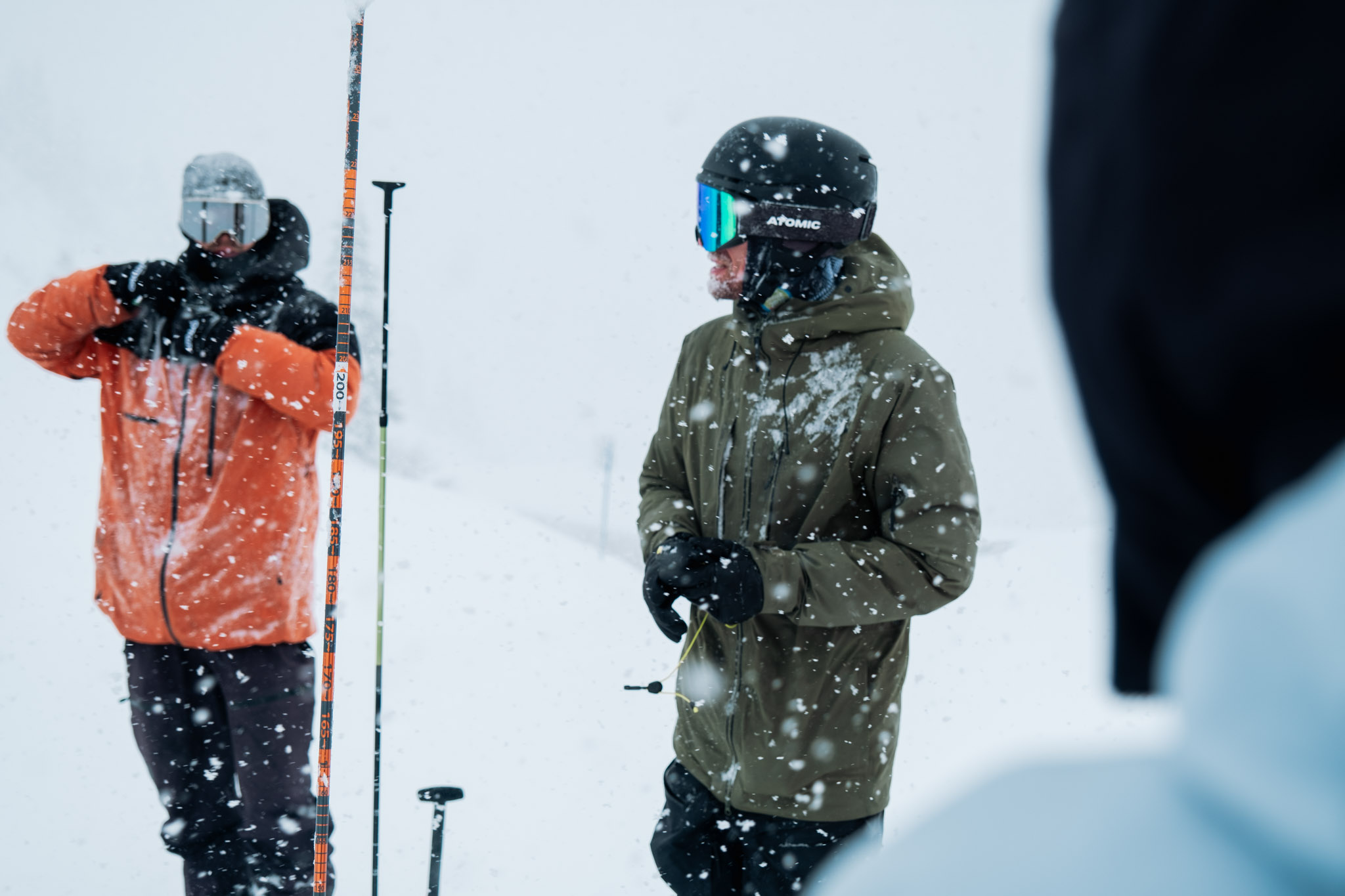
Freeriding is a team sport
Safely Together Off-Piste
From the outside, freeriding often looks like an individual battle. One after another, riders drop into the slope, carve their line, and wait for the others at the bottom.
In reality, a good freeride day works differently.
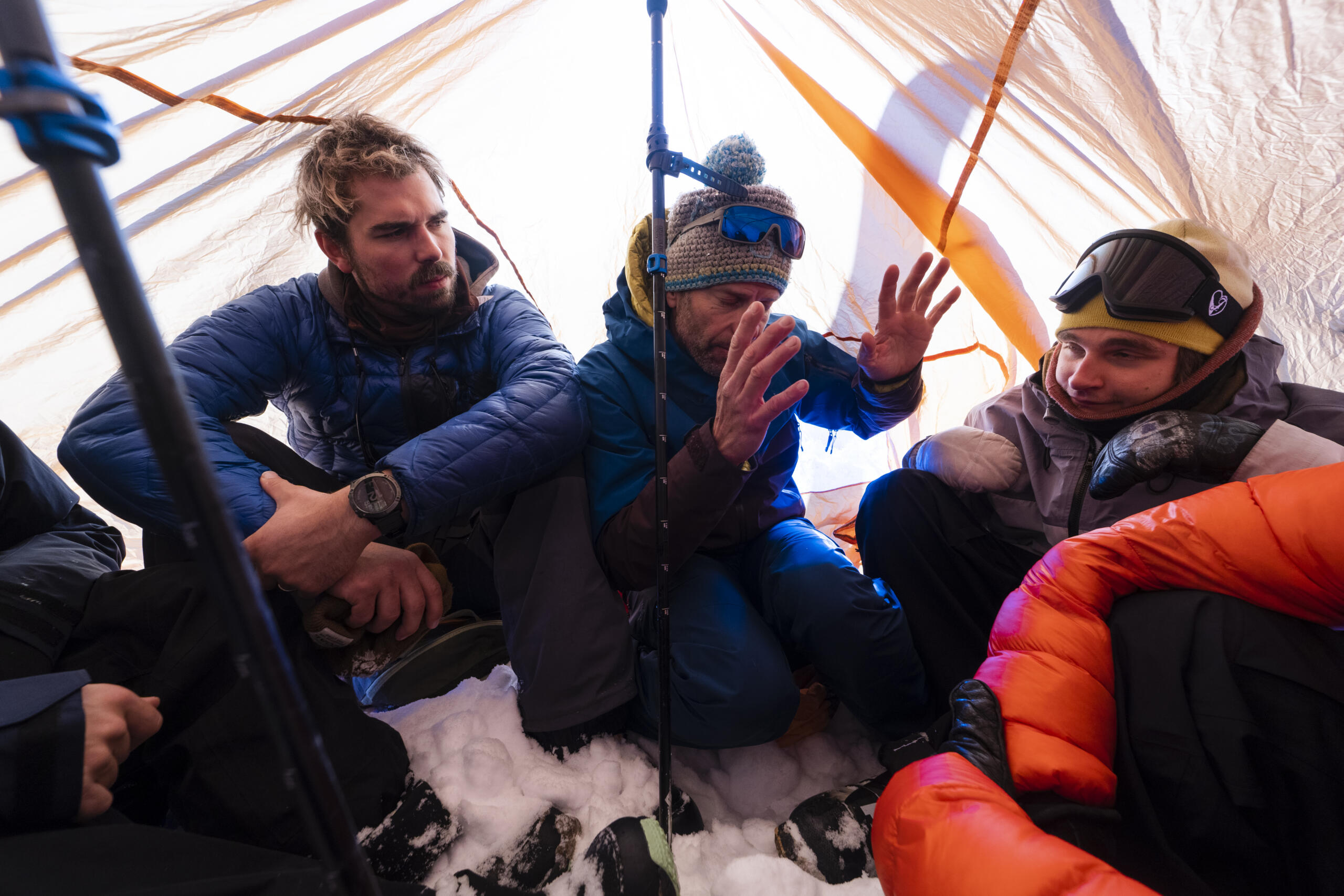
Decisions are made together. One person might know the snow better, another the terrain, and a third has more avalanche experience. And sometimes, it’s precisely the one who’s there for the first time today who says: “This is too much for me.”
That should be enough.
Because off-piste, it’s not about who dares the most. It’s about whether the plan suits everyone in the group.
Does the plan suit everyone’s abilities?
This is one of the questions you should ask yourself before every descent.
Not just: What does the slope look like?
Not just: Where is the best powder?
But:
Does what we’re planning suit the abilities of everyone standing here right now?
A good skier can be overwhelmed by bad snow. A good ski tourer is not necessarily a safe freerider. And someone who effortlessly skis every black run on the piste can quickly reach their limits in open terrain.
Then there are factors that change every day: snow, visibility, wind, temperature, avalanche situation, and the group’s condition.
That’s why you don’t just look at the slope. You also look at the people you’re with.
Who can do what?
Who’s having a bad day today?
Who knows the terrain?
Who can perform an avalanche rescue?
Who has experience with first aid in the backcountry?
And where do we collectively draw the line?
That’s not a weakness. That’s sensible planning.
No Solo Players Off-Piste
If something happens, a group quickly turns into a rescue team.
An avalanche, a fall with injury, or a lost ski can be enough, and suddenly someone has to organize, search, probe, shovel, provide first aid, or make an emergency call.
And then your followers, your ski brand, or the people currently on the piste somewhere won’t help you.
Then your buddies help.
That’s precisely why the group is part of the safety equipment.
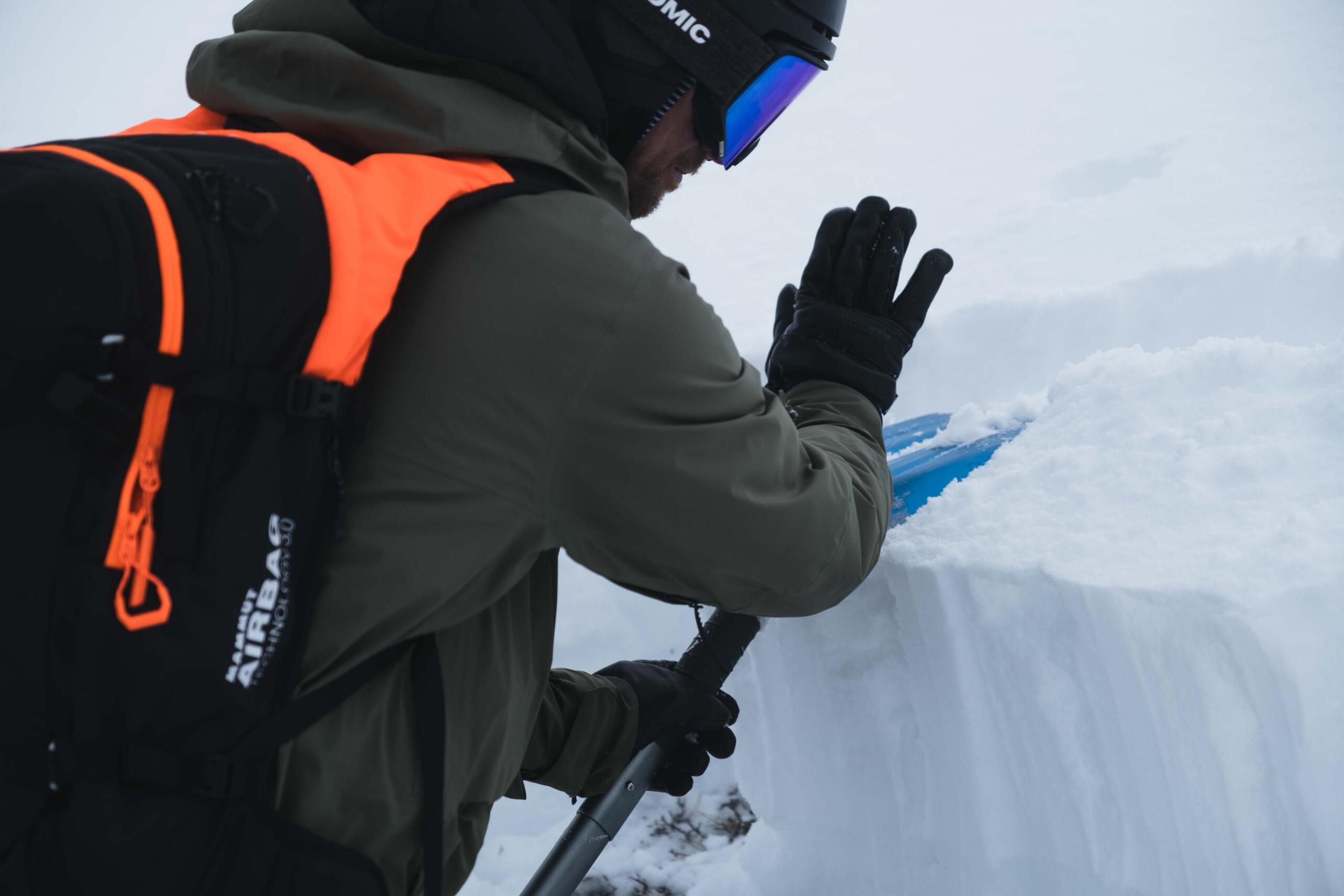
An avalanche transceiver, shovel, and probe must, of course, be carried. But even more important is that everyone knows how to use them. In an emergency, there’s no time to explain to each other which button on the transceiver needs to be pressed again.
Therefore, avalanche rescue shouldn’t just be practiced once in an avalanche course and then forgotten. Anyone who regularly ventures into open terrain should continuously practice the procedures.
Good Decisions Are More Important Than a Good Line
In freeriding, there’s a lot of talk about technique. About skis, bindings, boots, and how to ski in powder.
All important.
But at some point, ski technique no longer determines whether a descent ends well.
Then it’s about decisions.
A little further?
Traverse the slope or not?
Ski individually or regroup?
Increase distance?
Turn back?
And sometimes the right decision is quite unspectacular:
We’re not skiing here.
This must be possible within a group.
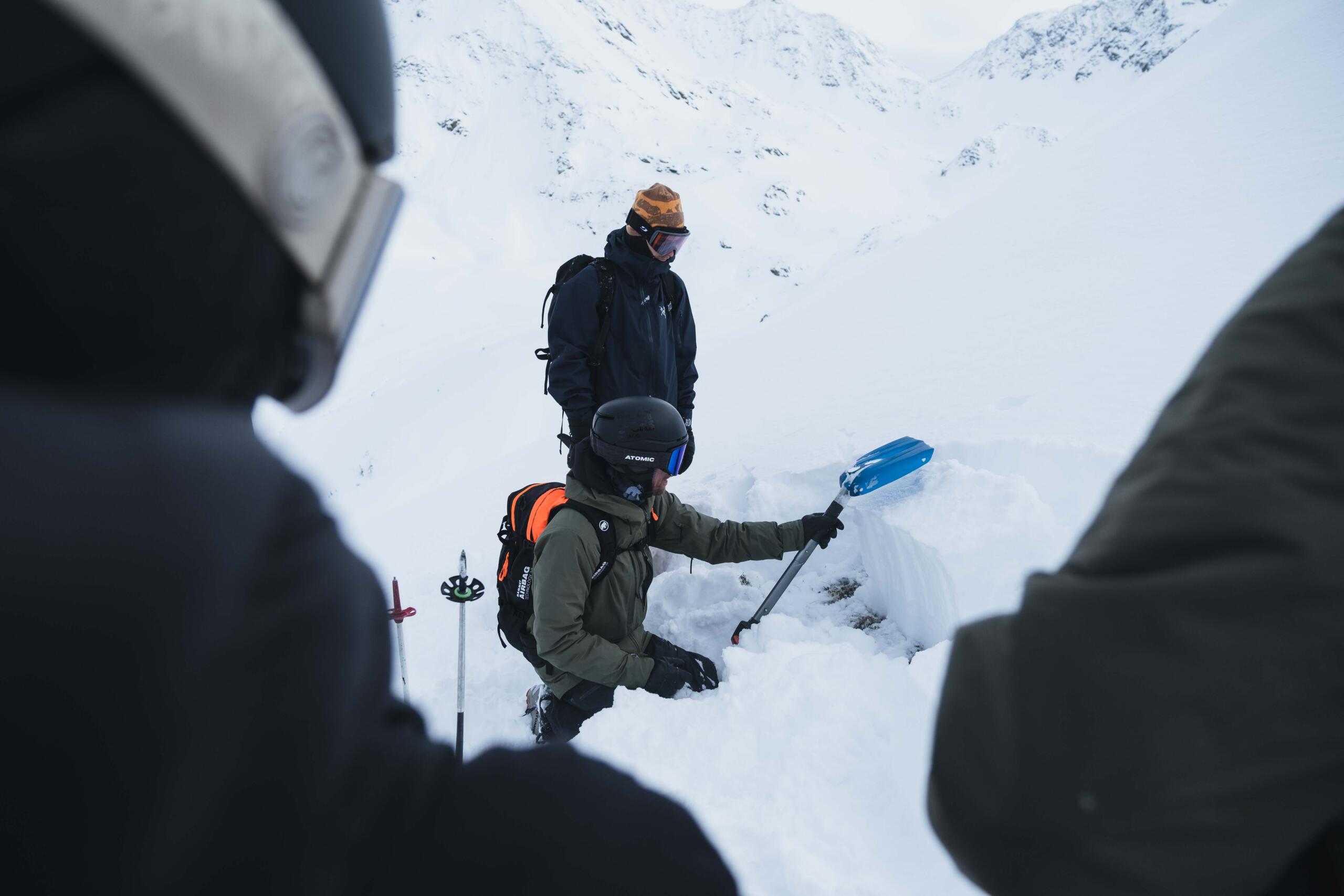
No one should feel pressured to make a bad decision just because others want to continue. And no one should persuade someone to ski a slope they have a bad feeling about.
This is especially important in a group with varying levels of experience.
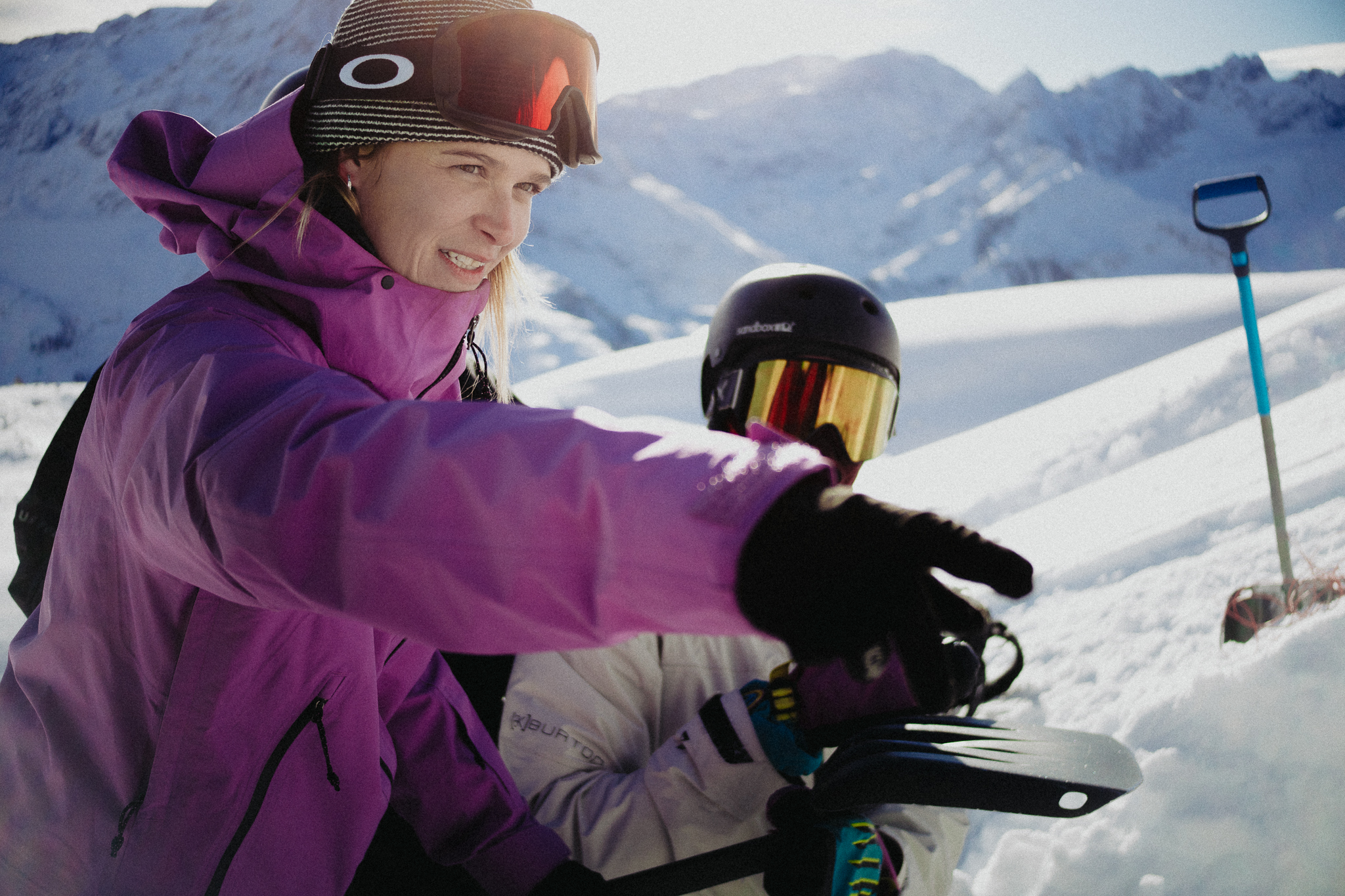
Ability Also Means Saying No
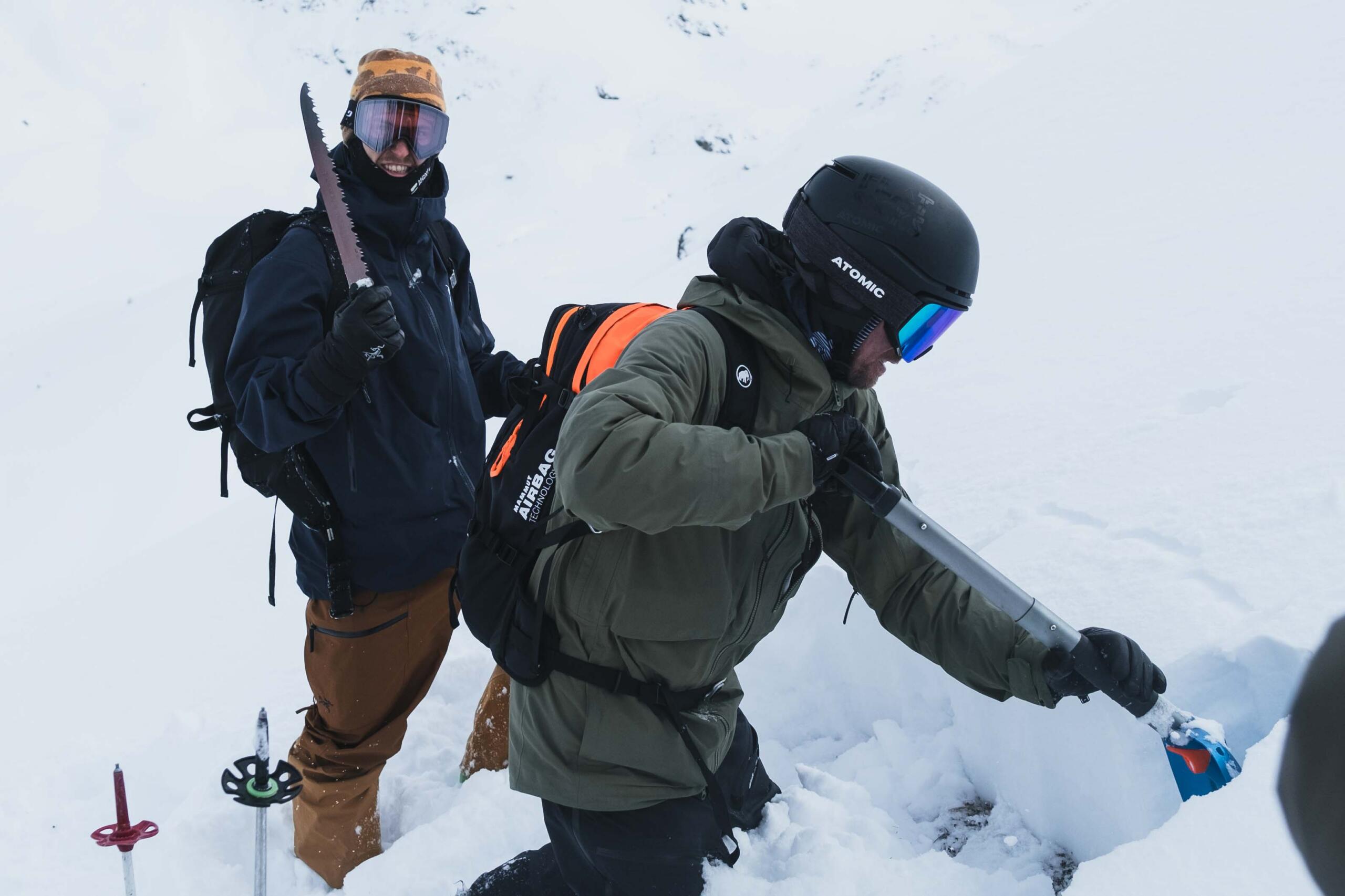
Learning freeriding doesn’t mean always skiing more difficult slopes.
It also means being better able to assess what makes sense at the moment.
A slope can be technically feasible and still not be a good idea. A beautiful powder slope can be exactly the wrong place under certain conditions. And sometimes a descent looks completely different from the entry point than it did in a photo from the day before.
With more experience, the list of things you won’t do usually gets longer rather than shorter.
And that’s a good thing.
Anyone who only wants to ski what they can barely manage in the backcountry will eventually encounter a situation that is no longer manageable.
Trust Within the Group
Freeriding with good buddies makes a big difference.
You know each other. You have a general idea of how the others ski. You know who feels comfortable in steep terrain and who prefers to take it a bit easier.
Even more important: You know you can rely on each other.
If one person skis ahead, the others need to know that they won’t suddenly disappear somewhere. If someone chooses a different line, it must be clear where you’ll meet again. And if someone doesn’t want to ski a slope, it shouldn’t be a topic debated for ten minutes.
Trust isn’t built through shared powder days. Trust is built by learning, practicing, and experiencing together how others make decisions.
Therefore: Take the Course Together
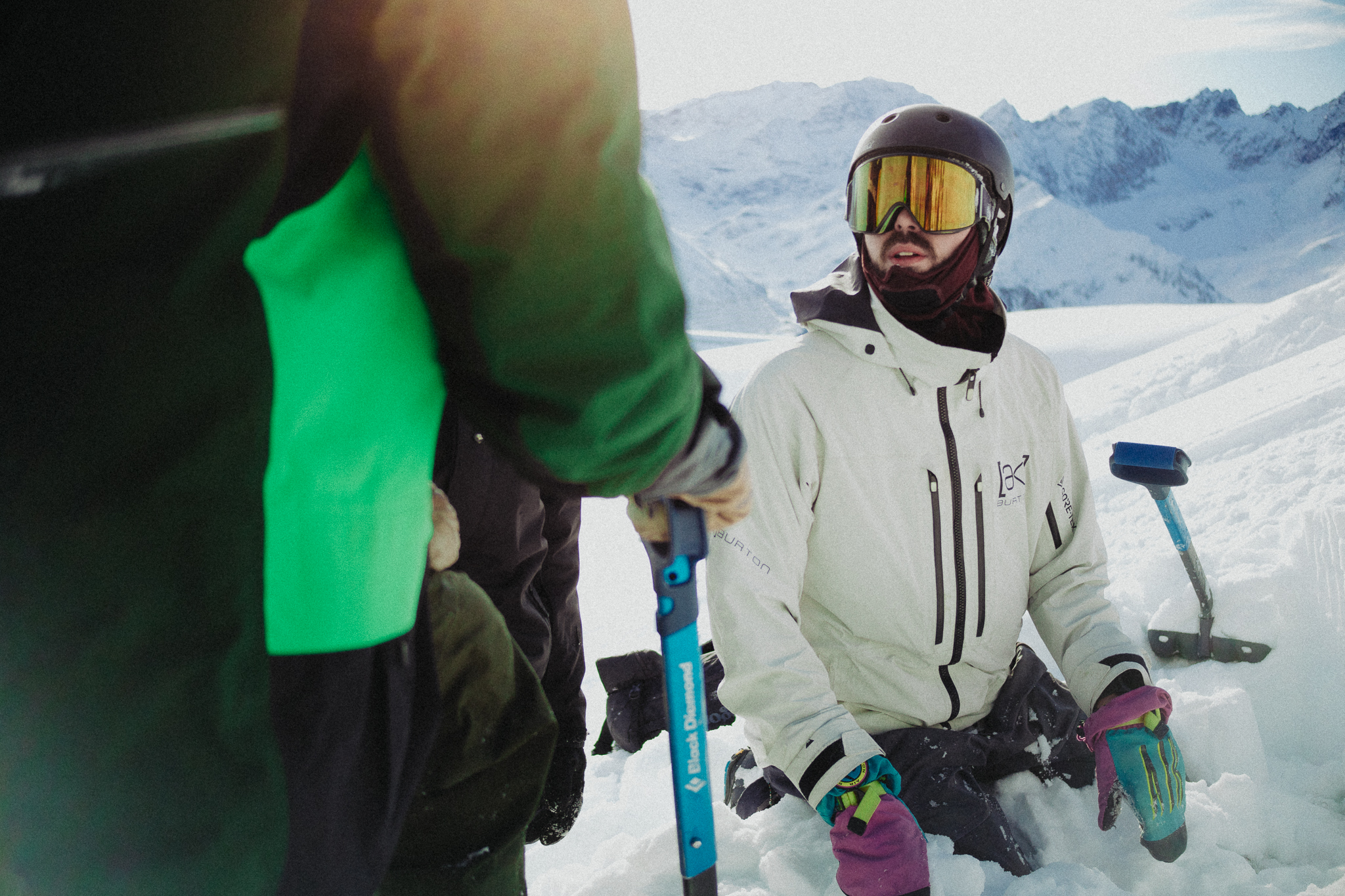
An avalanche course is of little use if one person can do everything and the others just stand by.
If you usually go out together, then do the training together too.
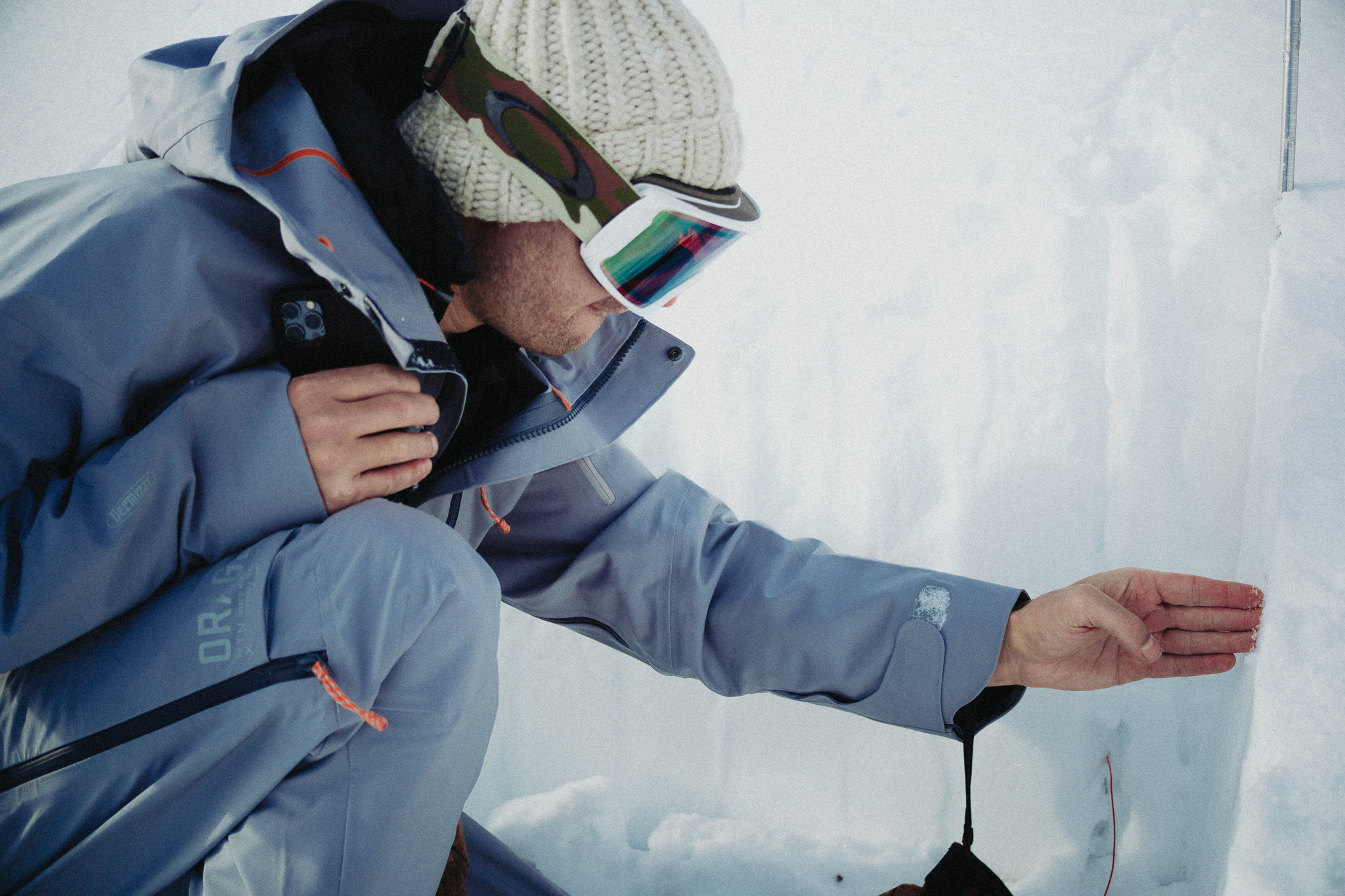
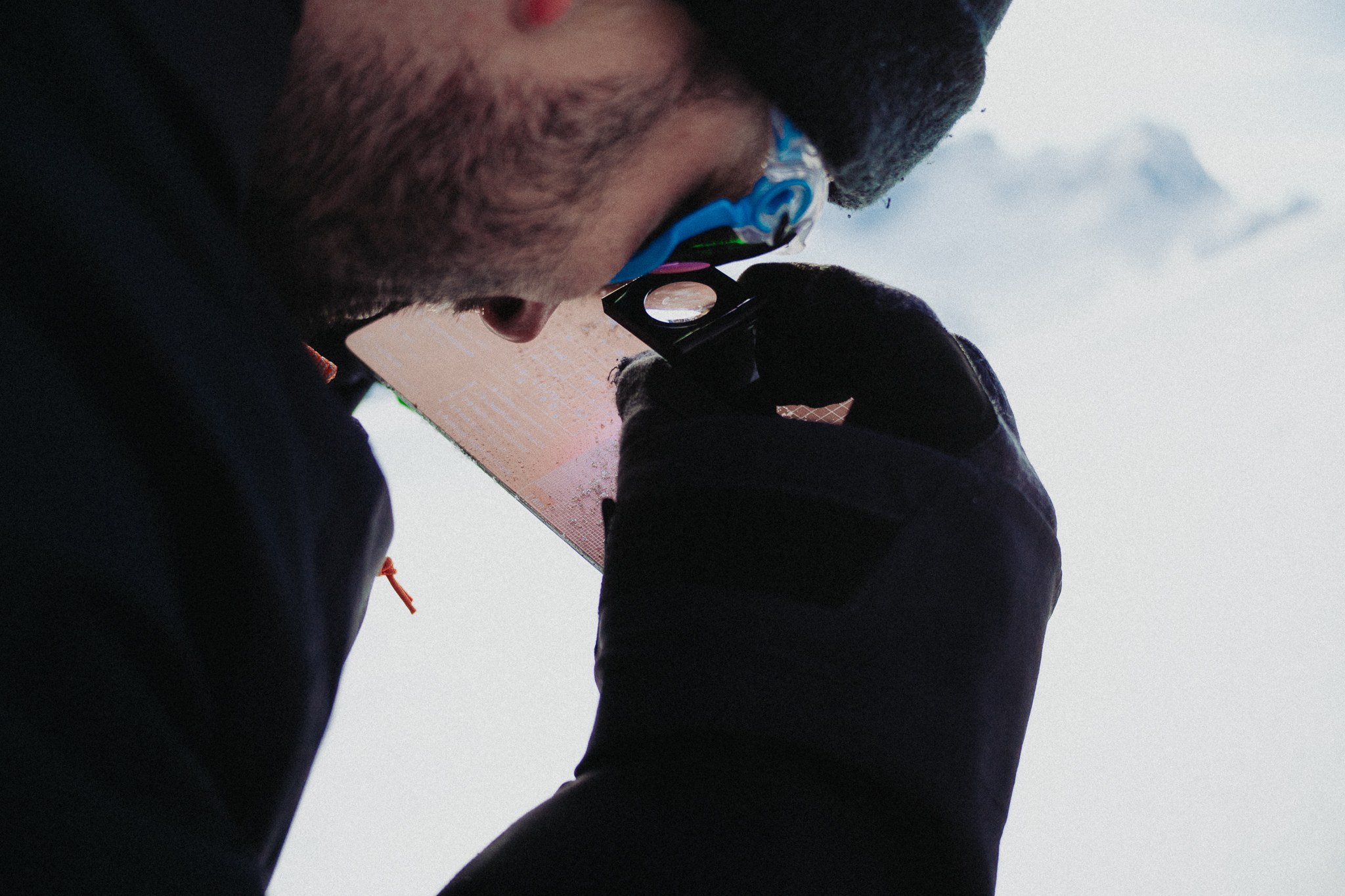
Learn how to read an avalanche forecast. Examine the terrain together. Practice avalanche rescue. Talk about distances, meeting points, and emergency procedures. And consciously take a run where it’s not about accumulating as many vertical meters or as many runs as possible.
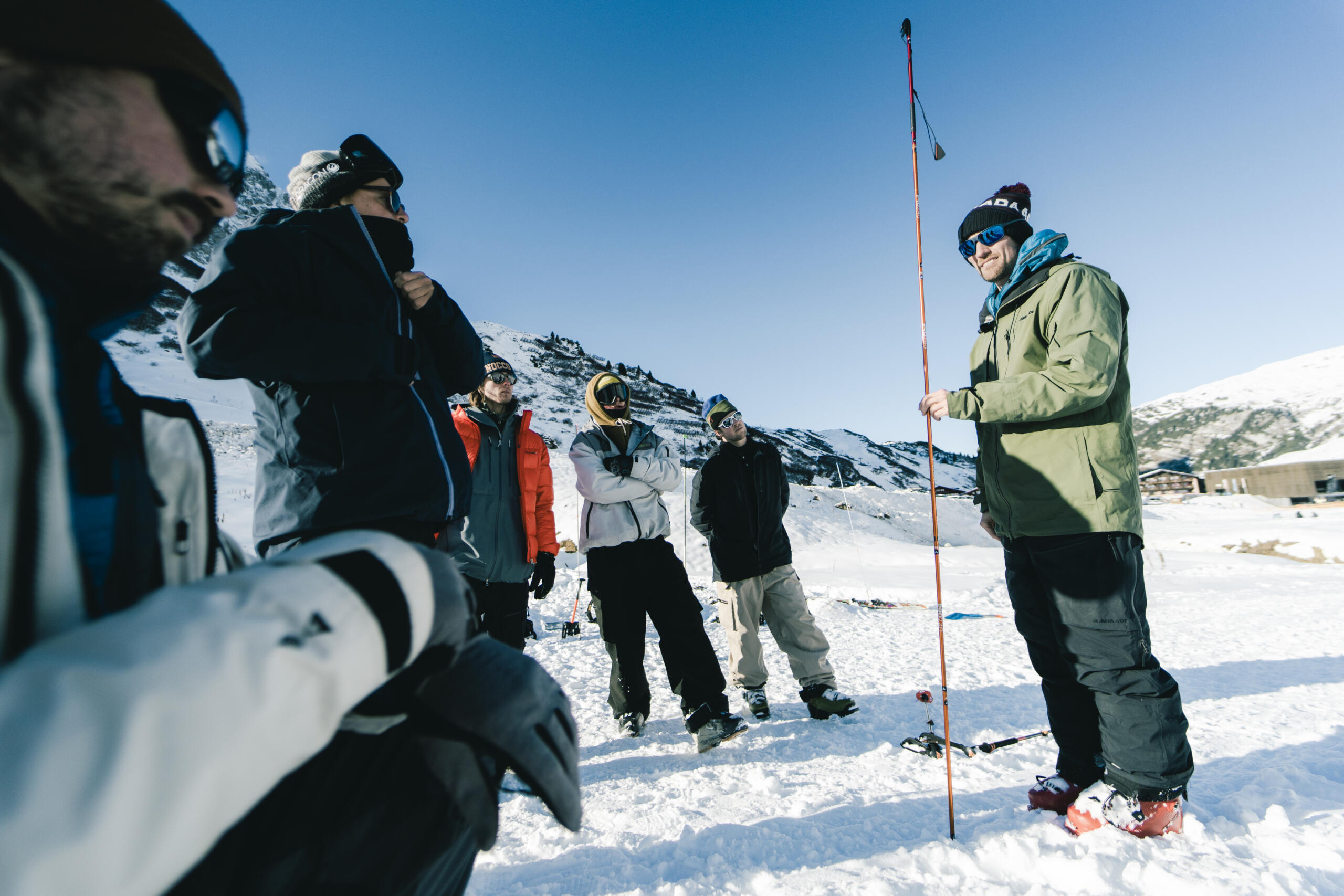
A good freeride course should provide space for exactly that: getting out into the terrain, looking at situations, discussing decisions, and then seeing if the decision works.
Because eventually, you’ll be standing at the top of the slope again.
Then there’s no instructor to tell you what’s right.
Then it’s just the four of you, three of you, or two of you again.
And then the group has to function.
Freeriding is a team sport
Freeriding is freedom. But this freedom only works with responsibility.
Not everyone has to ski equally well. Not everyone has to have the same amount of experience. But everyone should contribute to ensuring the group is safe.
Skill. Training. Communication. Trust.
And the willingness not to do a descent if it’s not right for the group.
Grab your buddies and take a course.
Not so you can ski bolder lines afterward.
But so you make better decisions when it counts.