
Die 5 besten klassischen Transalp Übergänge mit dem Mountainbike
Traumhaft Pässe auf klassischen Nord-Süd MTB Routen von Deutschland nach Italien
Was macht einen Transalp eigentlich aus? Der Weg ist das Ziel, und genau dieser Weg besteht aus mehreren Etappen welche wiederum über verschiedene Übergänge und Pässe gehen. Genau hier entscheidet sich, ob eine Alpenüberquerung „gut“ oder unvergesslich wird. Lange Anstiege, Tragepassagen, spektakuläre Landschaft und vor allem die Abfahrten, das ist der Stoff, aus dem echte Transalp-Erlebnisse bestehen.
Hier sind fünf der besten klassischen Übergänge, die ihr unbedingt mal in eine Transalp einbauen solltet. Inklusive einem kleinen Geheimtipp, den man nicht übersehen sollte.
1. Fimberpass – Trailvielfalt und Hochalpenfeeling
Region: Silvretta / Samnaungruppe
Höhe: 2.608 m
Höhenmeter: ca. 700–1.400 hm (je nach Variante und Liftnutzung)
Schwierigkeit: großteils S2, teilweise hochalpin mit losem Untergrund
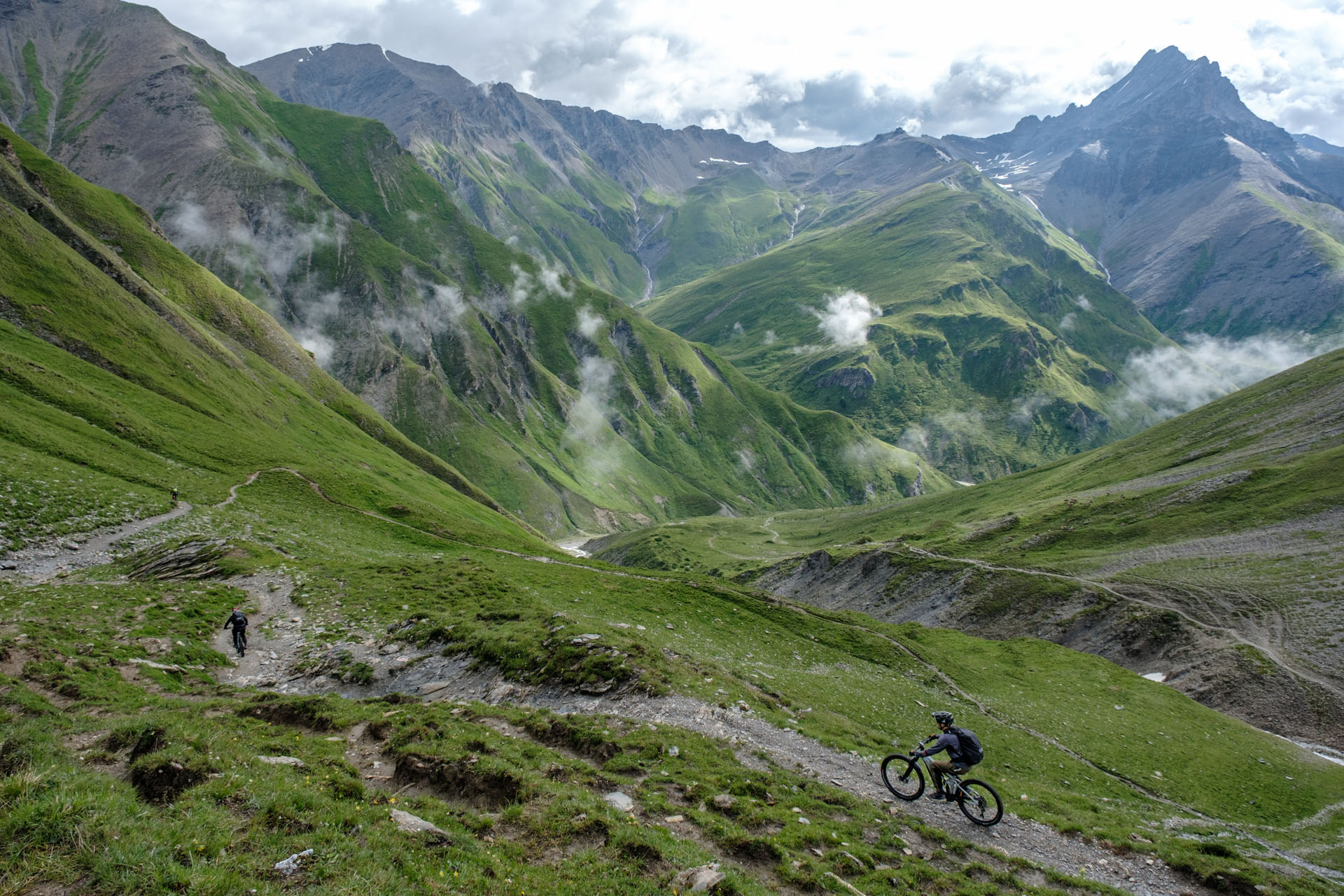
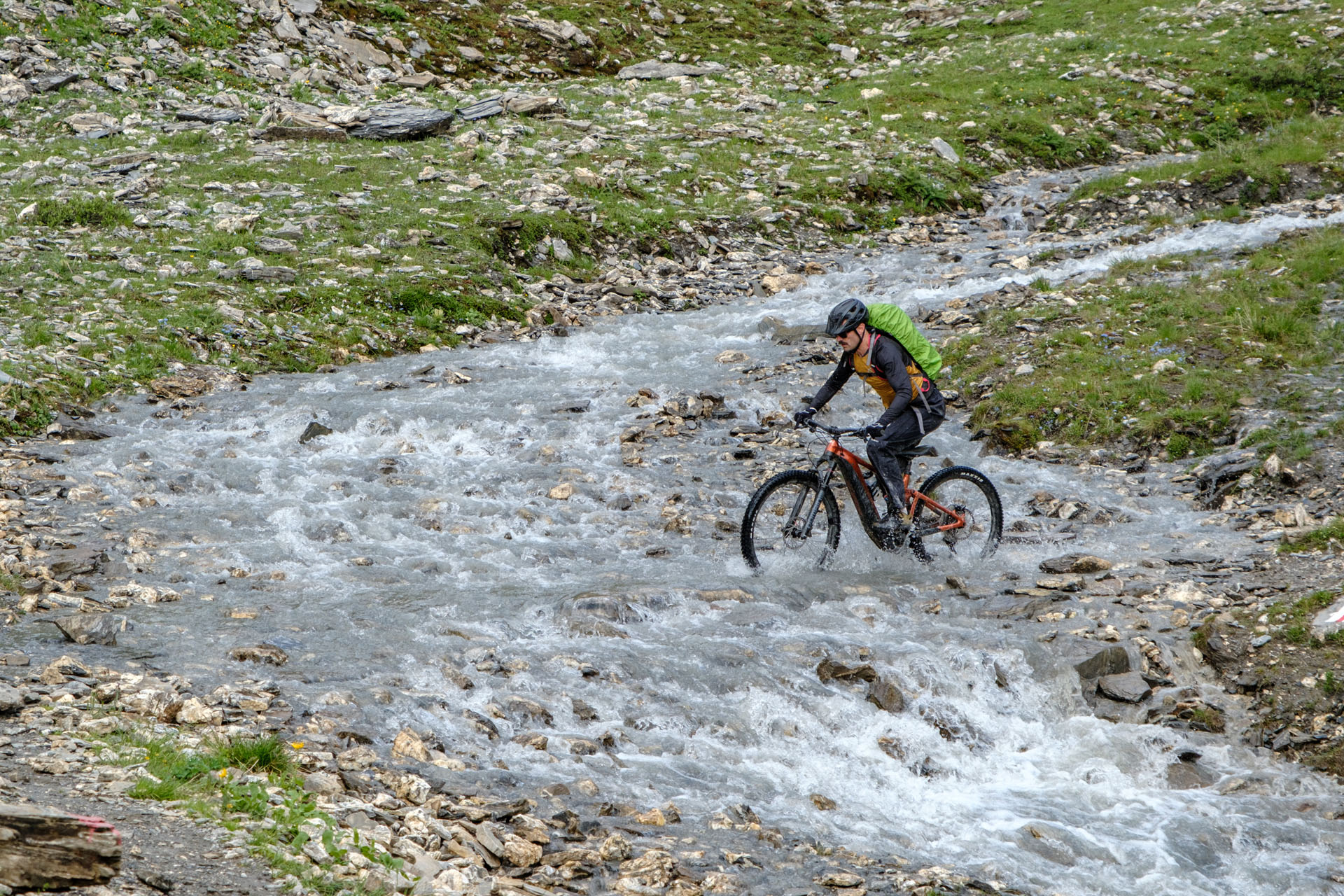
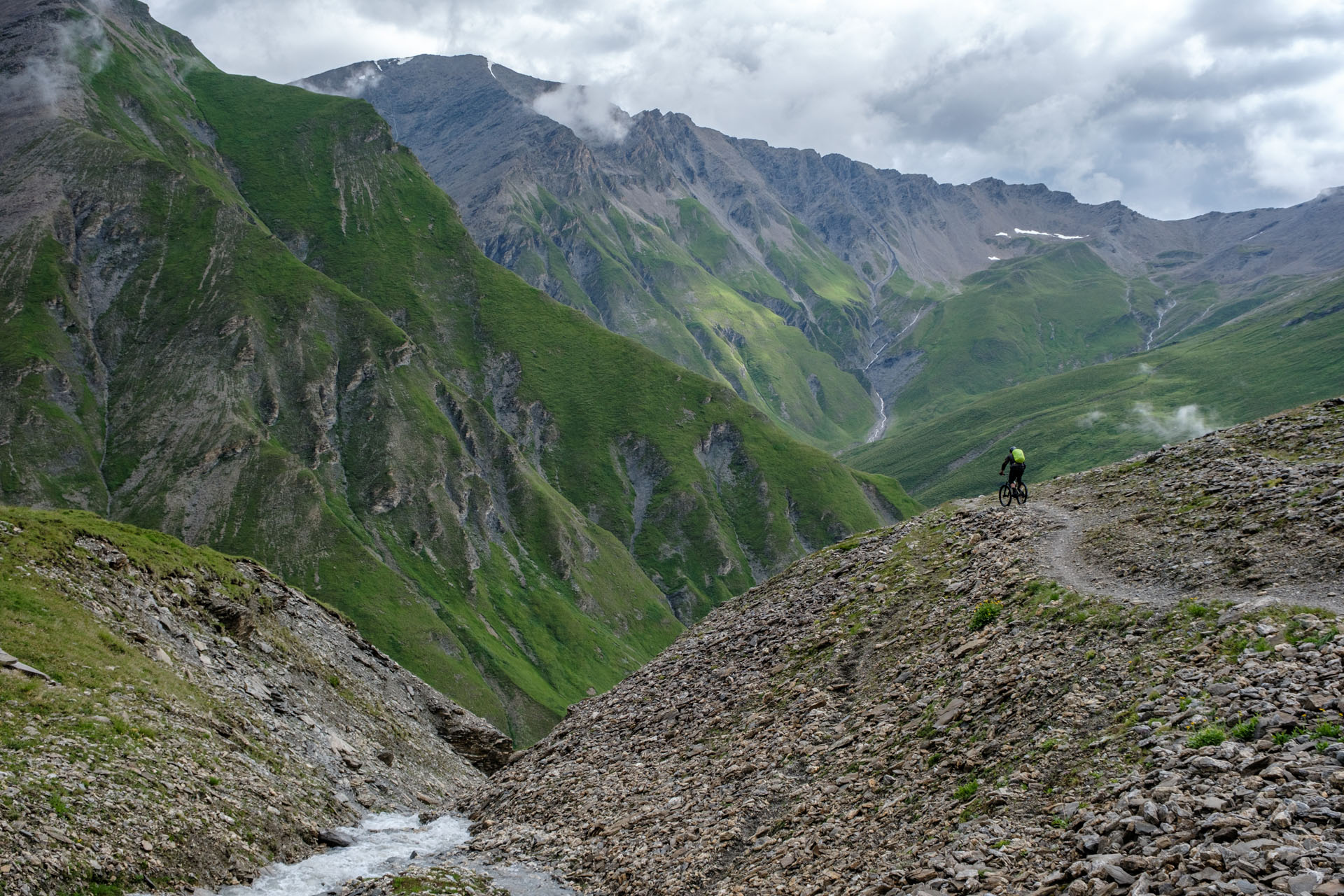
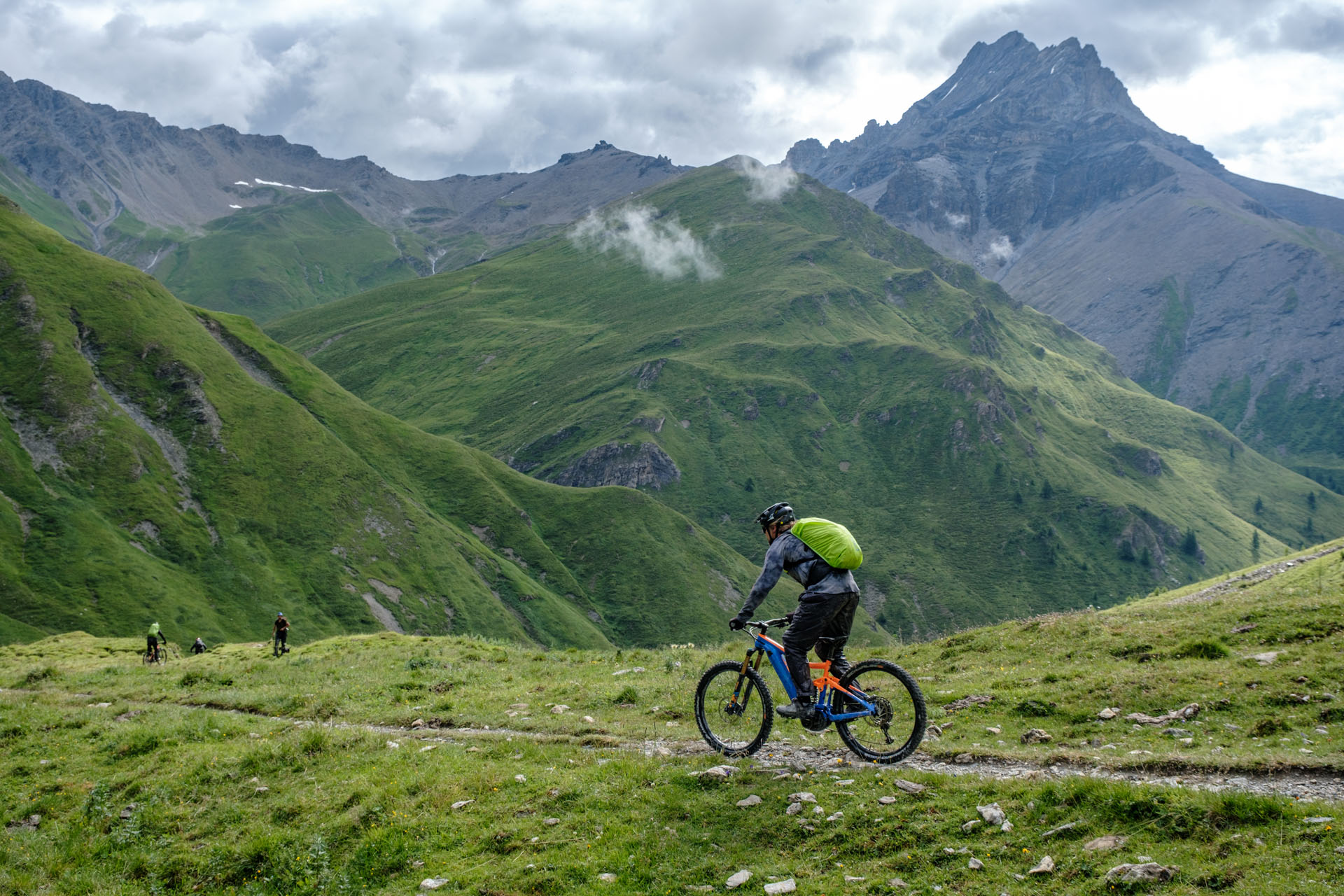
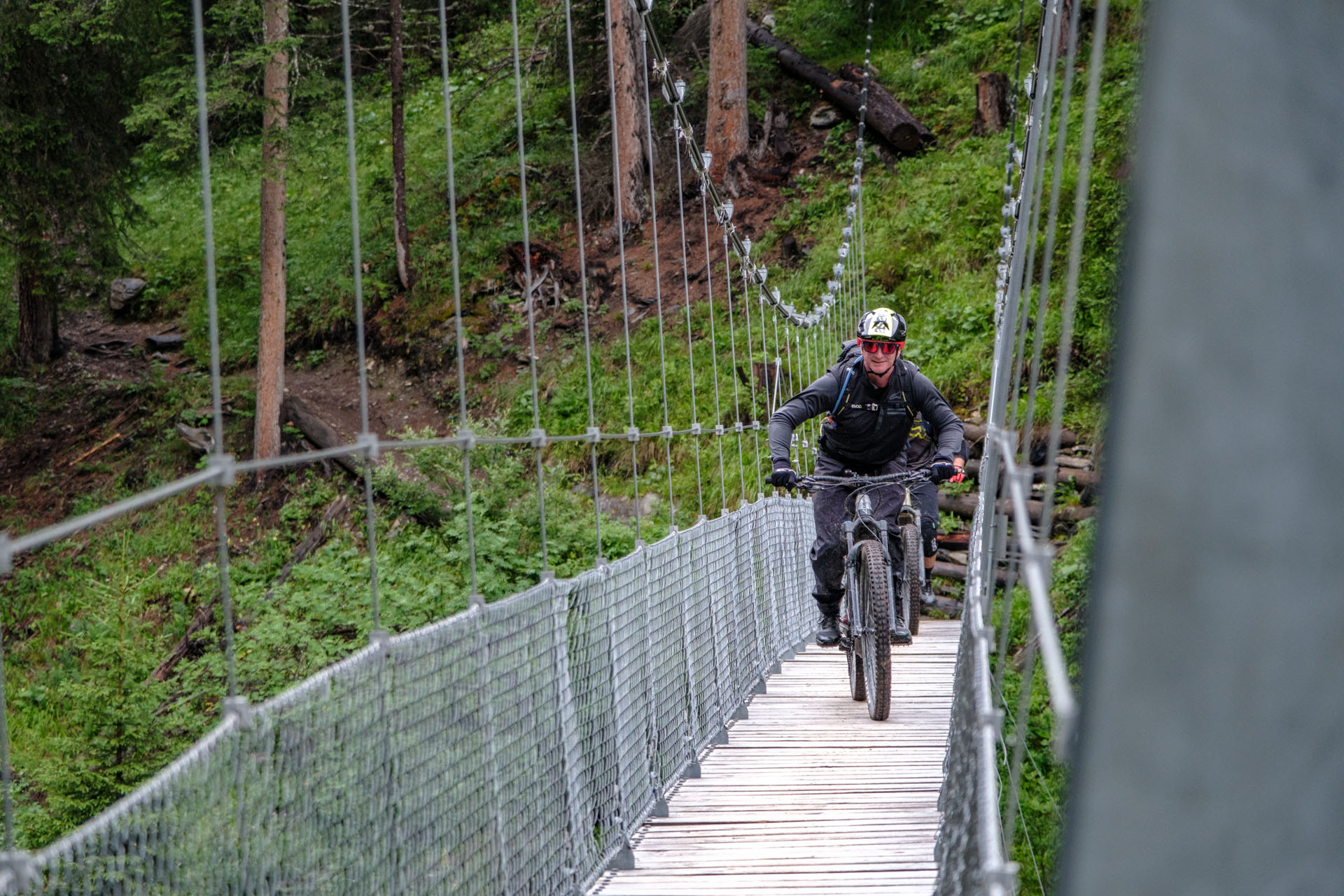
Der Fimberpass ist einer der abwechslungsreichsten Übergänge überhaupt. Klassisch startet man von Ischgl über die Heidelberger Hütte. Eine solide, aber eher klassische Variante. Deutlich spannender wird es mit Liftunterstützung in Ischgl und anschließenden Varianten über den Salaaser Kopf und die Fuorcla Val Gronda. Hier warten traumhafte Singletrails, die direkt ins hochalpine Gelände führen.
Die Abfahrt Richtung Engadin ist lang, alpin und fordert Konzentration – genau das, was man sich von einer Transalp erwartet.
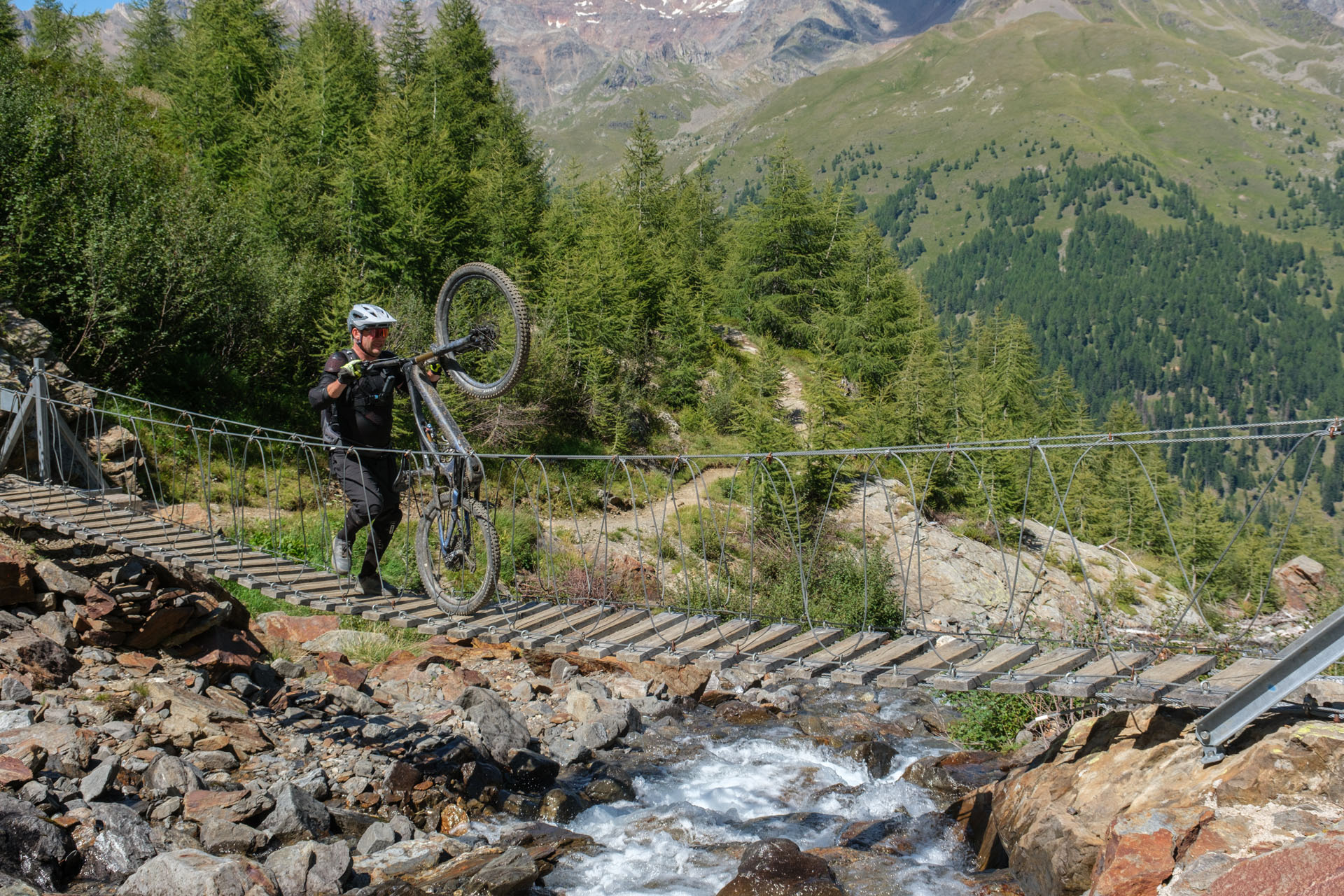
Bonus: Der berühmte Hängebrückentrail weiter unten bietet eine abwechslungsreiche Verlängerung für gute Trail Fahrer (S3 Stellen).
2. Madritschjoch – der höchste klassische Übergang der Ostalpen
Region: Ortlergruppe
Höhe: 3.123 m
Höhenmeter: ca. 800hm ab der Bergstation der Seilbahn
Schwierigkeit: Viel S2 aber auch S3 und S4 Stellen, bergauf für die meisten zum schieben
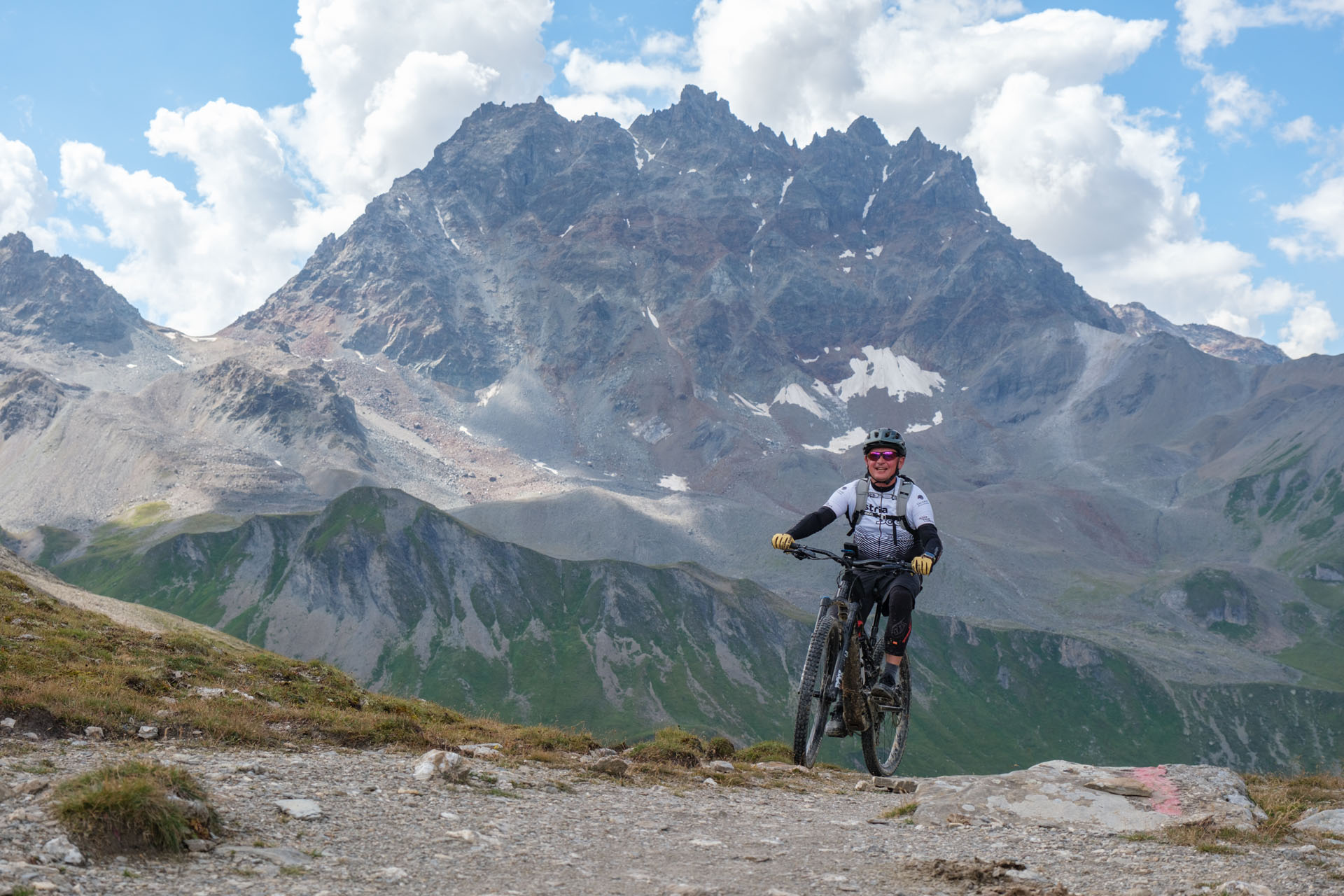
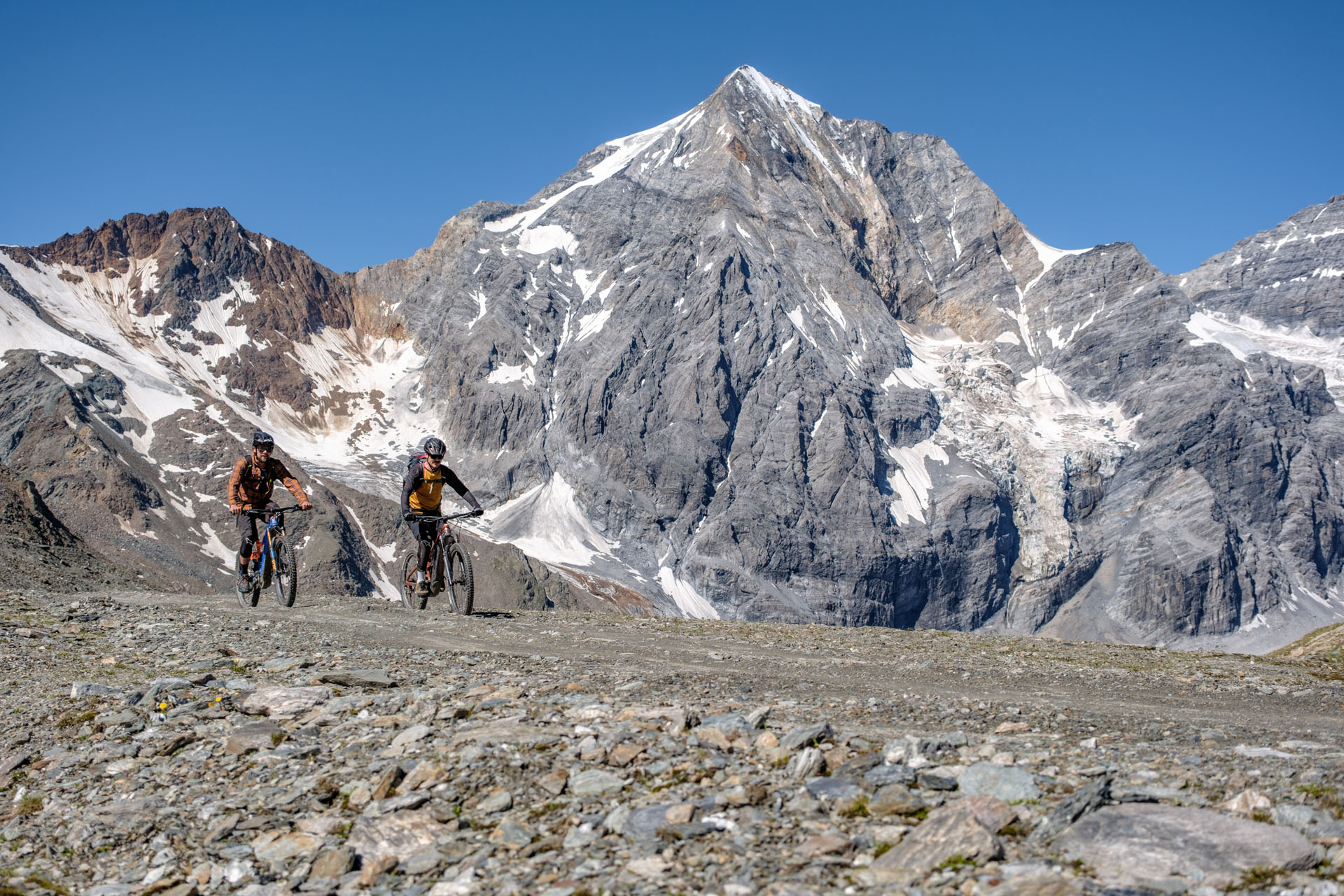
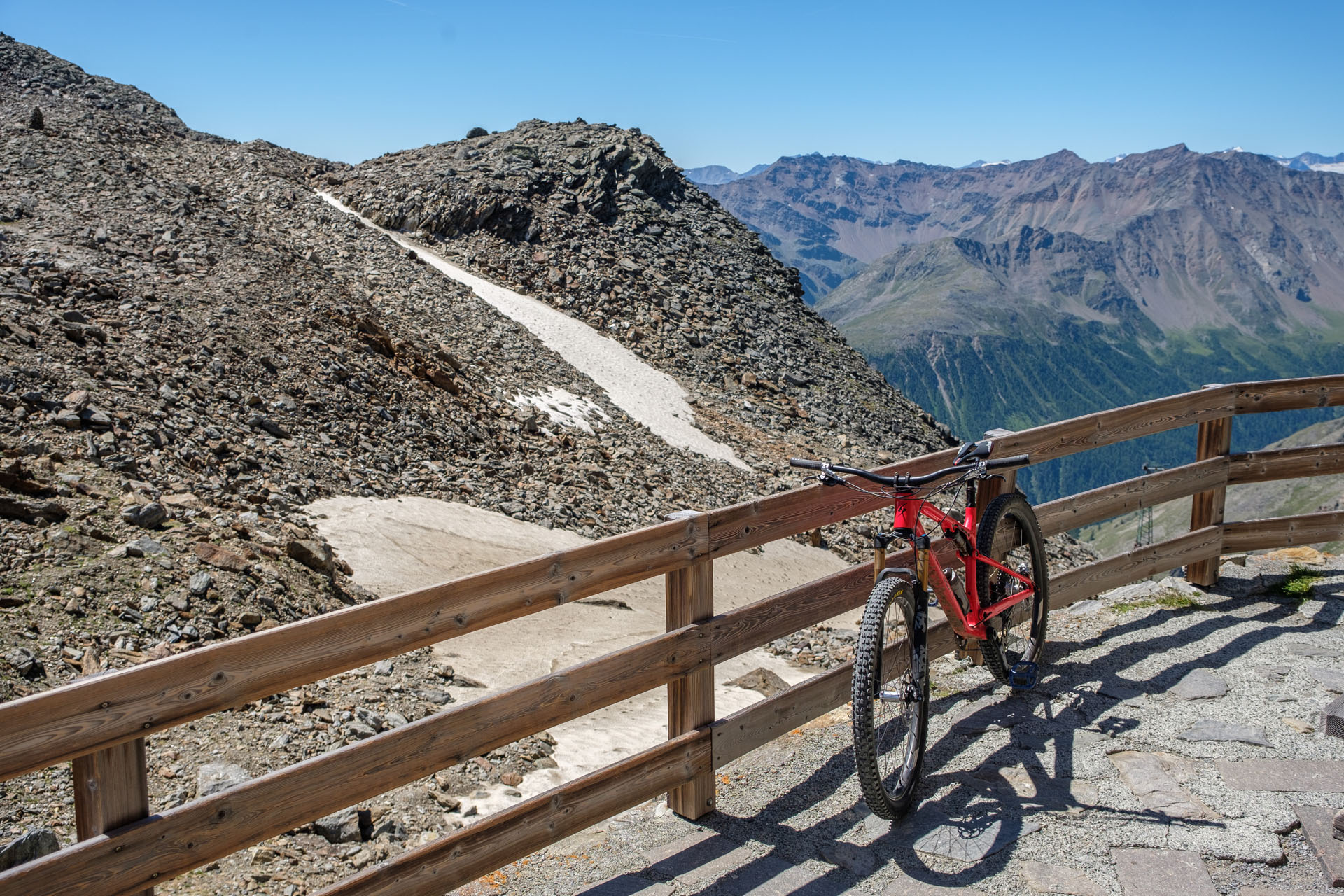
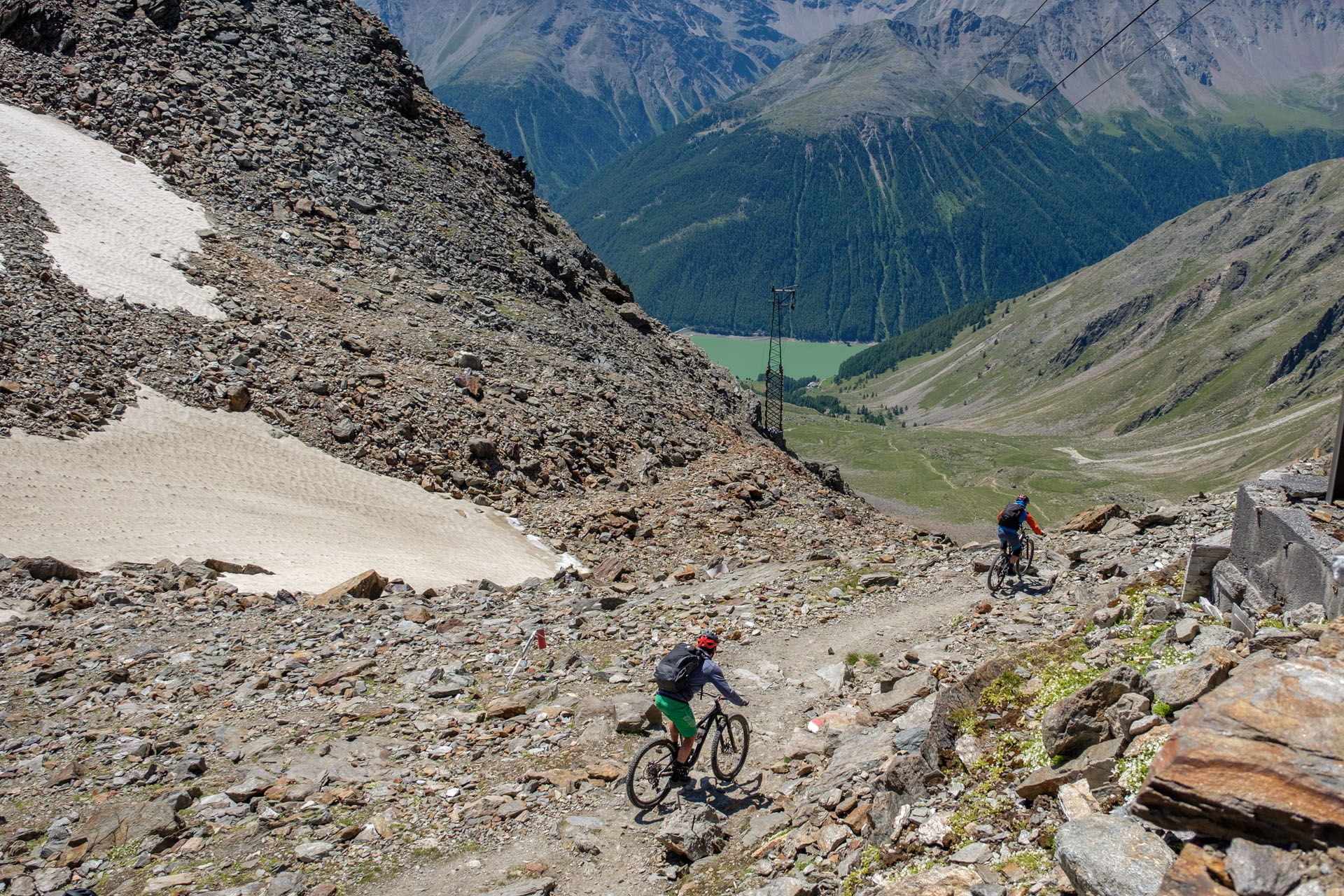
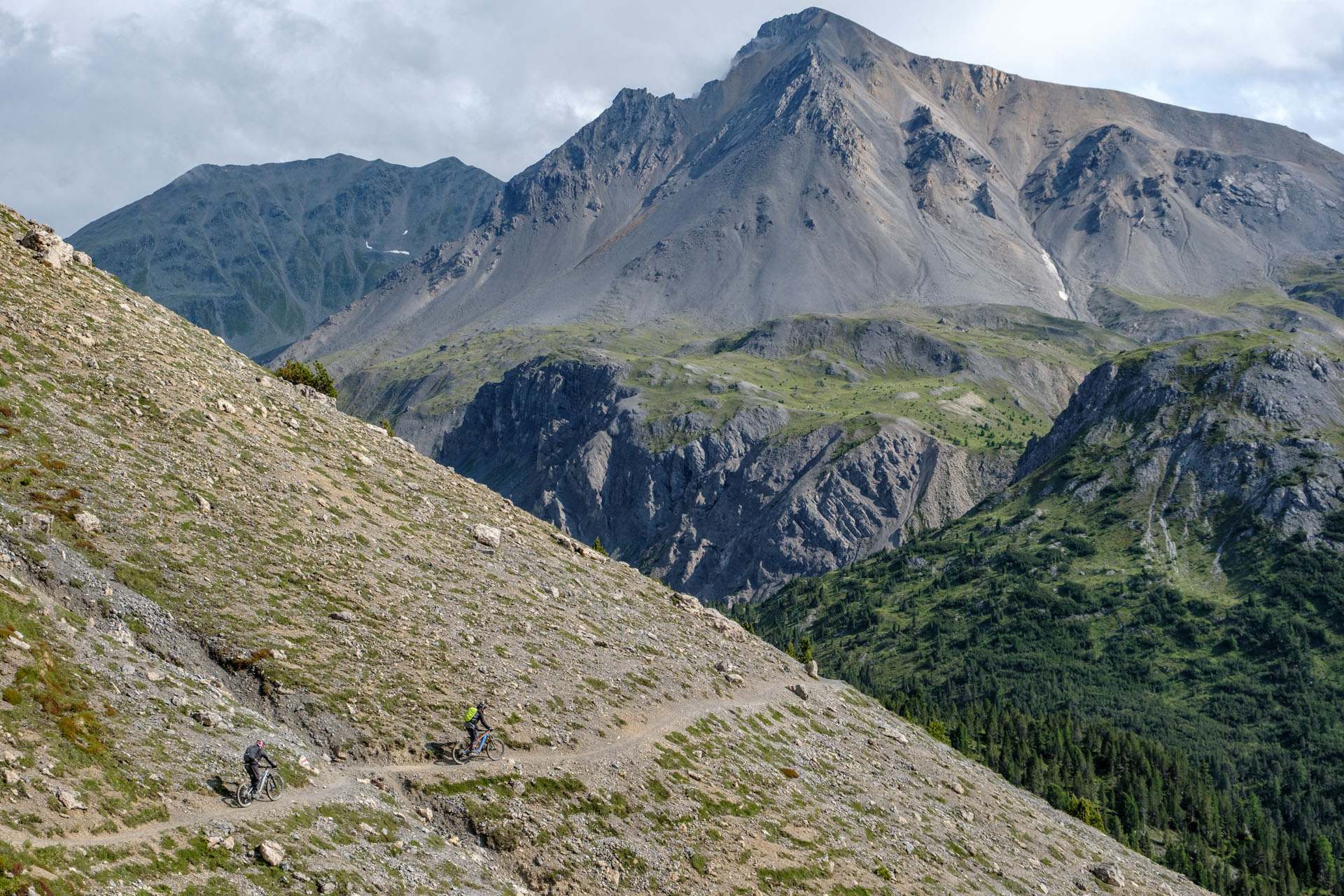
Das Madritschjoch ist einer der höchstgelegenen fahrbaren Übergänge der Alpen. Fahrbar ist aber relativ, gerade der Anstieg ist extrem steil, und die meisten müssen hier schieben. So hat man aber mehr Zeit das traumhafte Panorama mit Königsspitze und Ortler zu genießen. Die Abfahrt startet gleich mit einer kurzen S3-S4 Sektion, wird aber dann gleich wieder leichter. Es folgen aber immer wieder Abschnitte im S3 Bereich mit einzelnen S4 Stellen. Wer also 100% fahren möchte braucht eine sehr gute Technik, zum einen um das Material (Schaltwerk) zu schonen und zum anderen sollte man natürlich keinen Sturz in dieser hochalpinen Region riskieren. Zwischen den Schlüsselstellen ist es aber super flowig und der großteil der Abfahrt liegt im S2 Bereich. Das Madritschjoch ist ein absolutes Must Do für jeden Alpenüberquerer und bietet auch im unteren Teil der Abfahrt wenn man talauswärts ins Vinschgau fährt noch endlose flowige Trails.
Zusammengefasst: Die Abfahrt ist anspruchsvoll und technisch, nichts für Anfänger, aber ein absolutes Highlight für erfahrene Biker. Das Madritschjoch ist auch der höchste Punkt unserer E-Enduro Transalp.

3. Pfunderer Joch – Der Transalp Klassiker
Region: Zillertaler Alpen
Höhe: 2.568 m
Höhenmeter: ca. 1.300 hm
Schwierigkeit: S2–S3
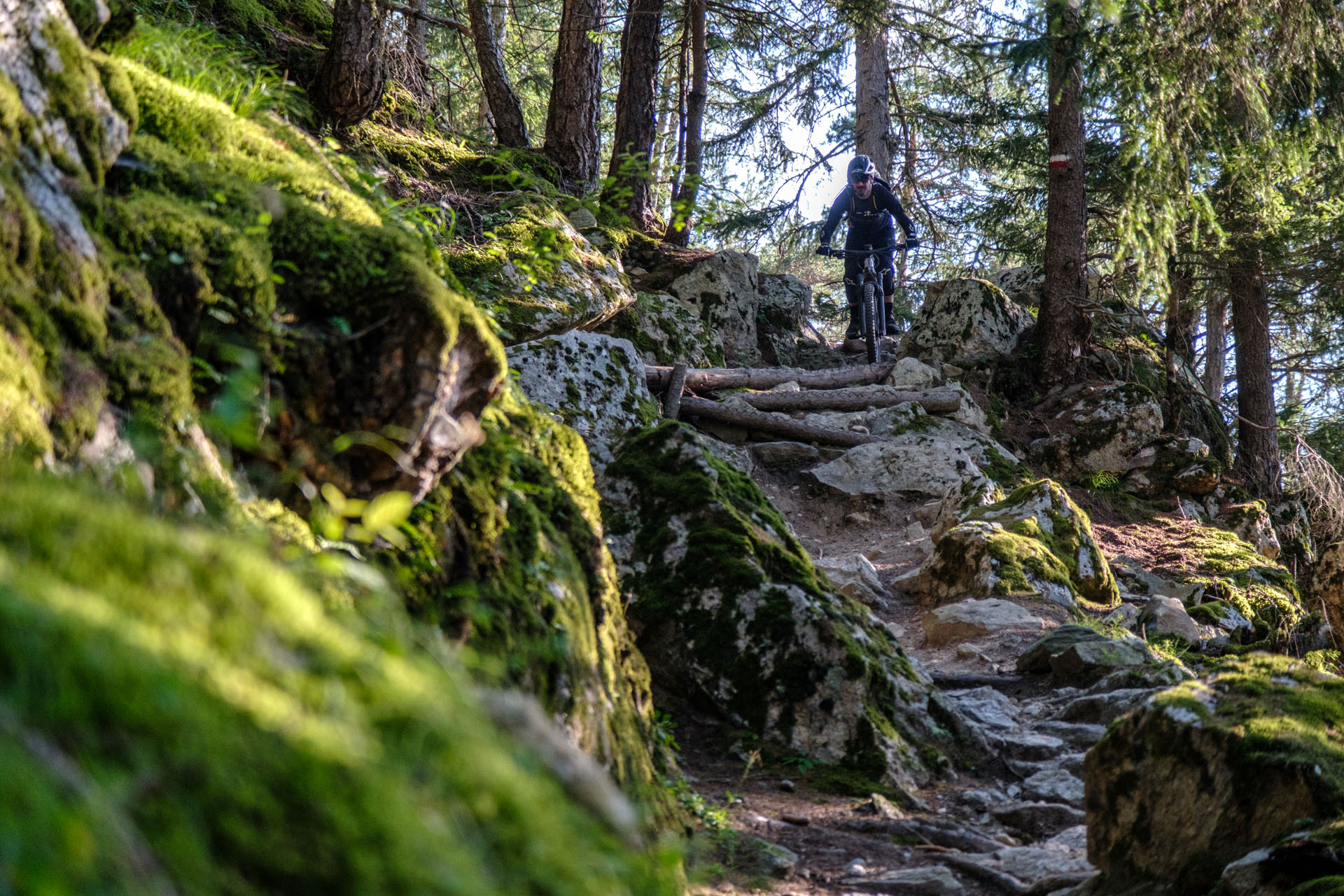
Das Pfunderer Joch ist vermutlich DER klassische Transalp-Übergang. Es ist die logischste und eleganteste Verbindung zwischen den Zillertaler Alpen kommend vom Pfitscher Joch bzw. den Brennerbergen und den Dolomiten. Der Anstieg vom einsamen Pfitschertal ist lang und schön, im oberen Teil gibt es einen tollen Uphill Trail. Die Abfahrt hat alles von Super Flow bis zu einigen Spitzkehren. Wen euch der Übergang zu einfach war, könnt ihr kurz vor der Ortschaft Pfunds noch über das Eisbruggjoch weiter (S4). (Eine Übernachtung auf der Gampielalm ist dabei sehr zu empfehlen). Die meisten fahren von hier aber nach Bruneck und über den Kronplatz weiter in die Dolomiten.
4. Montozzo Scharte – Flow und Geschichte
Region: Ortlergruppe / Tonale
Höhe: 2.613 m
Höhenmeter: ca. 900–1.200 hm
Schwierigkeit: S2
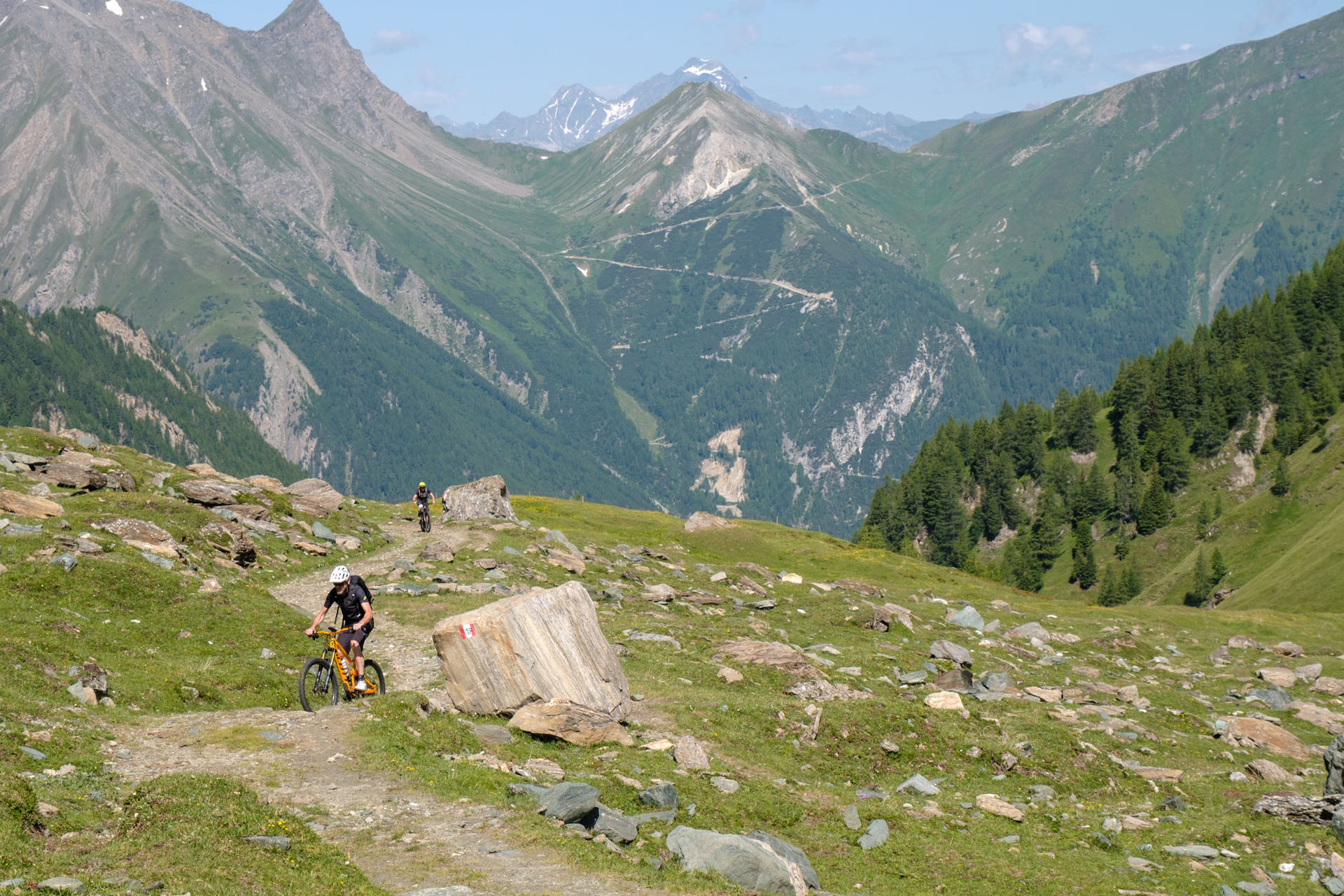
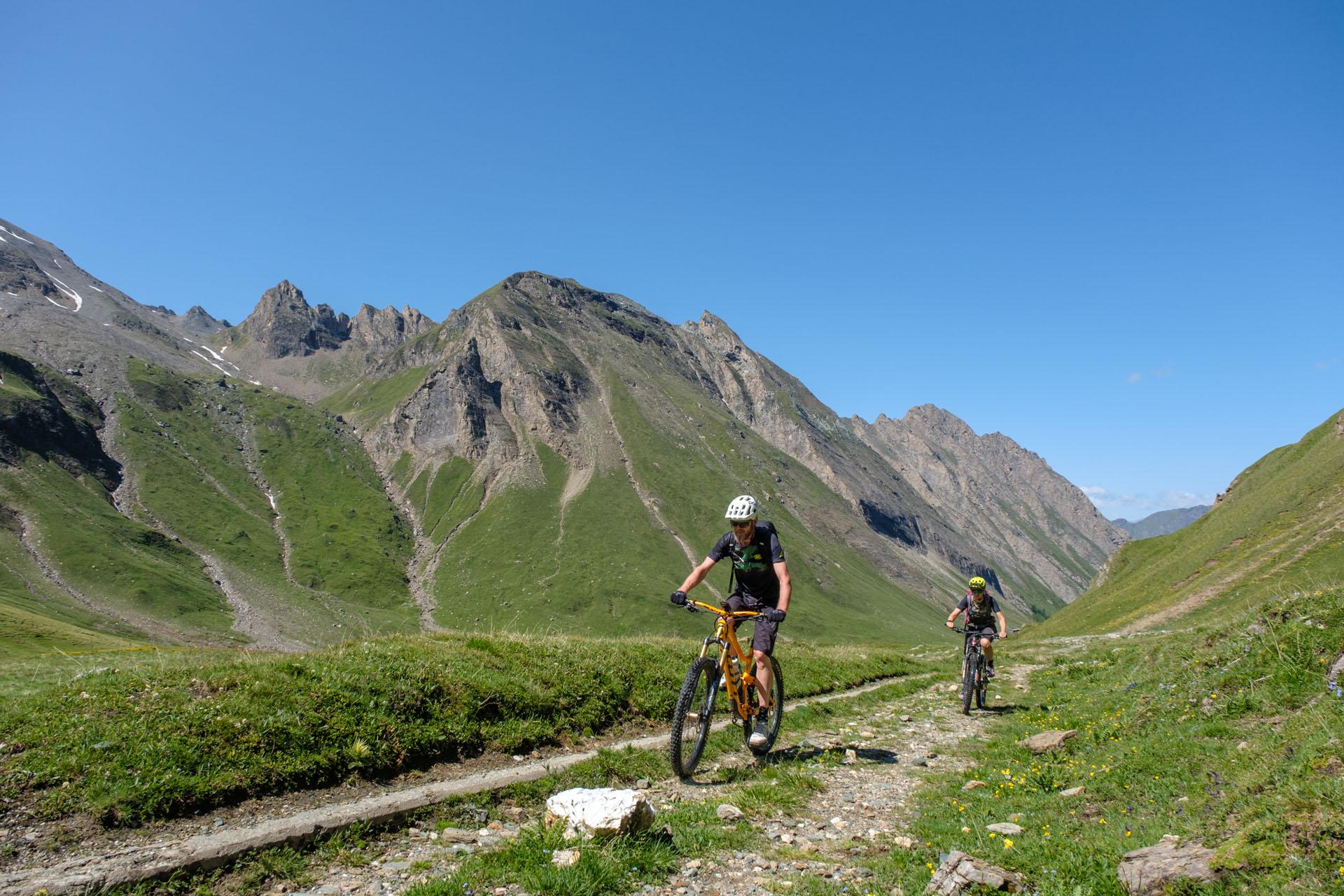
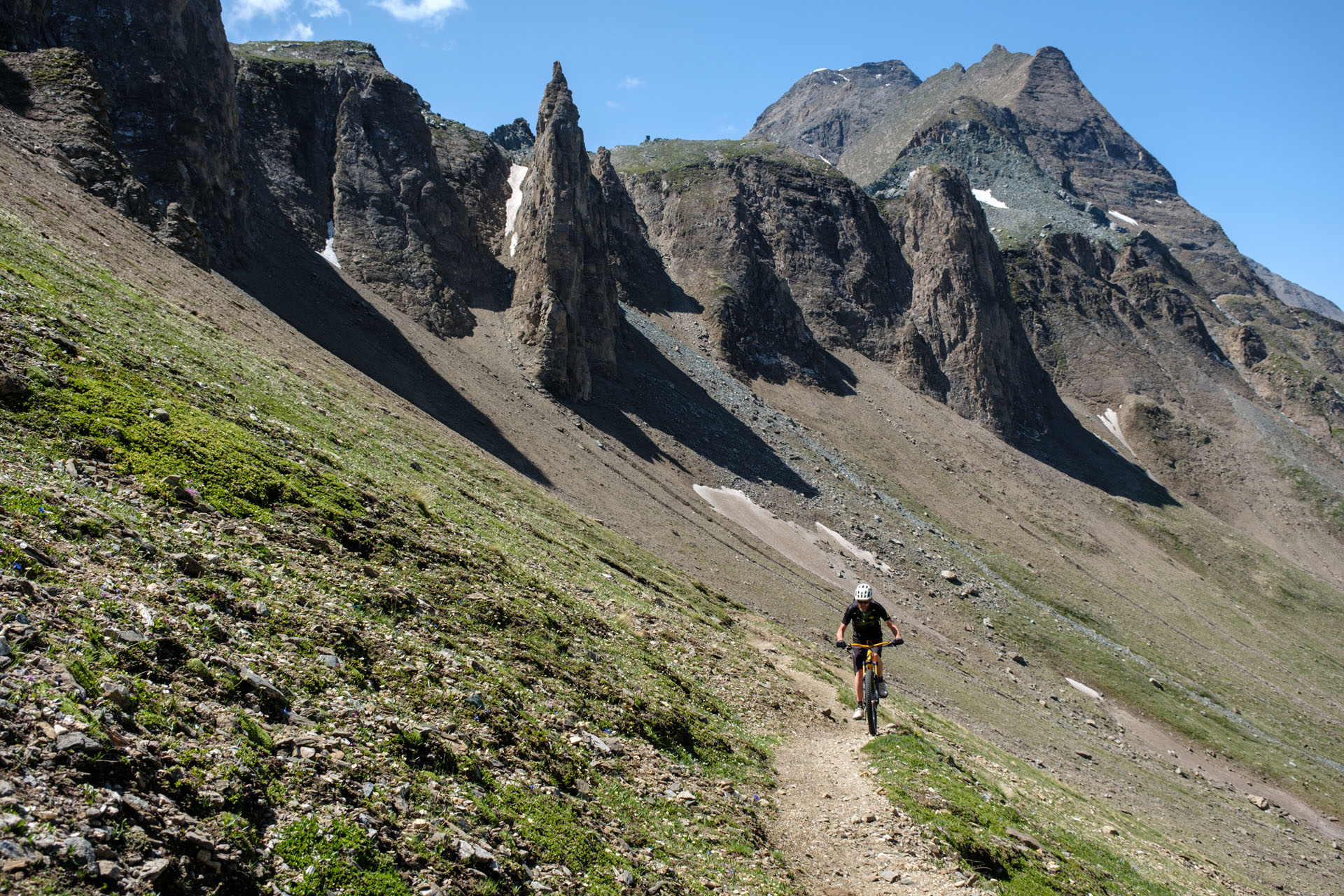
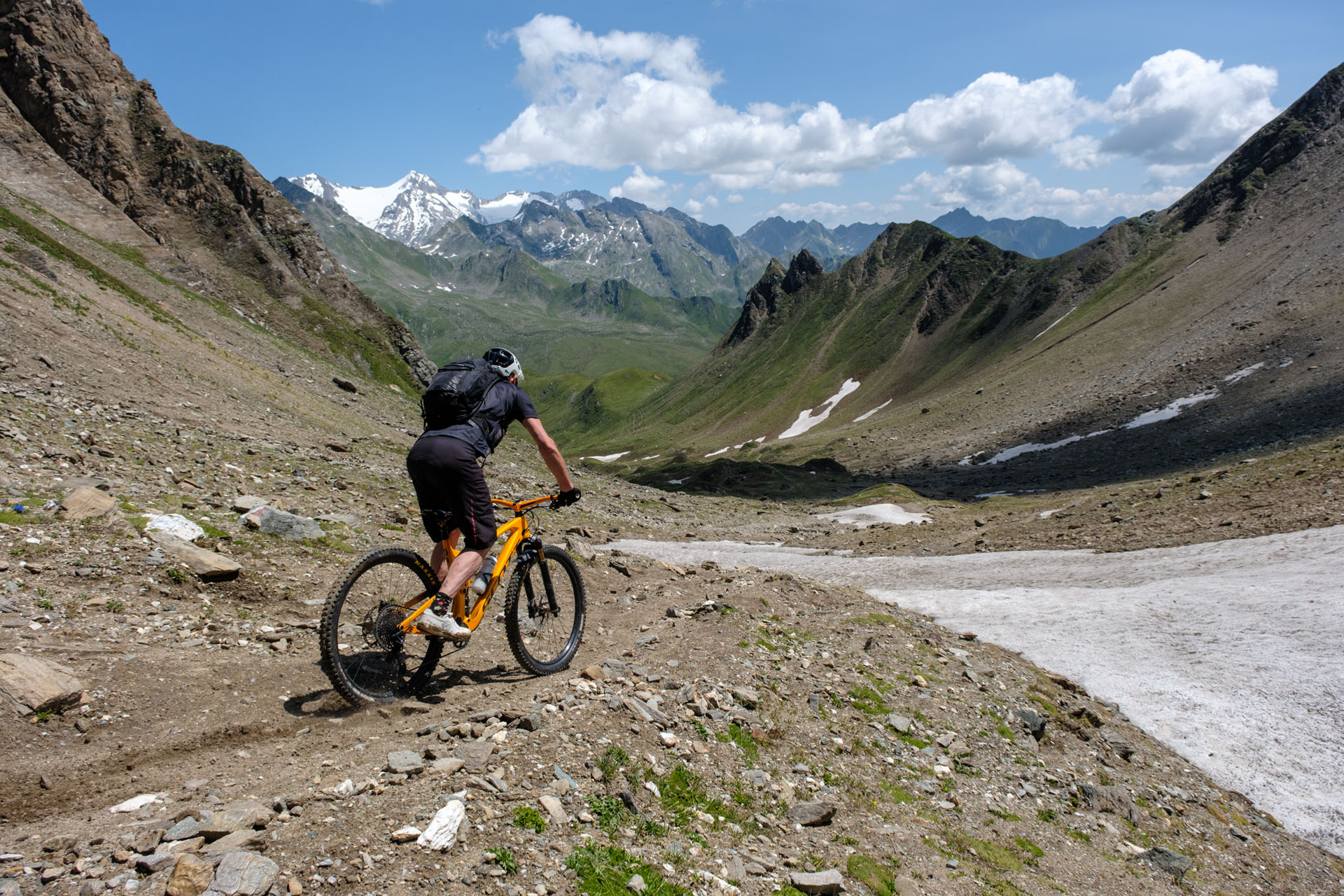
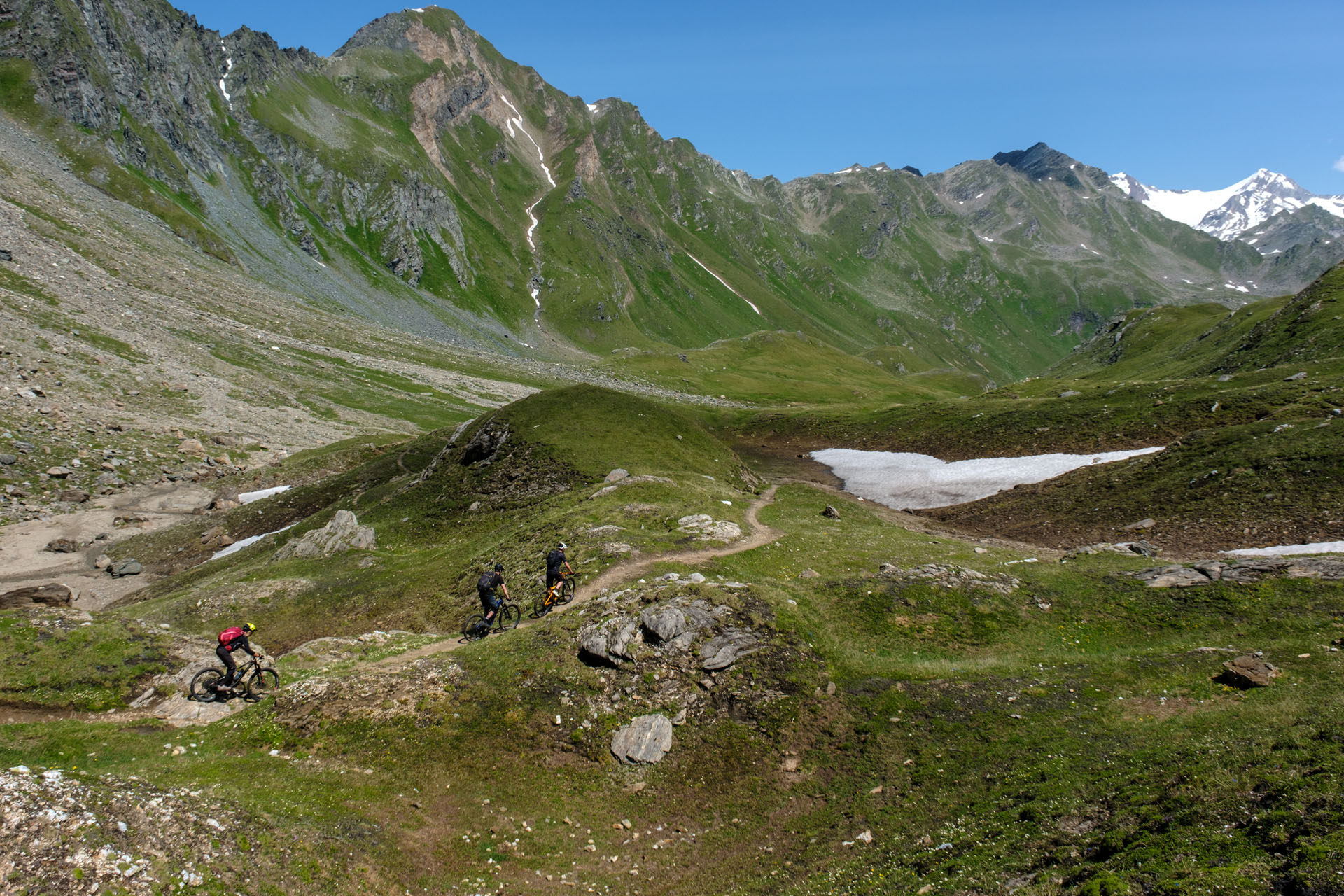
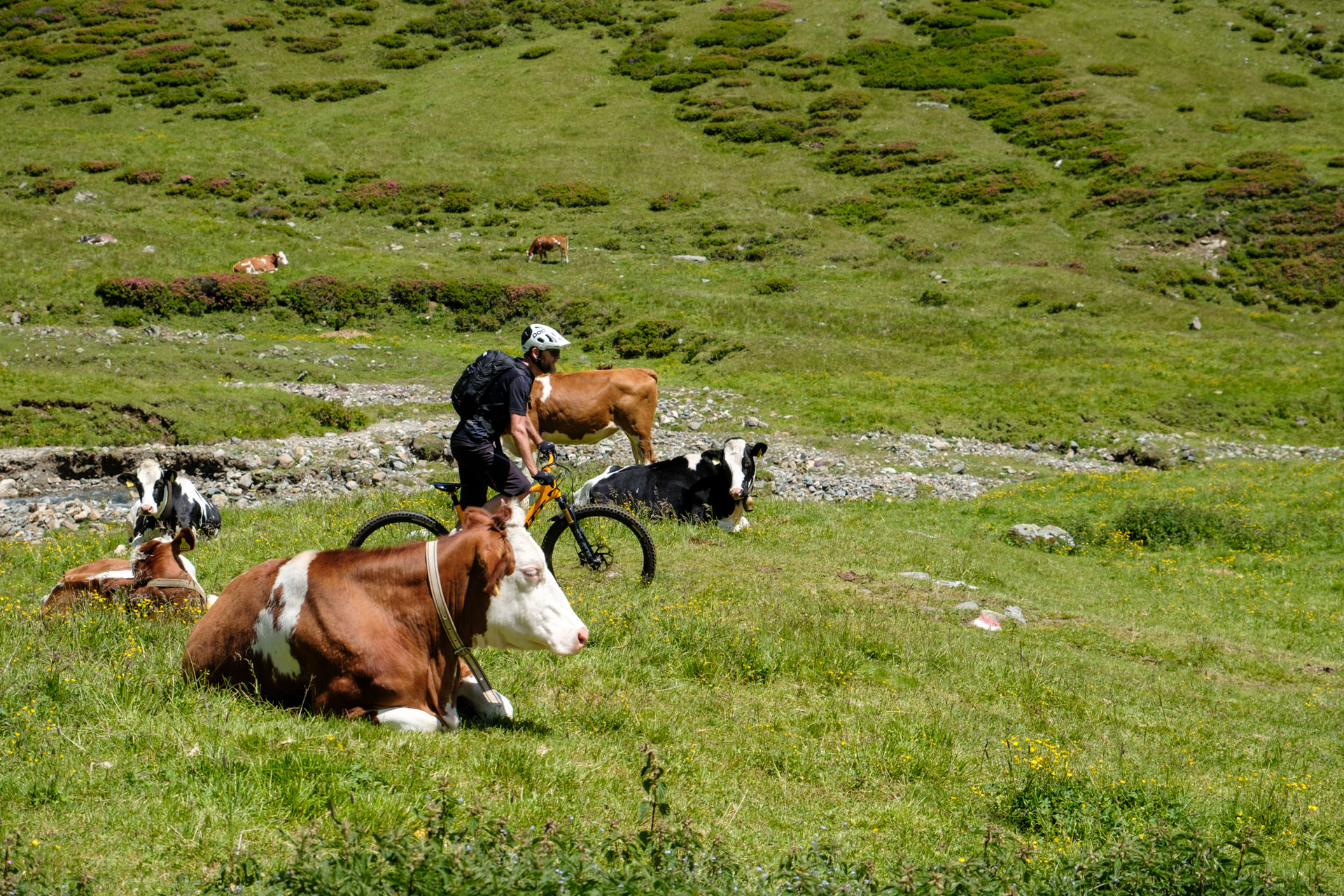
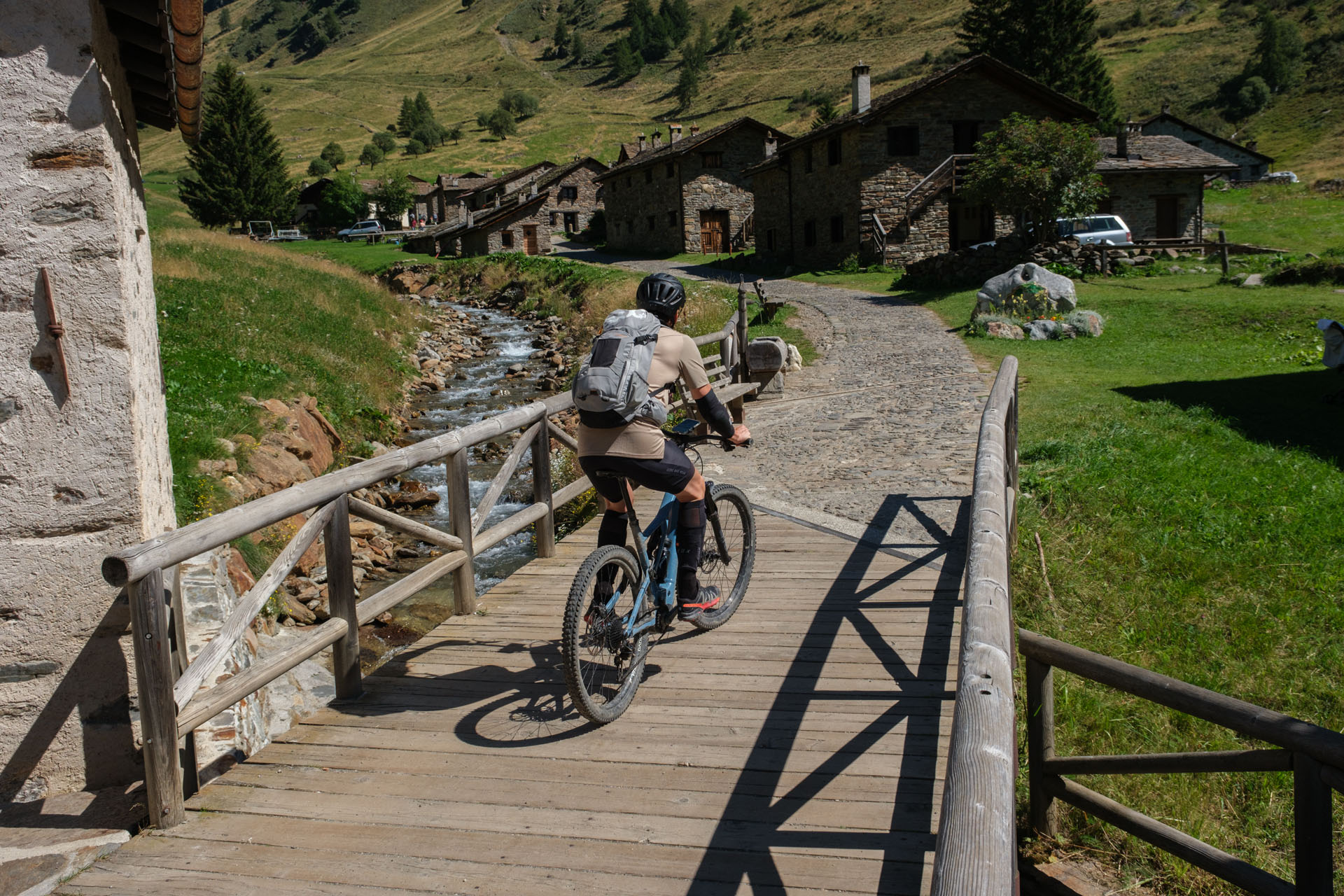
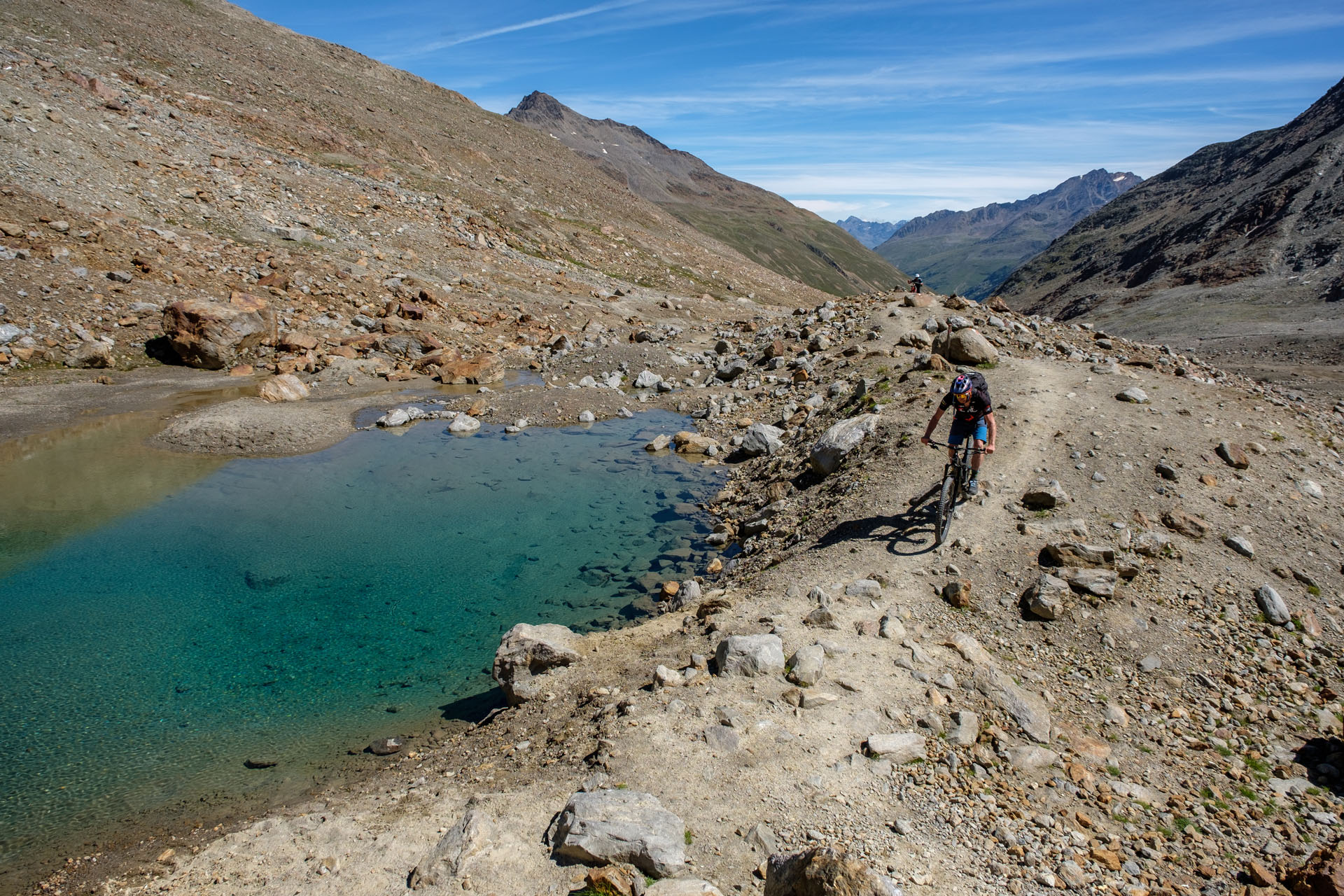
Die Montozzo Scharte ist ein Klassiker, der oft links liegen gelassen und über den Passo Tonale umfahren wird. Historische Militärwege aus dem ersten Weltkrieg treffen hier auf flowige Trails und bieten eine perfekte Mischung aus Fahrspaß und alpiner Landschaft. Man schlängelt sich vom Käsereidorf Case die Viso auf einer alten Militärstraße bis hoch zum Rifugio Bozzi. Von dort schiebt man 20min auf die Scharte. Die Abfahrt zum tiefblauen Lago Pian Palù ist ein absolutes Landschafts- und Trailhighlight. Es startet oben superschnell im S1 Bereich, und führt dann über abwechslungsreiche technische S2+ Sektionen bis ans Seeufer.
Ideal als Verbindungsübergang von der Ortlerregion zur Brenta und deutlich flüssiger zu fahren als viele hochalpine Übergänge ist dieser Pass fixer Bestandteil unserer Klassiker Transalp.
5. Similaunhütte – Der Extrem-Klassiker
Region: Ötztaler Alpen
Höhe: ca. 3.000 m
Höhenmeter: ca. 1.300 hm von Vent
Schwierigkeit: S3–S4, extrem alpin
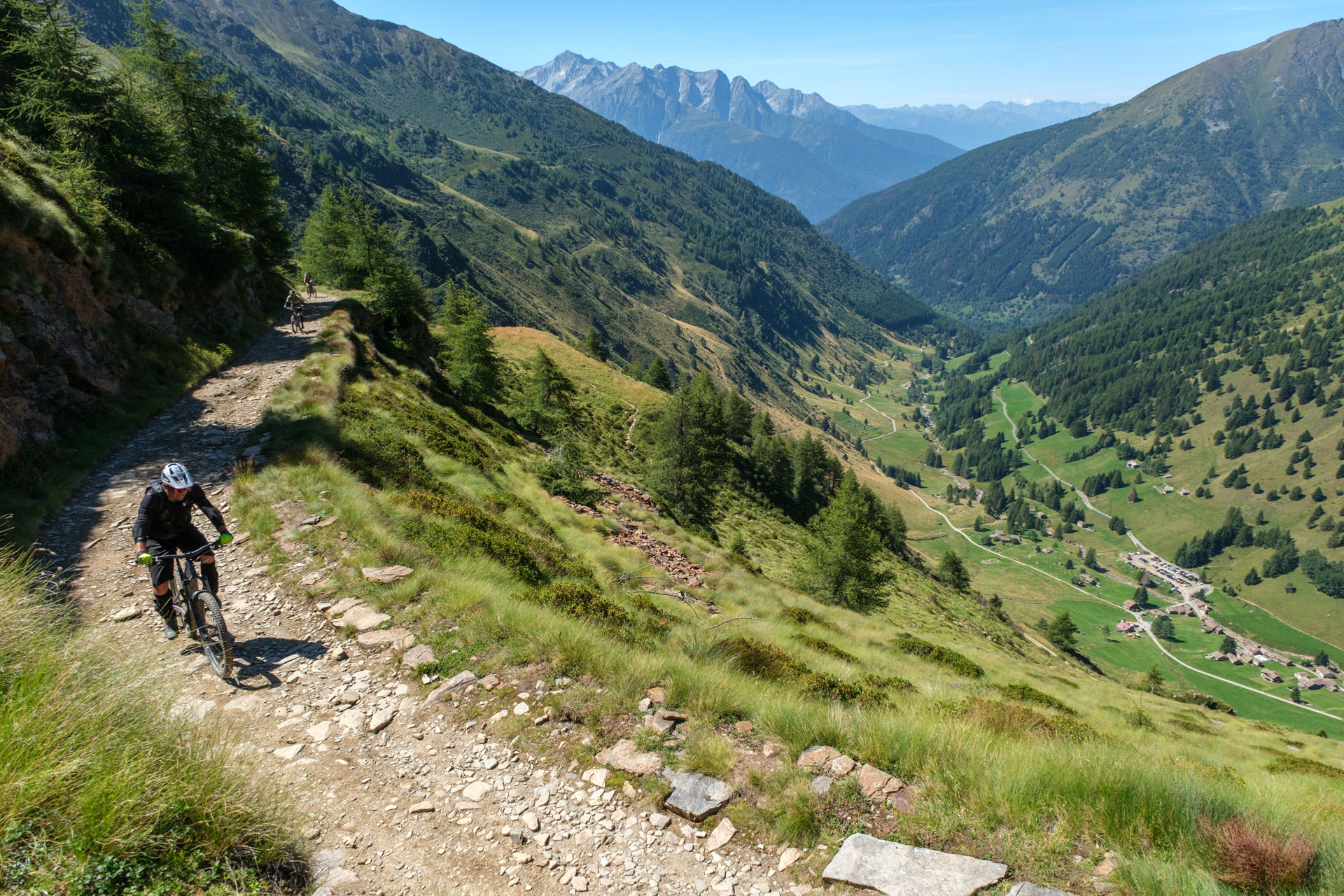
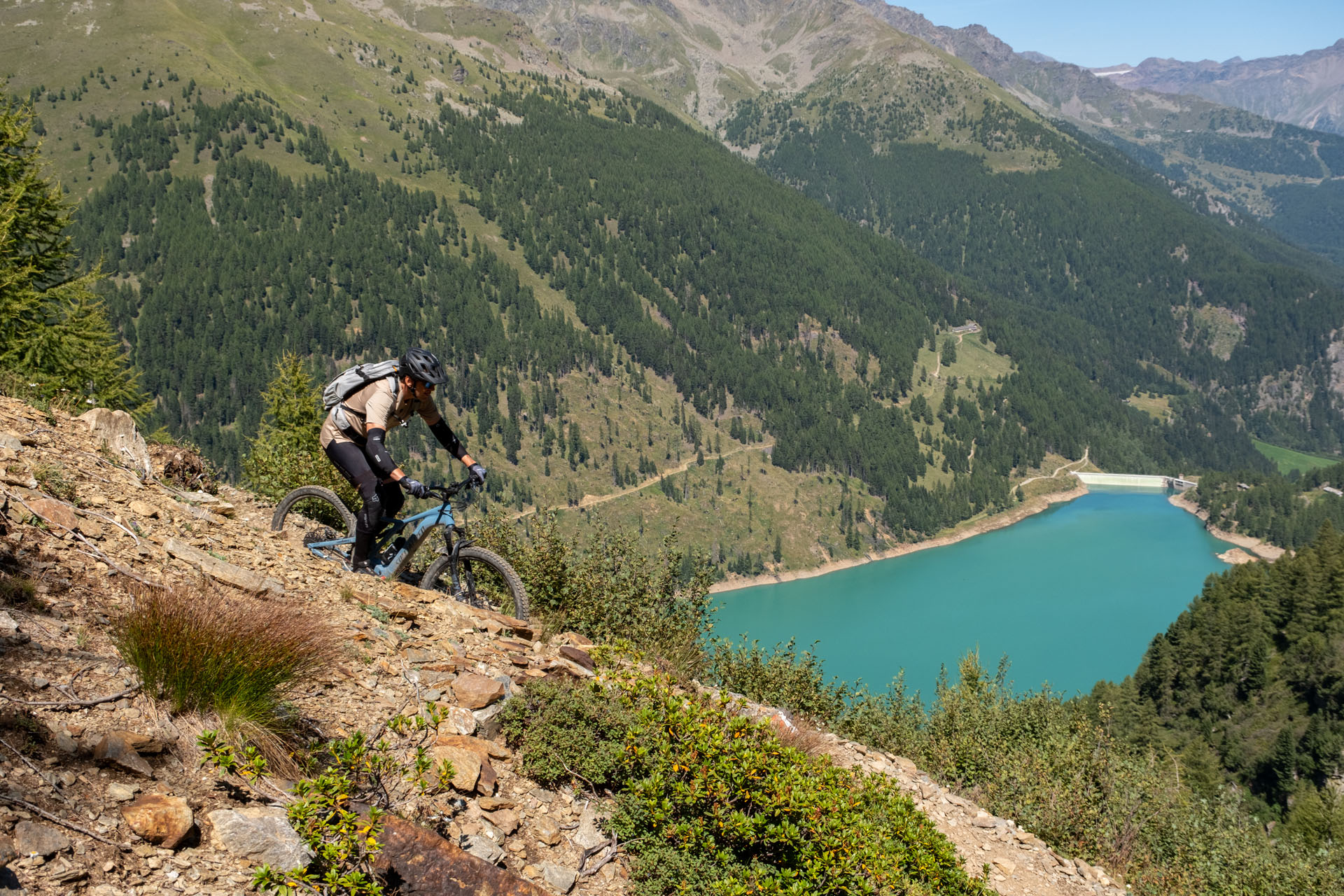
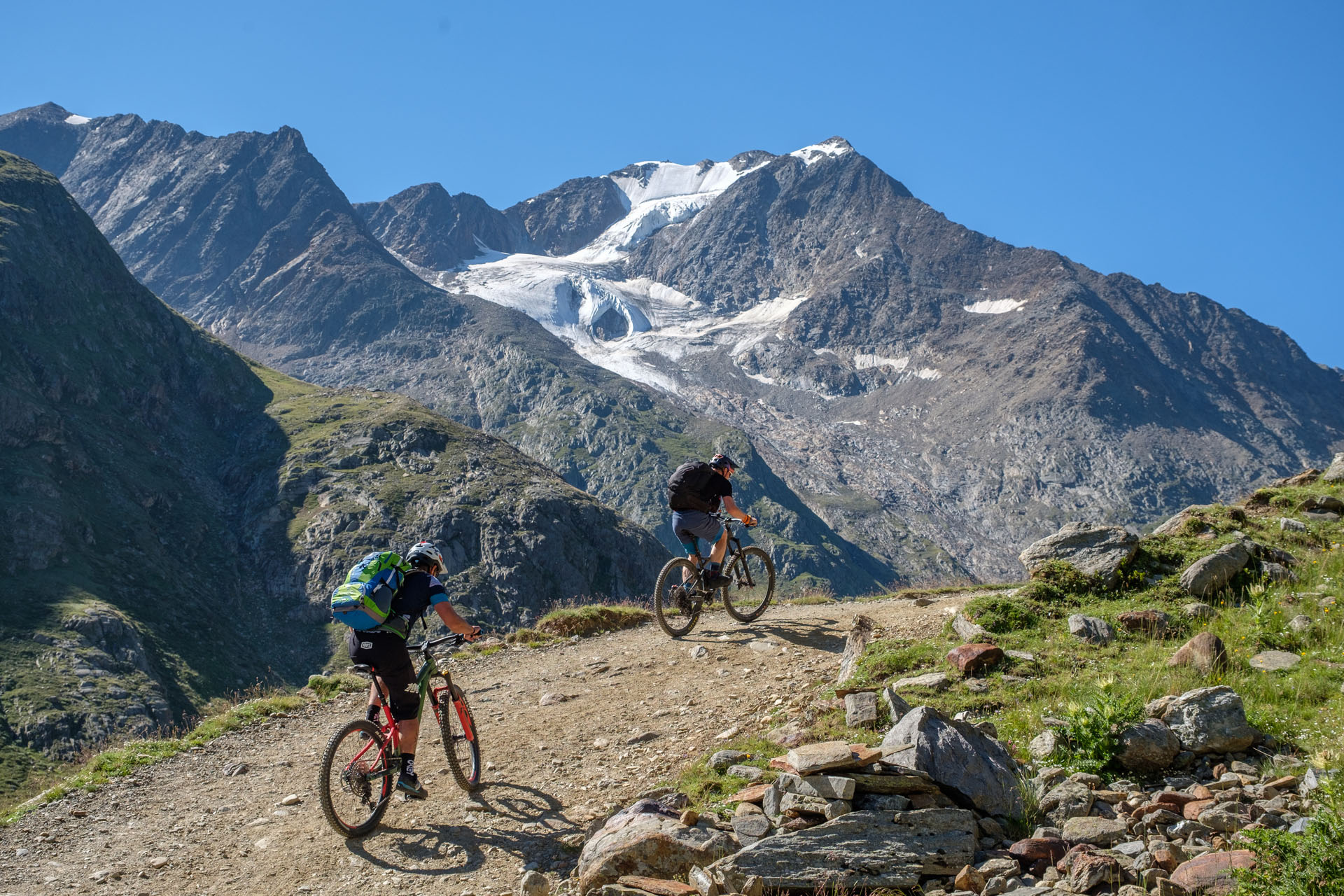
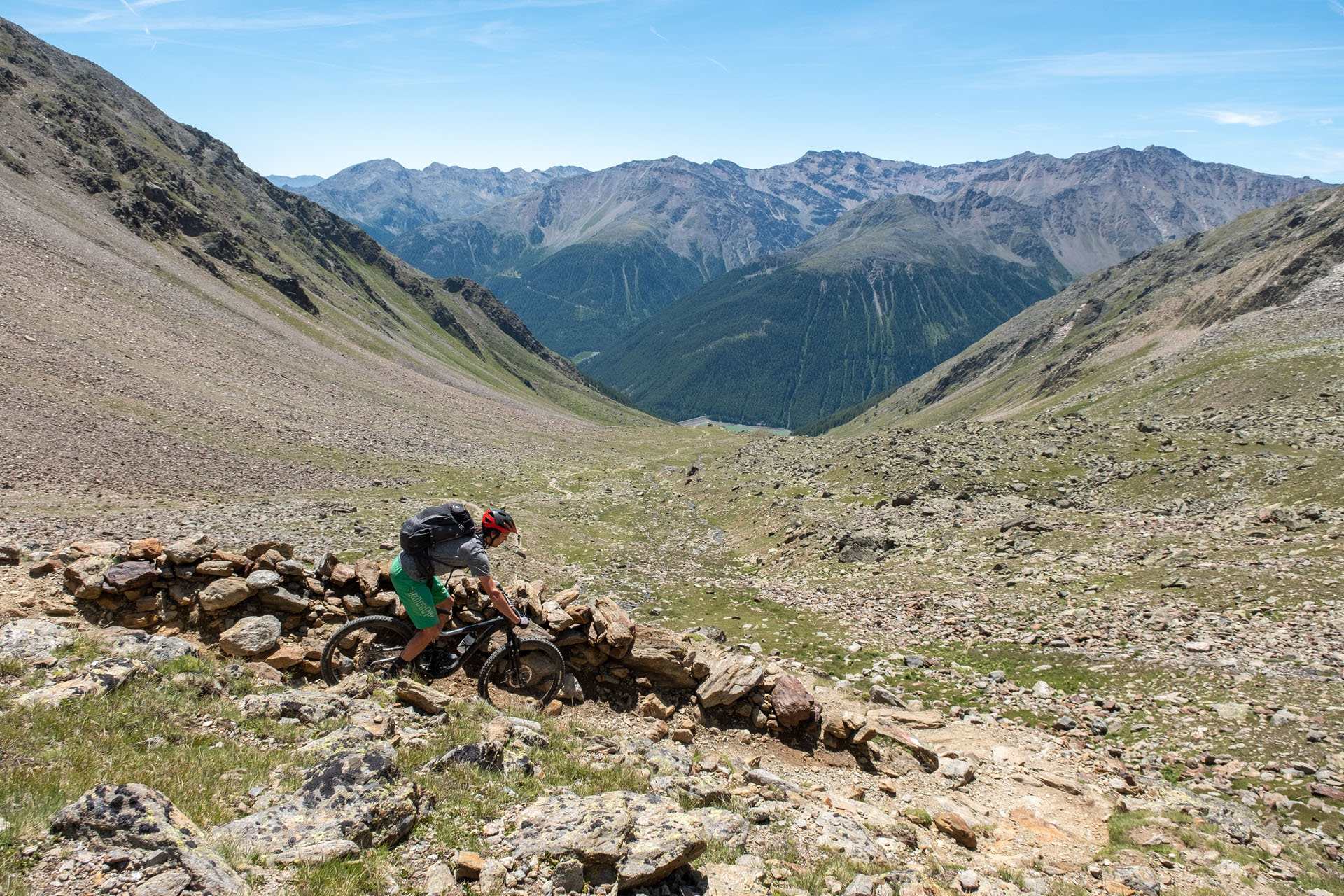
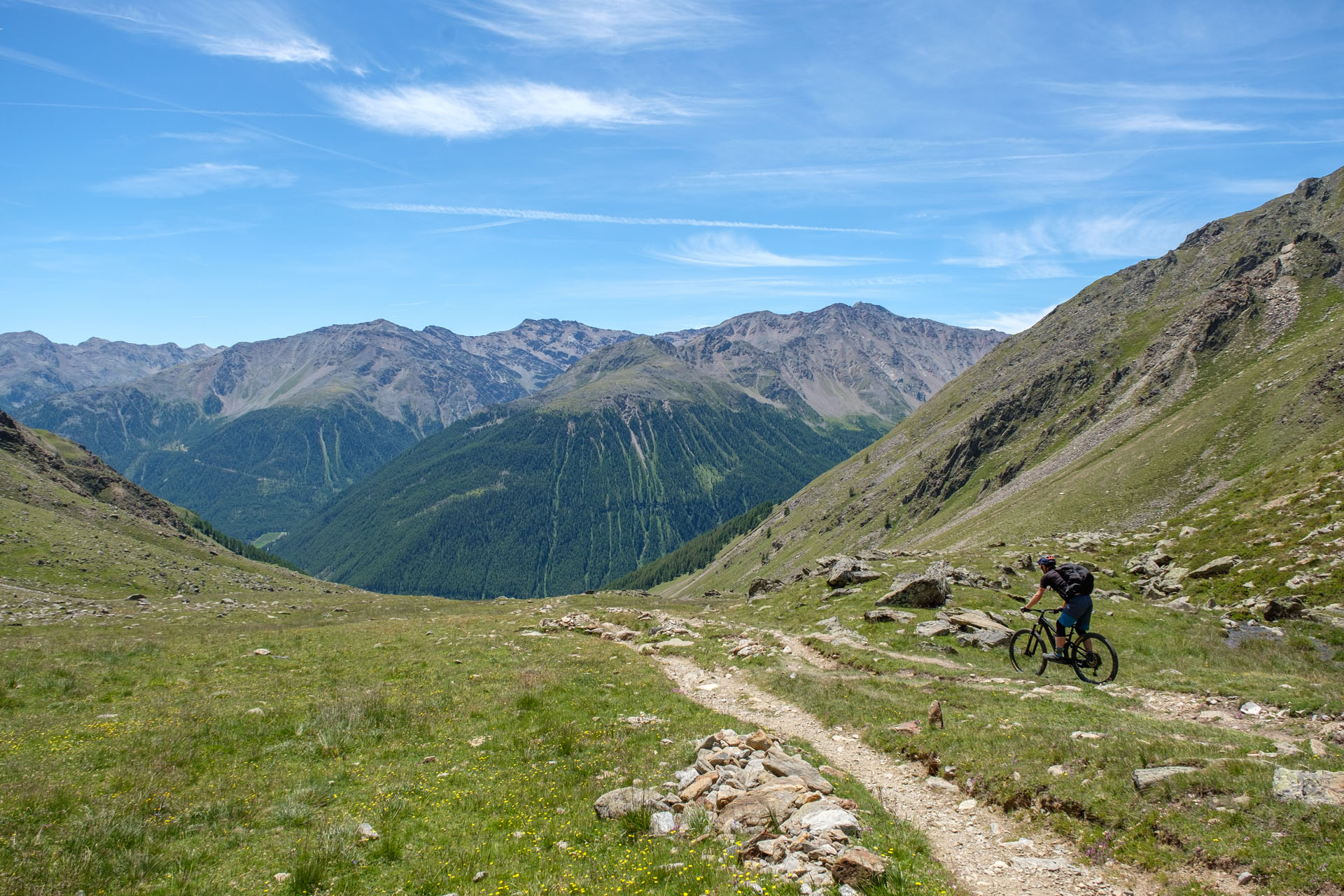
Der Übergang über die Similaunhütte ist nichts für schwache Nerven, aber durch das beeindruckende Panorama der Ötztaler Gletscherwelt und die fordernden Trails eine Traumtour für erfahrene Biker. Bis zur Martin Busch Hütte geht es auf Schotterweg, ab dort dann auf Trail weiter. Für starke (oder motorisierte) Biker ist fast alles fahrbar. Vom höchsten Punkt, der Similaunhütte, geh es dann erstmal 300 Tiefenmeter fast durchgehend im S4 Bereich bergab. Für die meisten eine Schiebepassage. Danach ist es aber geschafft und es folgt noch jede Menge Trail im S2 Bereich bevor man sich entscheiden muss ob man runter ins Vinschgau fährt, oder wieder aufwärts zum Eisjöchl (Unser Tipp).
Wer hier drüber fährt, is ein richtiger Transalp Adventure Biker.
Bonustipp: Valbella – Einsam und unterschätzt
Region: Engadin / Sesvennagruppe
Höhe: ca. 2.600 m
Höhenmeter: ca. 1.000–1.300 hm
Schwierigkeit: S2
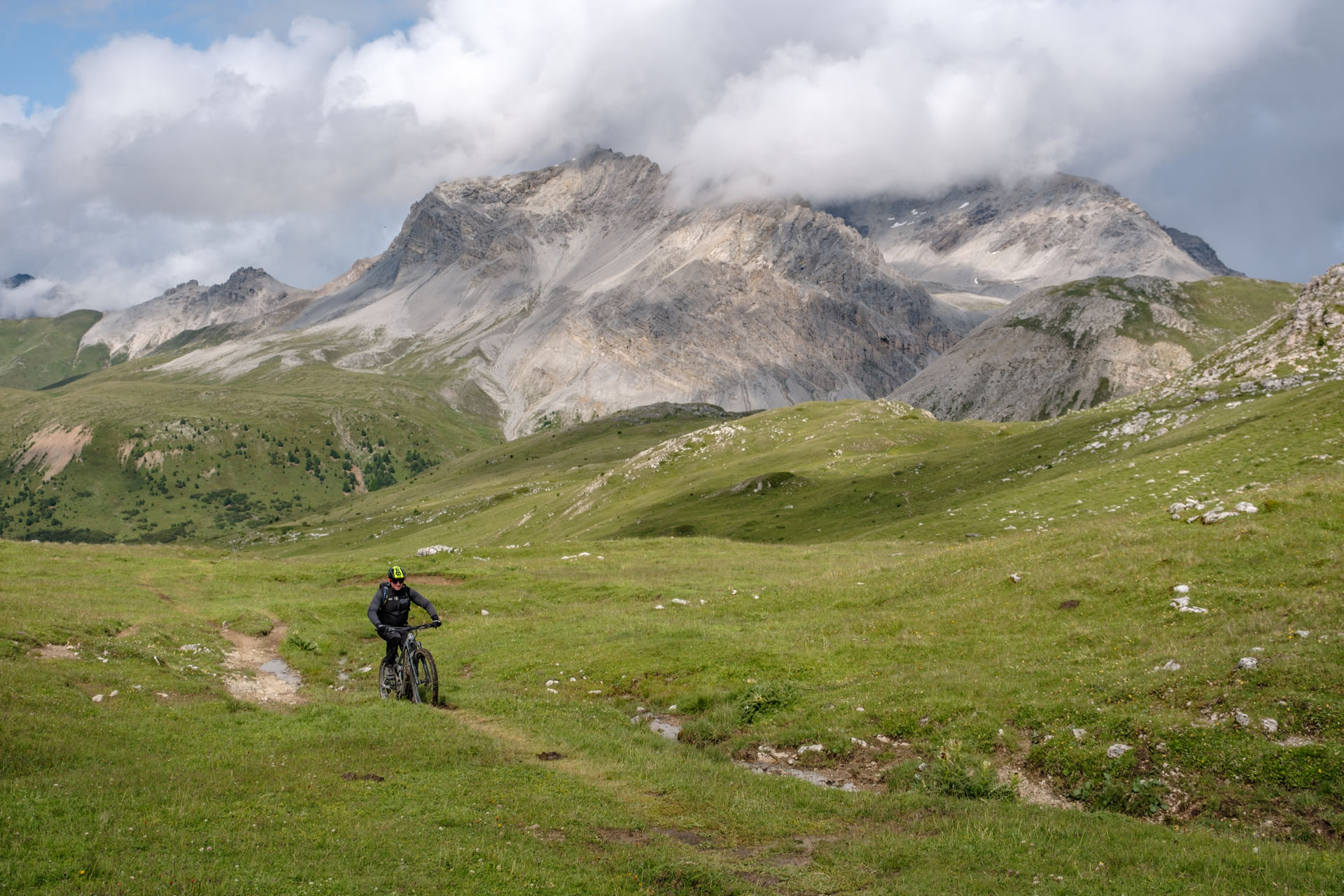
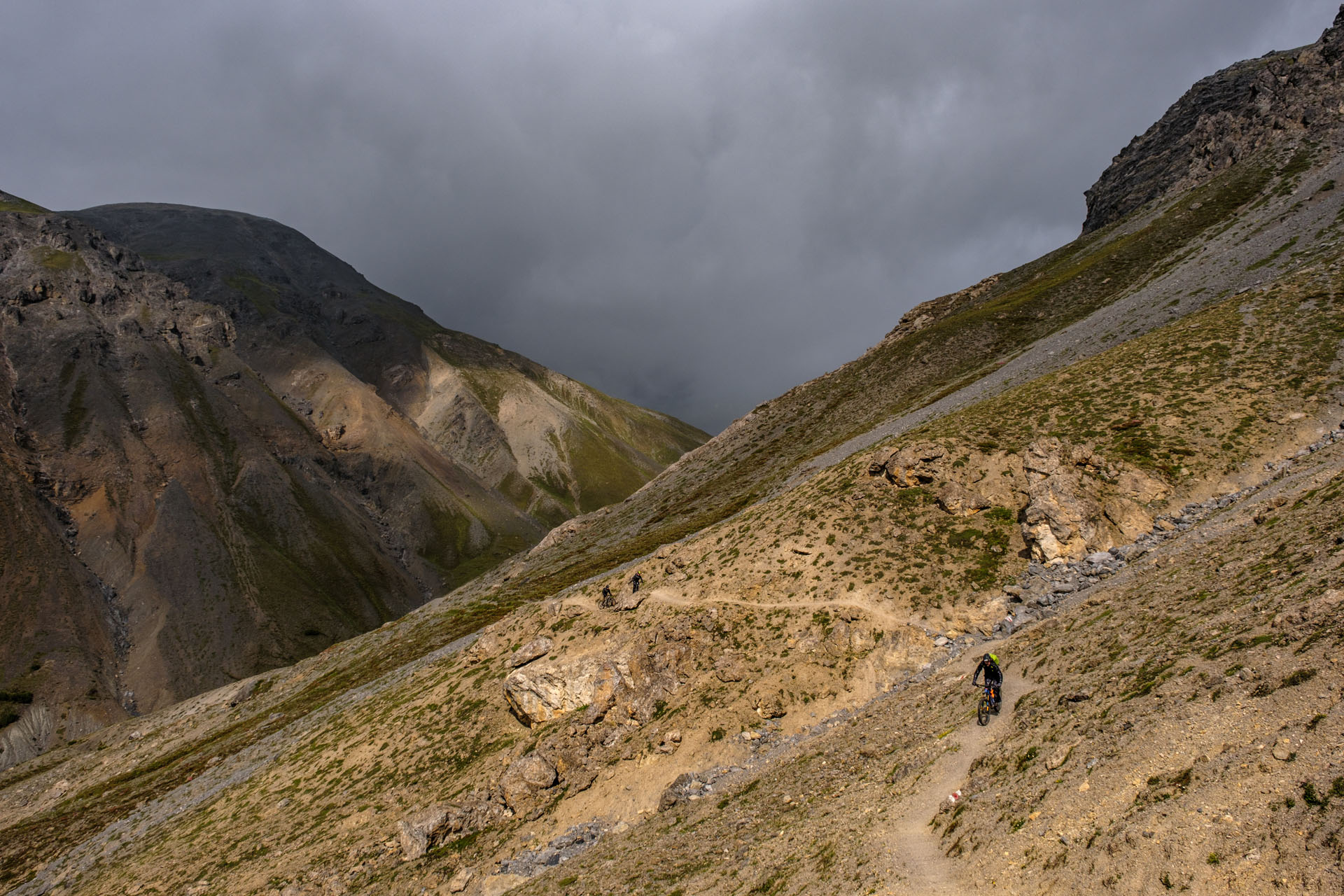
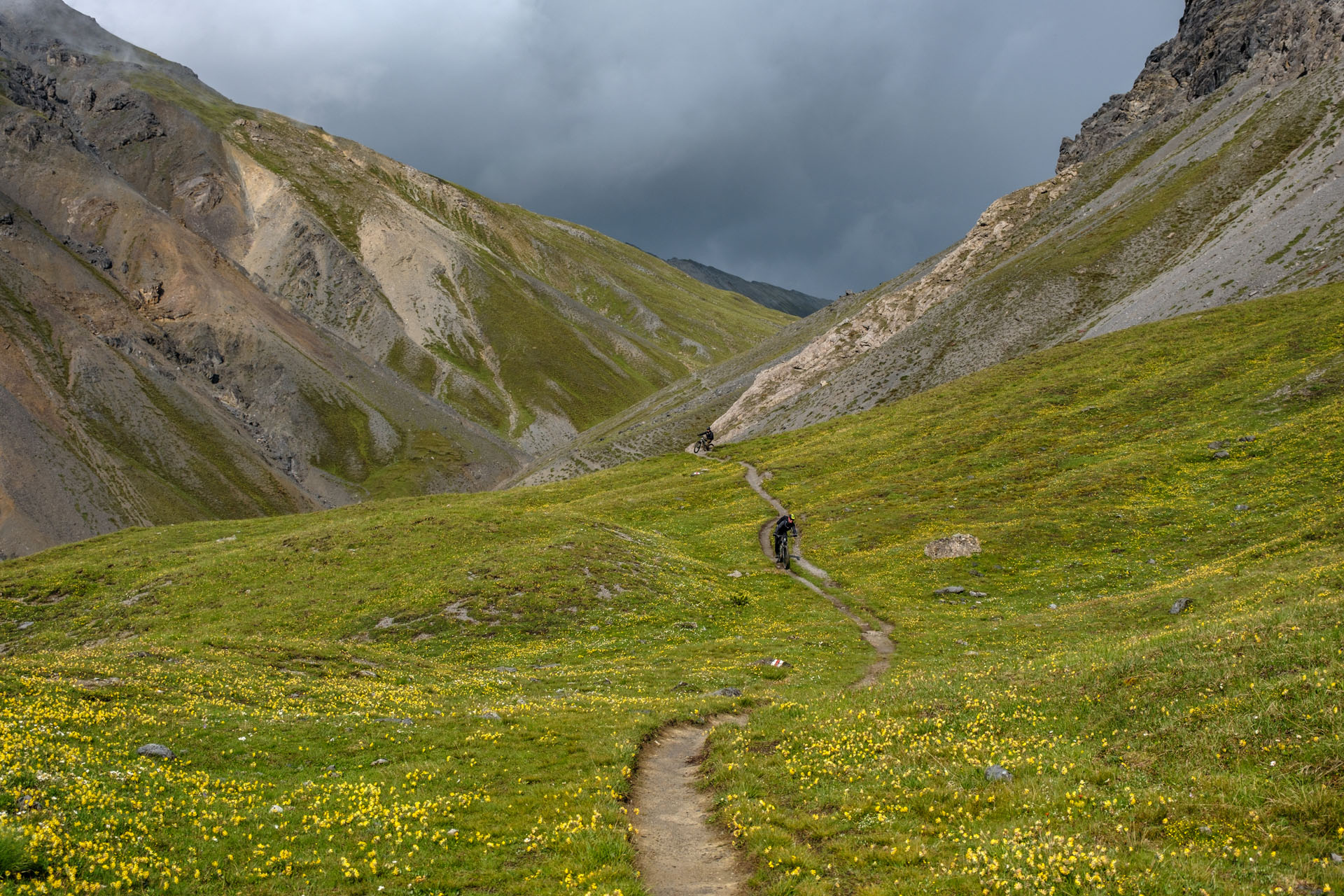
Valbella ist der Geheimtipp unter den Transalp-Übergängen. Weniger bekannt, deutlich ruhiger und mit unglaublich schönen Trails. Die Verbindung zwischen Passo Costainas und Ofenpass bietet alles, was man sich wünscht: Natur, Einsamkeit und superflowige Abschnitte. Ein 5 Sterne Trail den man leicht mal übersieht.
Perfekt für alle, die die besten Varianten der Klassiker machen wollen.
Fazit: Die perfekte Transalp ist die richtige Kombination
Jeder dieser Übergänge hat seinen eigenen Charakter – von flowig bis extrem alpin. Die Kunst einer guten Transalp liegt darin, diese sinnvoll zu kombinieren und auf das eigene Level abzustimmen.
👉 Wenn du die Transalp nicht selbst planen willst oder dir eine perfekt abgestimmte Route wünschst, findest du hier alle Infos zu unseren Alpencross Touren:
Transalp Touren & Alpenüberquerungen mit dem Mountainbike
🚵♂️ So holst du das Maximum aus deinem Alpenabenteuer heraus.