Getting used to the bike
This article is part of a riding technique series, which is intended to give participants in our riding technique courses a summary of relevant content to read. Of course, there is sure to be one or two good tips for everyone else as well.
For many, biking is not just a hobby, but a passion. Some tinker and fine-tune their perfect suspension setup, while others hop on their bikes and shred the most exciting trails. The recreational riders among us savor the refreshing break from daily routines and delight in nature and the scenery. Kids perform tricks and motivate each other with newly learned jumps. Biking is a sport that almost anyone can easily enjoy. Nevertheless, here at Flat Sucks, we have some riding technique tips for you to ensure more safety and even more fun on your bike.
This article is all about “Getting used to the bike” and describes some Basic Safety Skills. In order to minimize the risk of injury, coordination exercises or games are perfect for warming up. With a parkour or slalom, you can motivate yourself and your friends in simple relay games and challenge each other. At the same time, movement experiences are gathered on the bike. It is always important to train both sides and slowly increase from simple to more complex exercises. It is also important to ensure that a suitable practice area is selected in order to be able to guarantee safety.
Pushing the bike
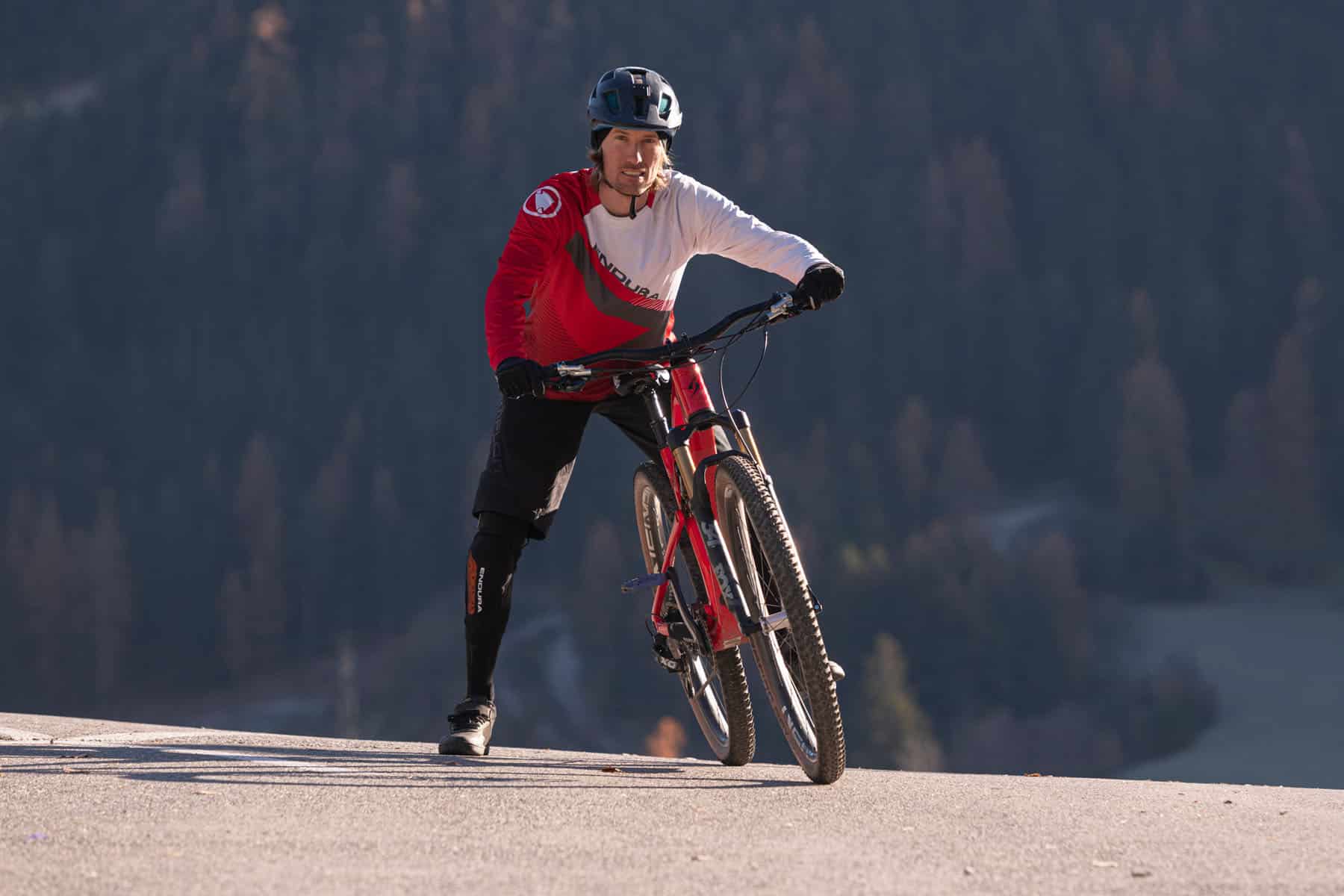
Exercises for pushing the bike are a good way to prepare for situations in the terrain. Especially with long pushing sections, it is advantageous to have a good handling of the bike, so that, for example, changing the wheel side is not an additional challenge. In general, you should always stand on the mountain side and the bike is on the valley side. This is preventive so that you don’t stray from the path yourself and possibly fall. When pushing, always pay attention to the pedal position so as not to hit your shins. You can also vary the position of your hands when pushing. So you can classically hold on to the grips on the handlebars or put one hand on the saddle or both hands to the left and right of the headset. The steeper the climb, the more important it is to stretch your arms so that the force is transferred directly.
Scooting with the bike

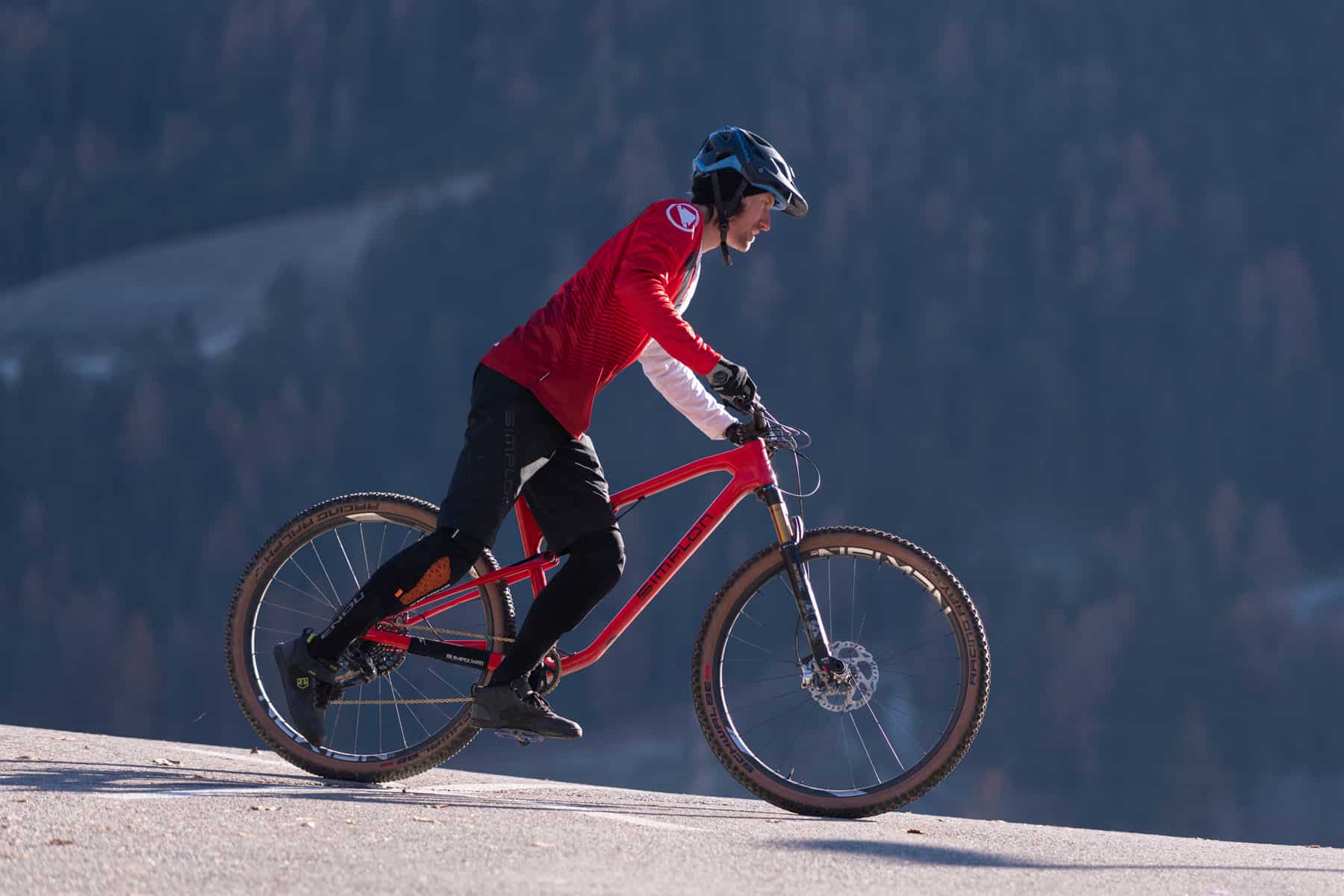
Another good way to get used to your bike is to scoot with it. Scooting is also an important preliminary exercise in cornering technique, especially in pushing technique. Scooting primarily trains the rotation of the hips. One leg is always on the pedal and both hands hold on to the handlebars for the time being. Now you can push off with the free leg. The driving behavior is similar to driving with a classic scooter. When scooting on the bike, however, the center of gravity must be brought over the wheel contact surface. Various tasks offer easier to more complex challenges for young and old. There are no limits to creativity and you can challenge each other with relay games. The feet on the pedal should definitely be changed to train on both sides. The same applies to the side of the bike. At the latest in a slalom you will recognize how different the coordination skills can be on the left and right. You can also vary the terrain selection and increase your coordination.
Coordination and balance on the bike

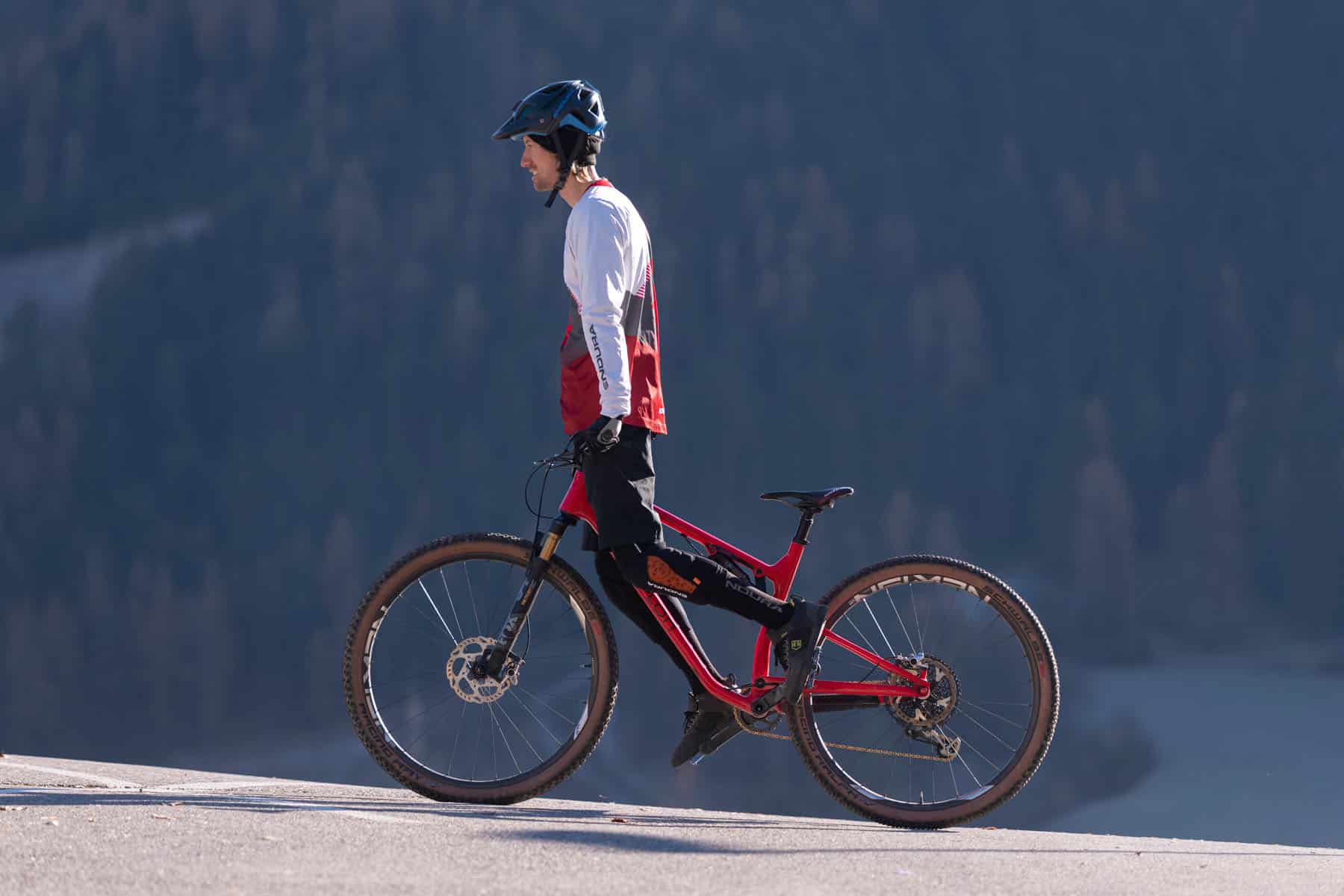


To train coordination on the bike, exercises with different tasks during the ride are ideal. A safe practice area is a prerequisite. Different challenges can be created by placing the hands, legs or by shifting the body position. Above all, games motivate you to train coordination on the bike. This includes, for example, the game “Chinese Whispers”. All bikers ride one behind the other and the first one demonstrates an exercise. Everyone else has to recognize the exercise and imitate it silently.
Coordination on the bike must be trained in order to be able to act safely in special situations. Let’s think of an unexpected situation, and it happens that a leg slips off the pedal or a hand slips off the handlebars, coordinated bikers may be able to compensate for this imbalance and, in the best case, prevent a fall. In road traffic, it is also assumed that you can drive safely with one hand to give a hand signal. Grabbing the water bottle while driving, or simply opening the zipper of the jacket are small advantages of the coordination exercises.
With further balance exercises you train your own balance. Exercises like the track stand are good here. You can make this easier at the beginning by leaning the front wheel sideways against an obstacle. A next step would be to drive straight against a wall and try to balance. Step three would then be to practice slightly uphill. You are not standing completely here, but always rolling a few cm back and forth. To make this possible, a good feeling for the pressure on the pedal and the chain pull is necessary. Group challenges, such as swapping bikes or standing up together on the bike in a group, are not only great fun, but also train personal balance. With many game ideas such as pushing out, petrifying, bike football, bike biathlon, parkours, you not only have an ideal activity in bad weather, but also train your coordination and balance at the same time.
Correct shifting
Well warmed up and safe on the bike, it is especially important for beginners to take a look at the shifting system. If the chain is on the largest sprocket, you have the easiest gear. If the chain is on the smallest, it is the hardest. In general, it is important to accelerate slightly before shifting and relieve the pedal during the shifting process. So do not shift under full load, this leads to higher wear and defects.