Overcoming obstacles
This article is part of a riding technique series, which is intended to give participants in our riding technique courses a summary of relevant content to read. Of course, there is sure to be one or two good tips for everyone else as well.
Descending Steps

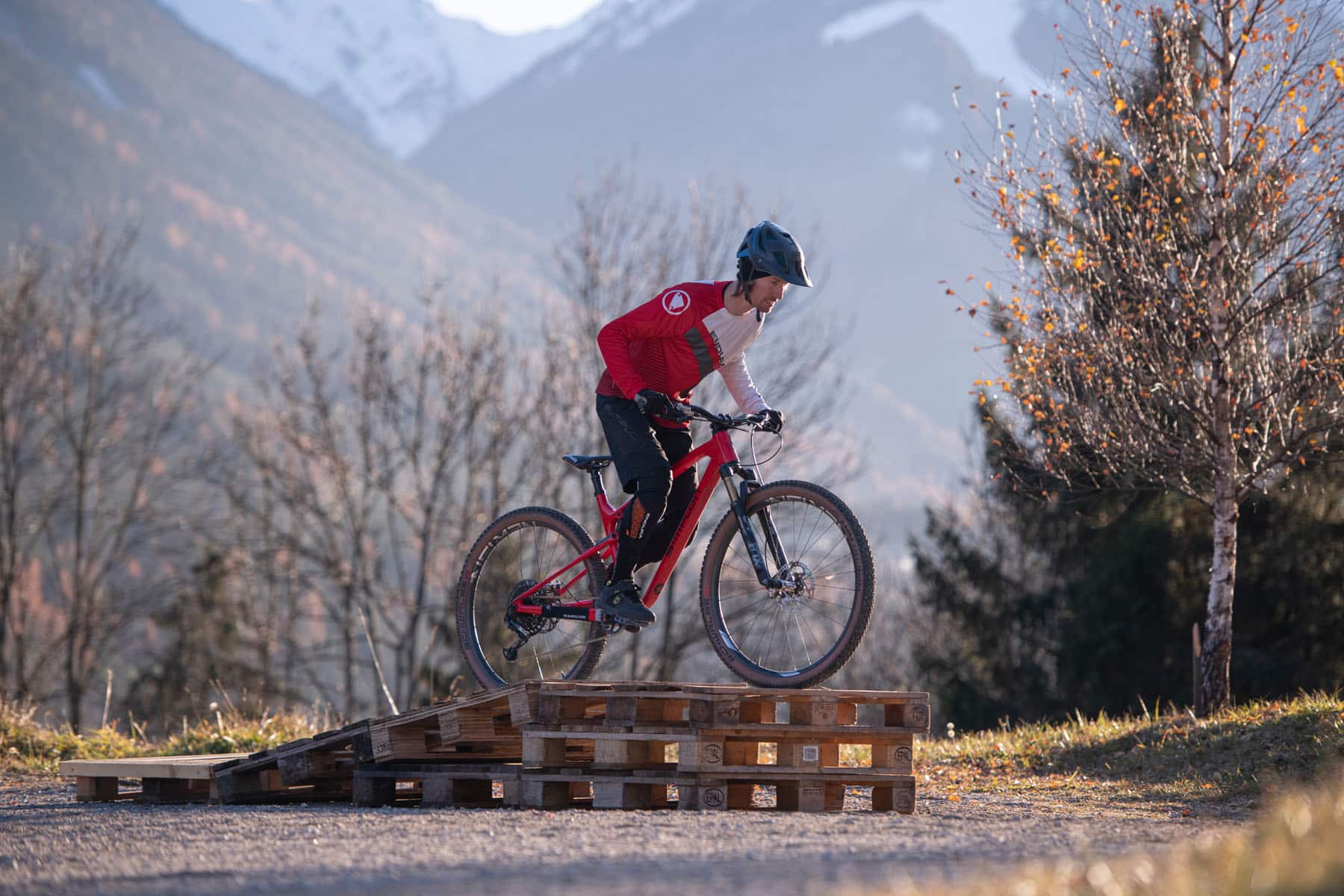

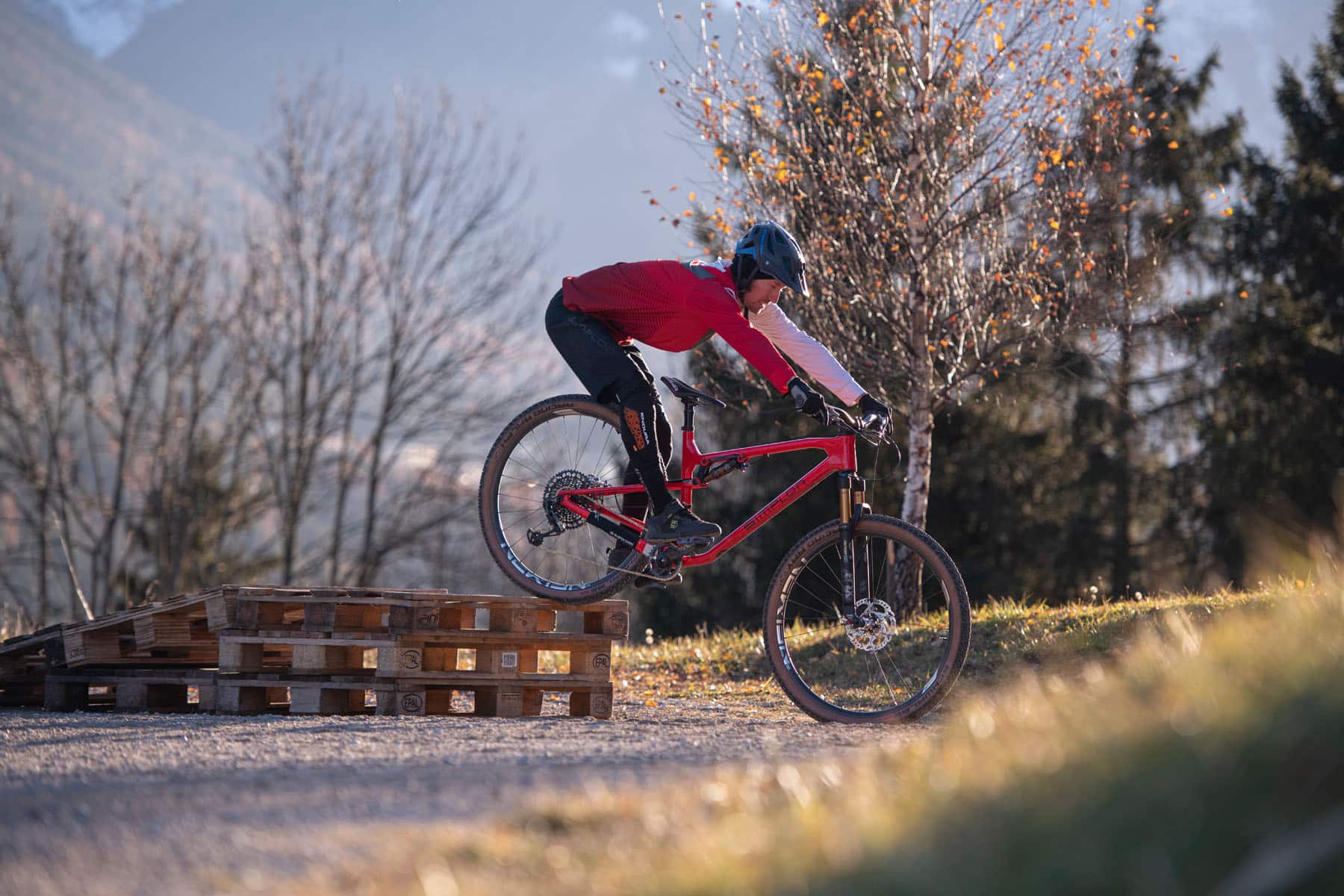
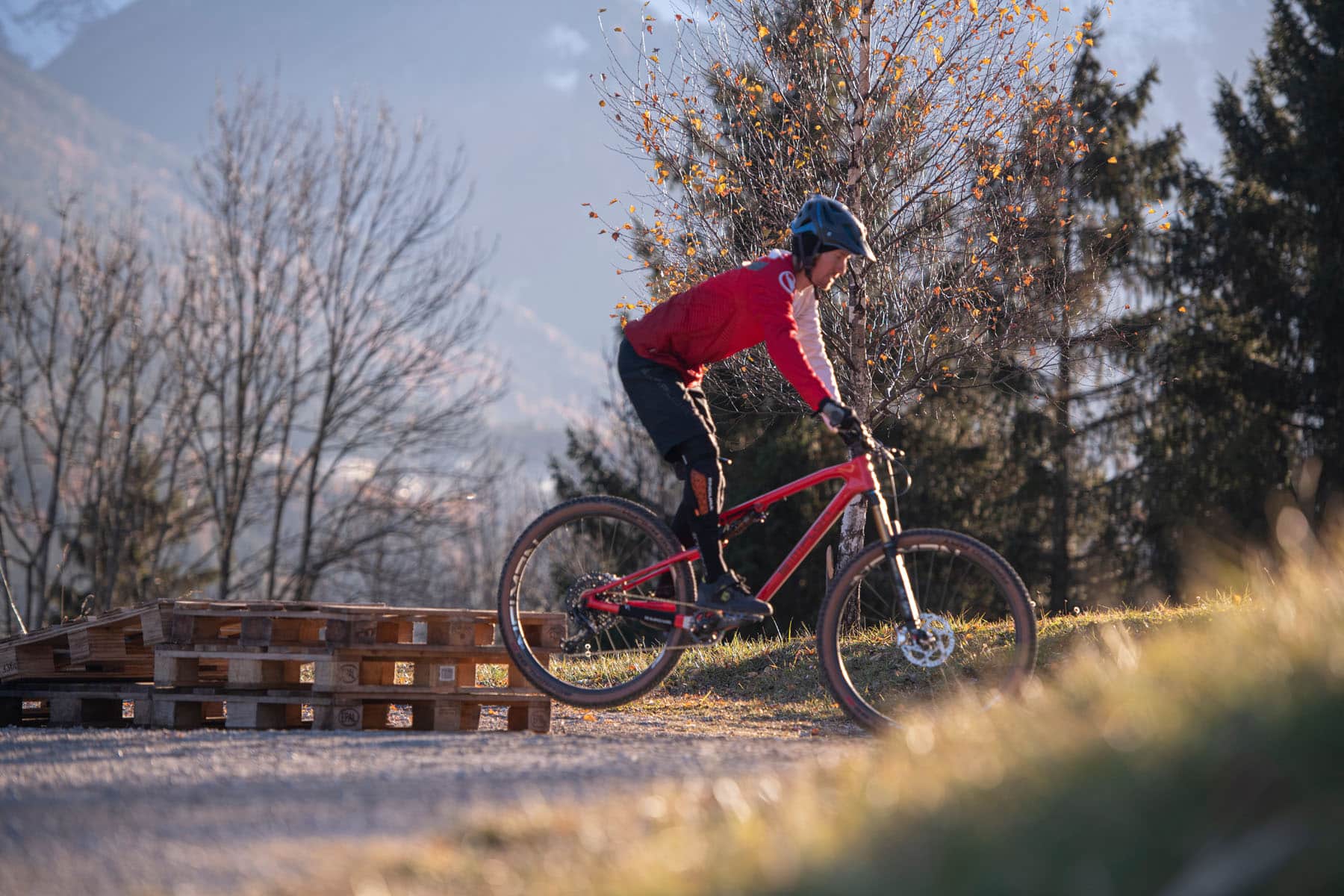
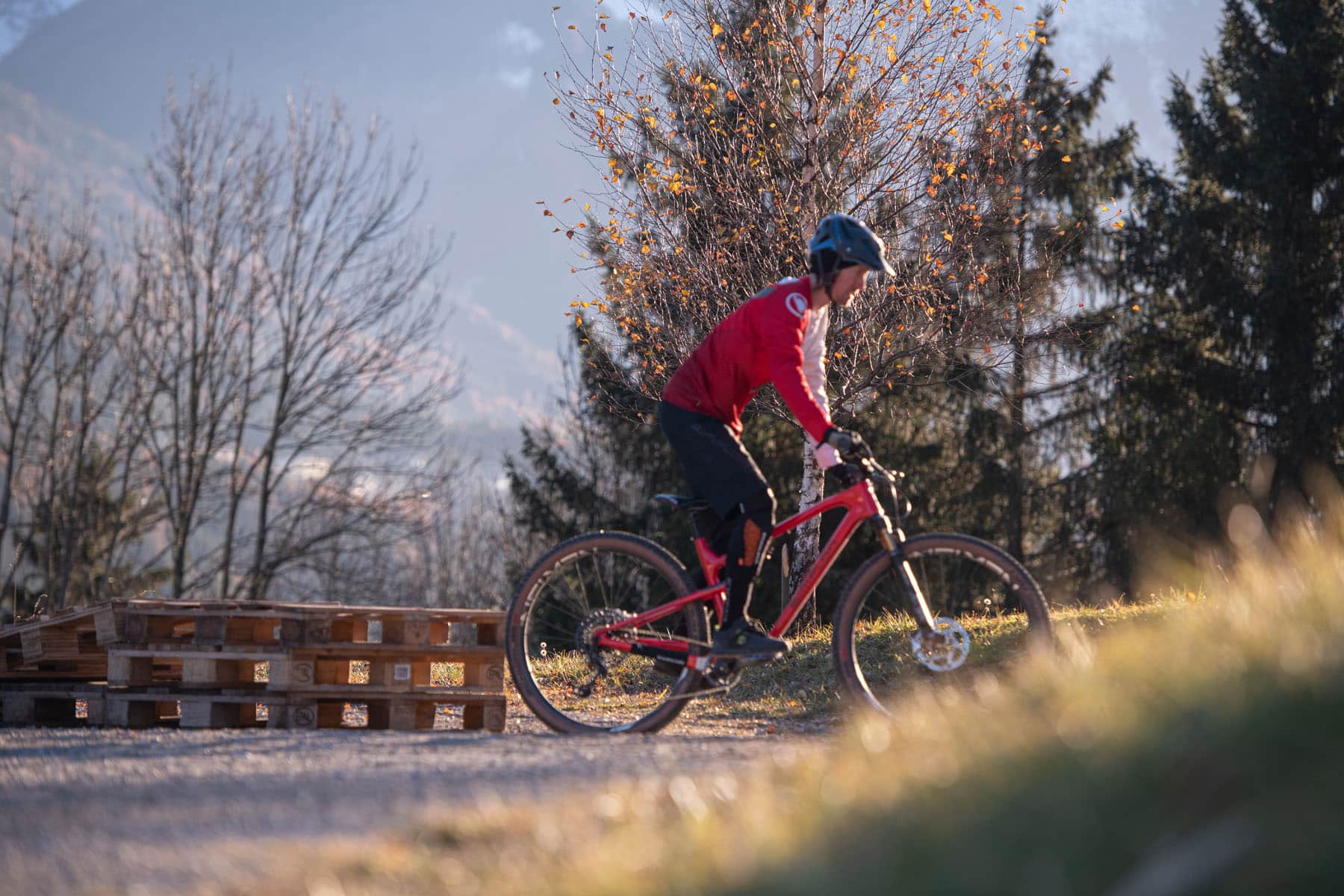
Pallets are ideal for practicing riding steps, as you can vary the height. If you don’t have one available, you should choose a not-too-high step in a safe area. First, check whether the step is rideable. The chainring must not touch the edge. The approach now follows in the trail behavior. A slow to moderate speed is initially selected for the approach. The step riding itself should be done without braking if possible. Shortly before the edge, we deepen the trail behavior again, we prepare the upcoming movement. The elbows are bent far and the legs are stretched. The view is directed forward to the area of the ‘landing’. Directly at the edge of the step, the front wheel is pushed explosively forward and down. The arms should not be stretched before the front wheel reaches the ground, otherwise you will plop down the last bit and the ride will be jerky. The legs are bent as far as necessary. As soon as the rear wheel has also rolled over the step, the trail behavior , meaning when passing the step with the rear wheel, the legs stretch. To feel more secure, it’s also ideal if a person positions themselves in front of or next to the step and secures the biker. Caution: this only works really well at slow speeds. The height of the step can be gradually increased. In addition, multiple steps can also be ridden in a row. Here, timing is especially important, as well as resuming the trail behavior in time to be able to react to the next step. If the steps are so close together that they become a staircase, the necessary technique corresponds to that of a (bumpy) steep descent, and no change in posture between the steps is necessary anymore.
Overcoming Obstacles
In order to overcome obstacles optimally, it is important to practice lifting the front and rear wheels separately first. We will limit ourselves here to techniques under assistance taking weight shifts. All pedal kick variants, meaning lifting wheels by stepping on the pedals, will be covered in a separate article.
Lifting the front wheel
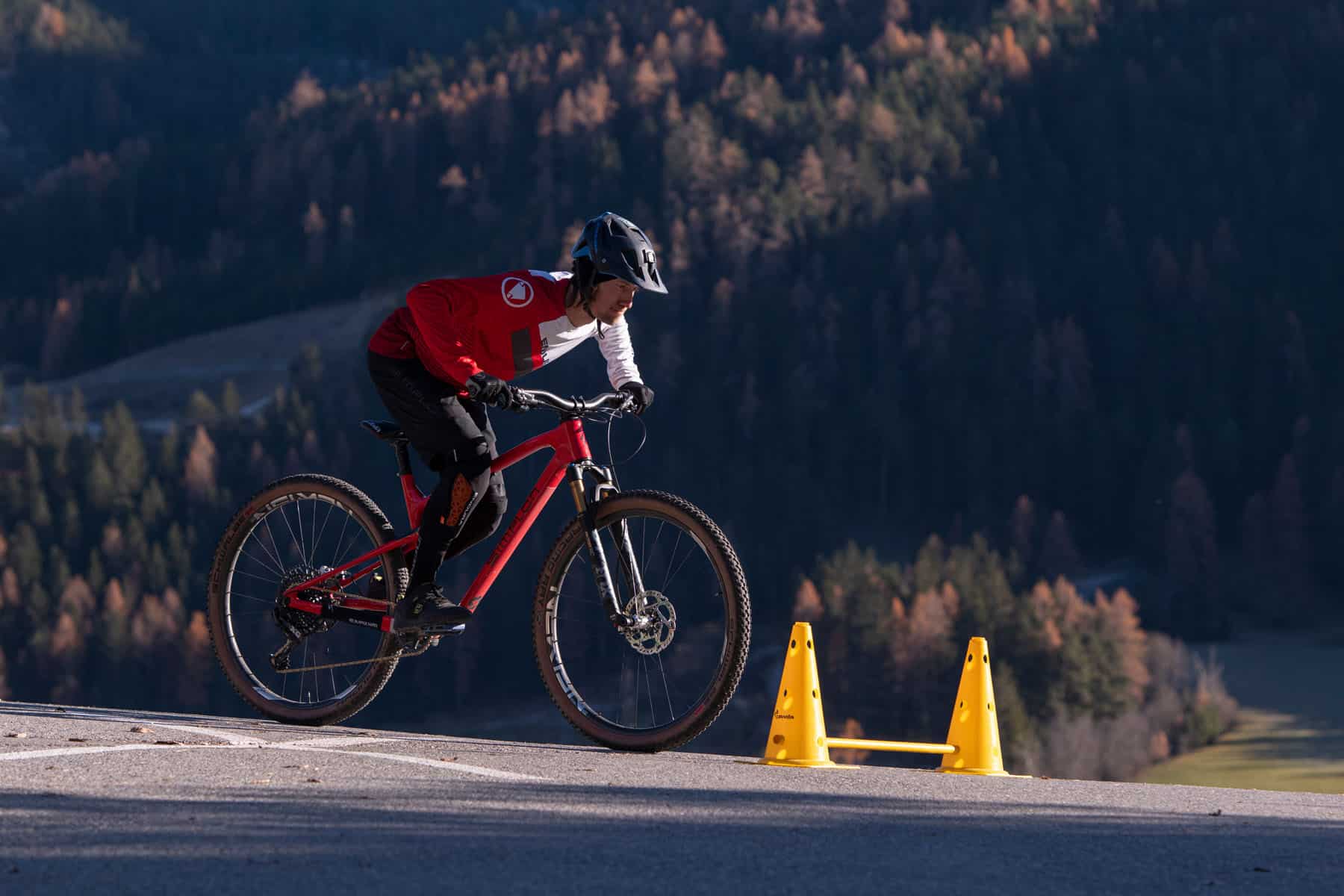

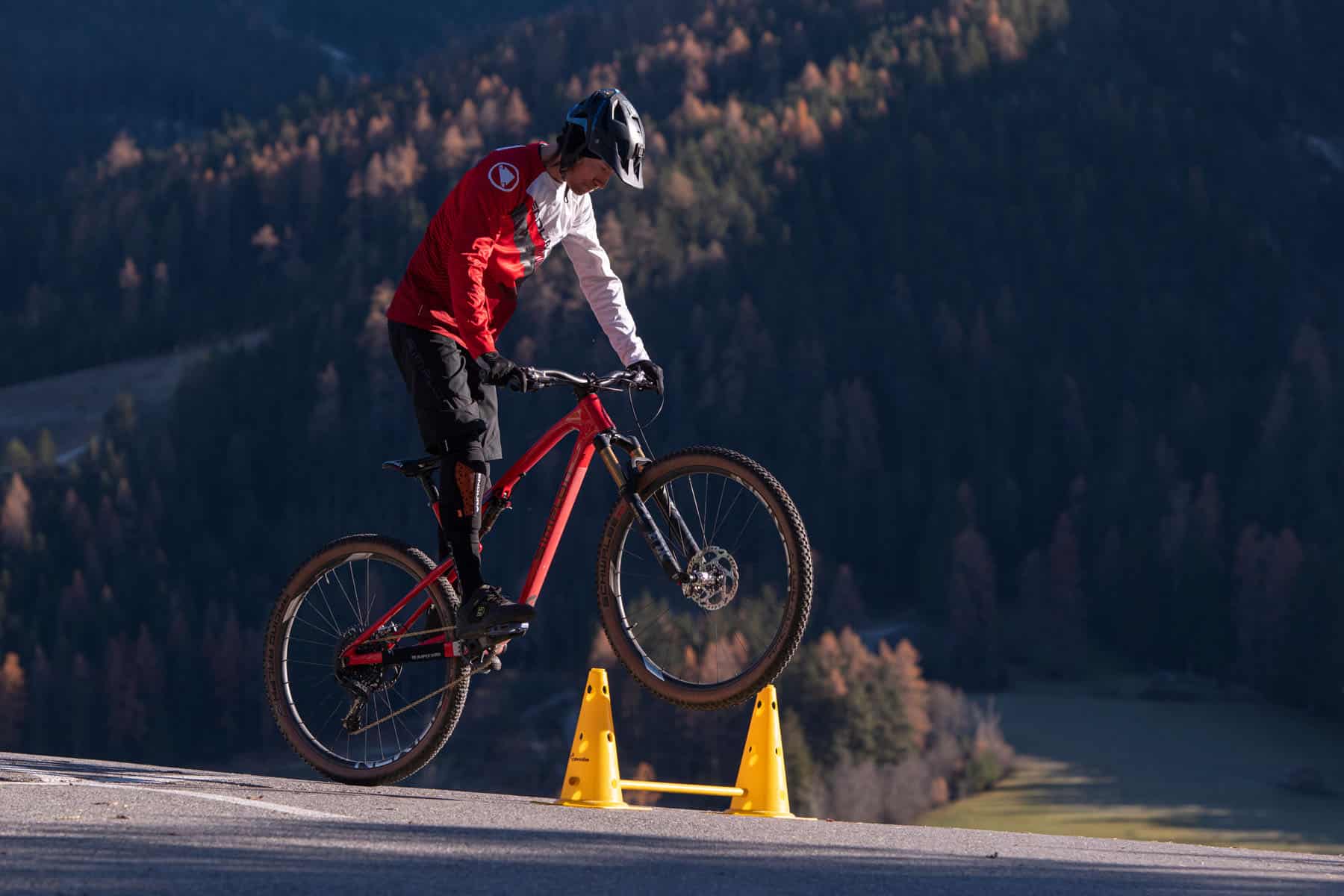
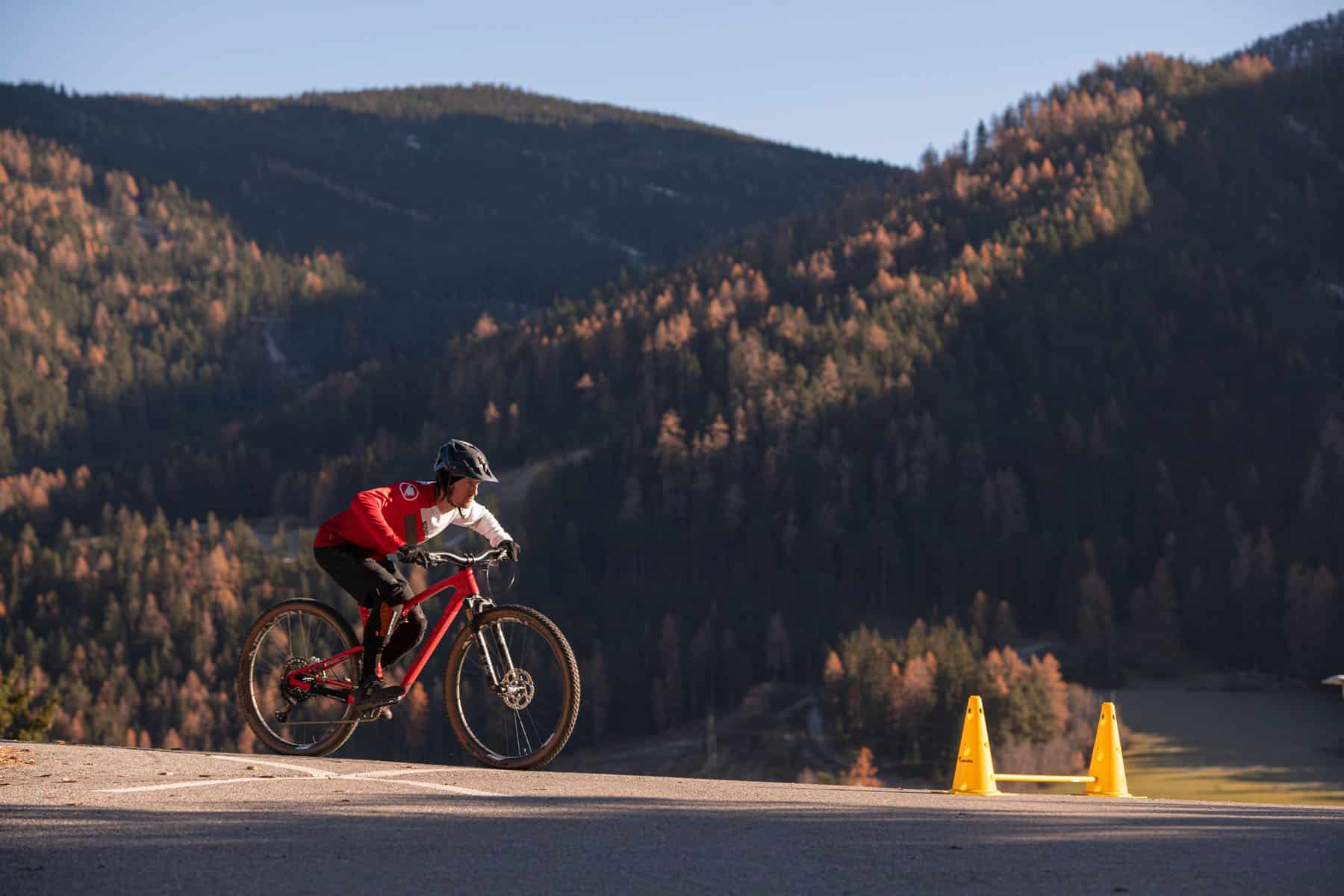

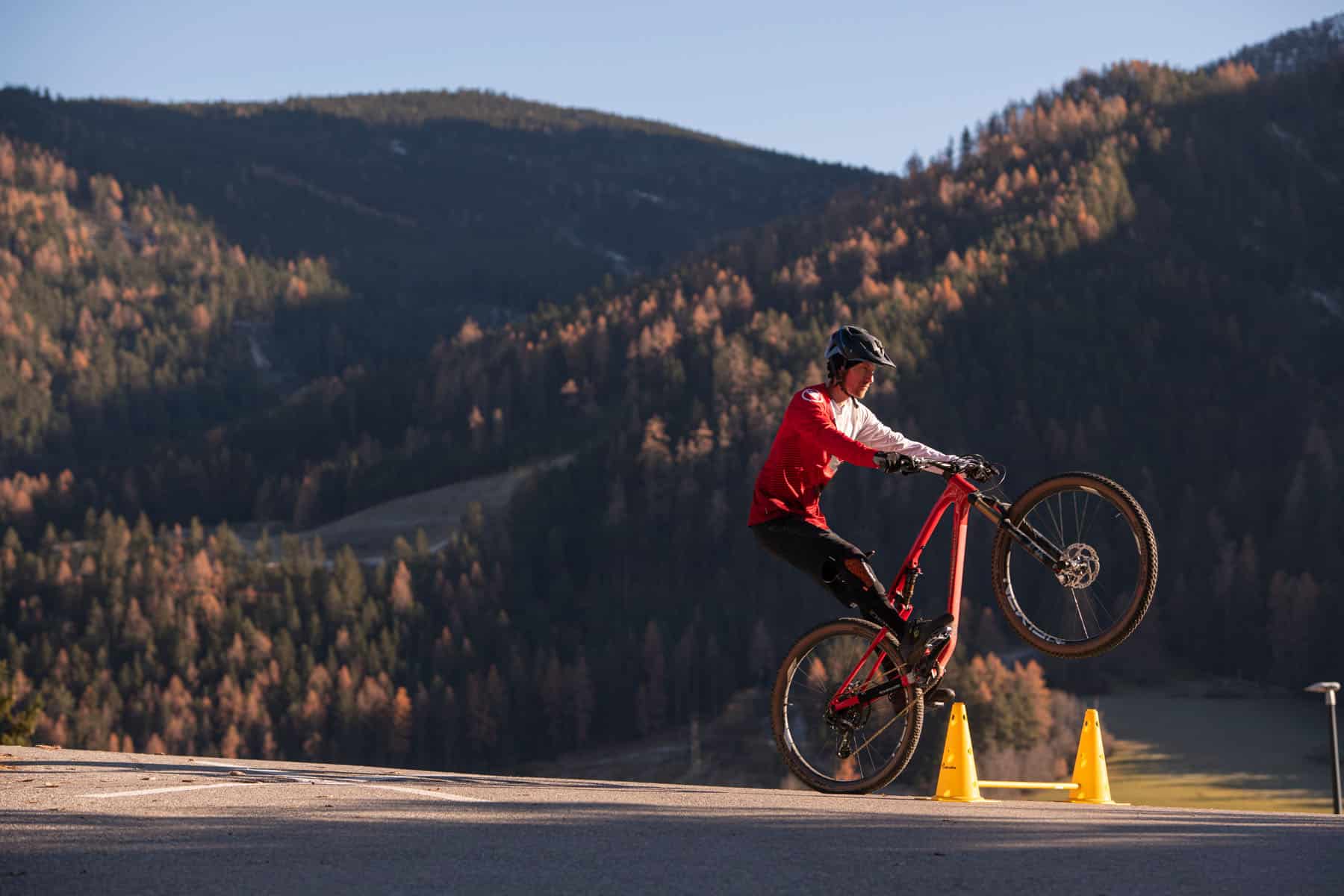
Basically, there are two ways to lift the front wheel. The easiest method is to lift the front wheel upward with the help of dynamic center of gravity shift. From the trail behavior, you go deep over the handlebars with your upper body and bring it straight up through dynamic center of gravity shift. This method is well suited for lifting the front wheel over or onto a curb, individual roots, or logs. However, it quickly reaches its limits as soon as you want to keep the front wheel in the air longer.
Another method is therefore to lift the front wheel with the help of the manual impulse. This is done without pedaling and can be optimally applied at medium to higher speeds. The hips first go centrally down from the trail behavior. A preload of the suspension elements is generated, which means that dampers and fork are actively compressed. Then the hips move dynamically backwards. The center of gravity shifts backwards. We speak of an L-movement (also V-movement for smaller bikes), which is carried out dynamically in a flow. At the end, the heels are slightly lowered and the arms must be stretched. The front wheel rises due to the impulsive shift of the center of gravity. This way of lifting the front wheel is a good preliminary exercise for the bunny hop, as well as for the manual itself. As an emergency button, you should always put your index finger on the rear brake lever. If you pull this, the front wheel will tilt down immediately. The movement can also be practiced from (supported) balancing while standing, where it is easier to implement in order to get a good feeling for the shift in the center of gravity.
Lifting the rear wheel

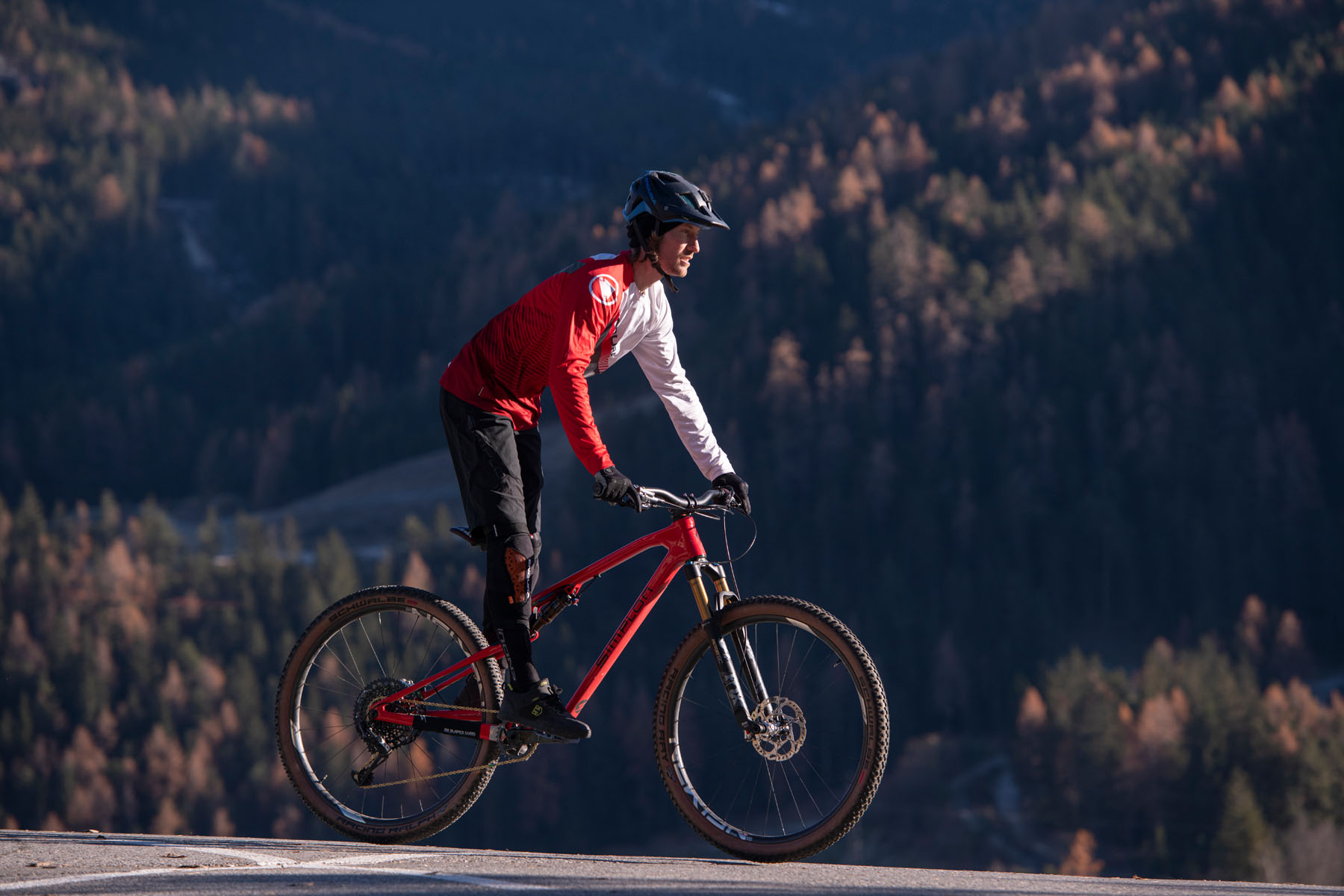
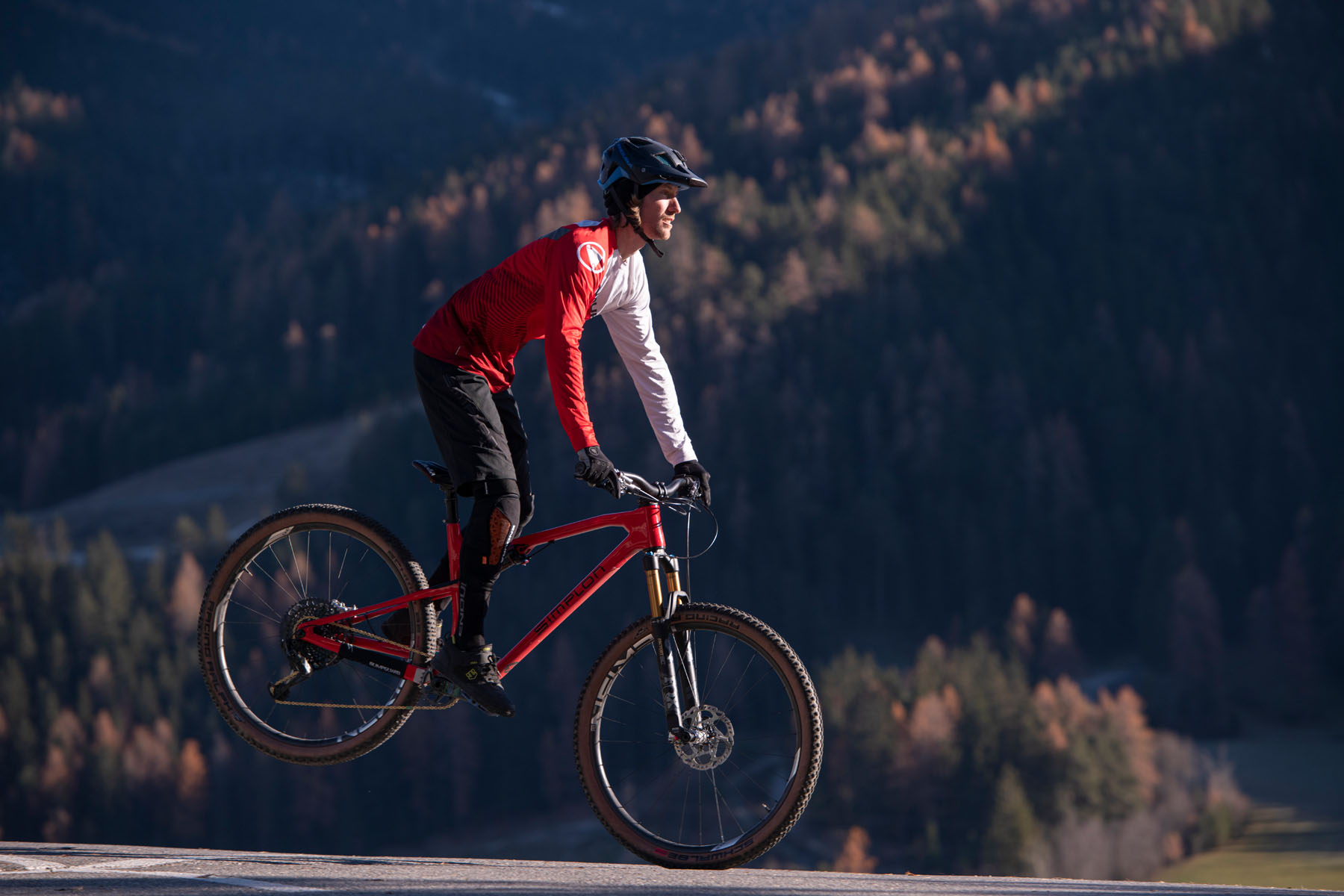
Of course, the rear wheel can also simply roll over some obstacles, but it is helpful if the rear wheel can be lifted. Above all, however, it is necessary to master this skill in order to be able to build up good tension in the wheel, so that you no longer slip off the pedals in the air. Especially for learninging master skills such as rear wheel offset or the bunny hop, this is a basic requirement. Again, the trail behavior is the starting position. At the beginning, you should adjust the speed to avoid crashes. This technique is not achieved through braking. From the trail behavior you go slightly back and down, and through an explosive, dynamic leg extension you shift the center of gravity forward and up. The toes point downward. Tension must be built up backwards in the legs to avoid losing pedal contact. The movement is similar to that of a horse kicking backwards. In order to learn this technique, the explosive leg extension and the movement forwards and upwards can first be practiced next to the bike in the form of Ajumping, the explosive leg extension as well as the forward and upward movement should be practiced. In addition, this should initially be practiced on flat terrain. Here too, lines, wooden slats, or other obstacles can be used.
Piggy Hop
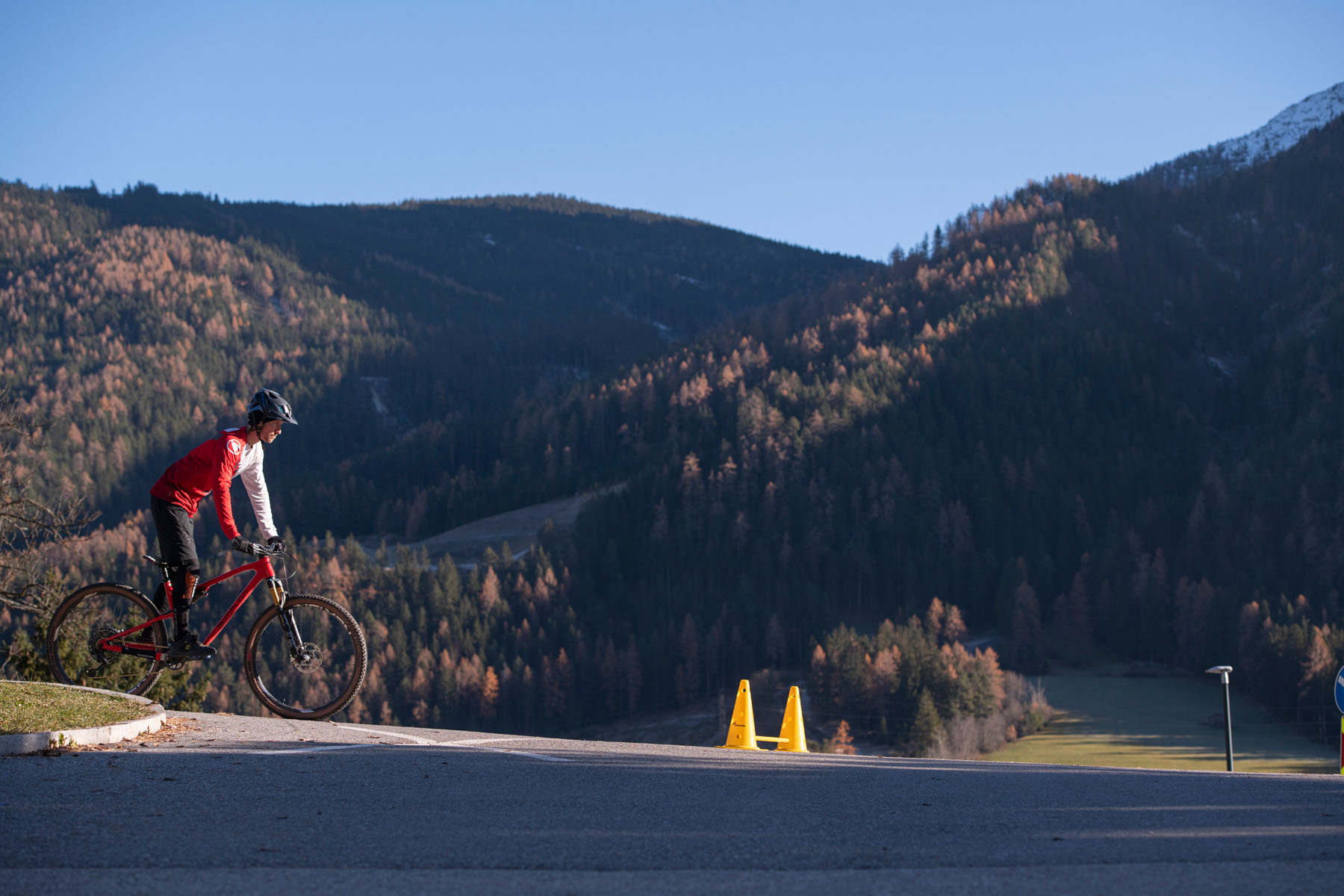


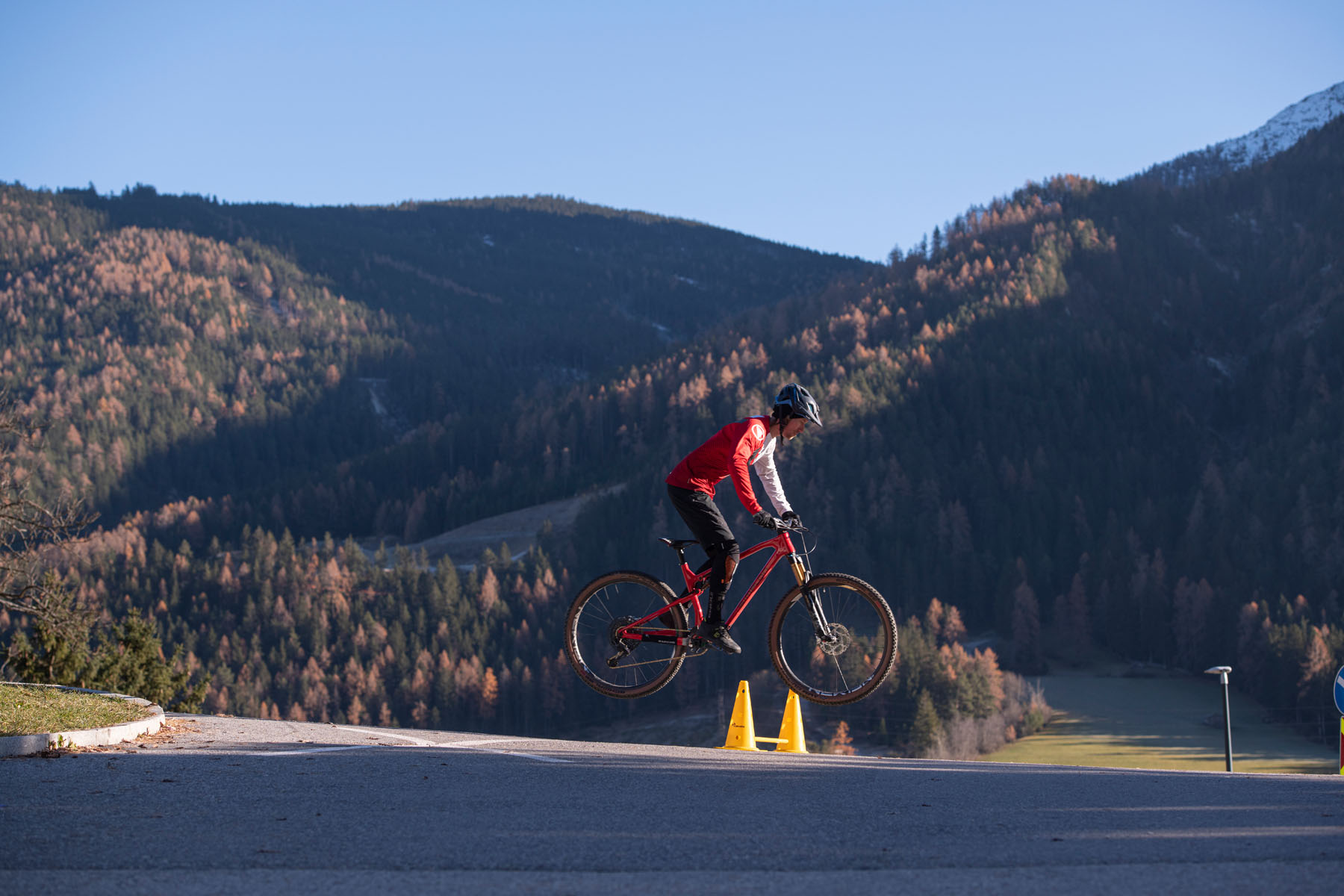
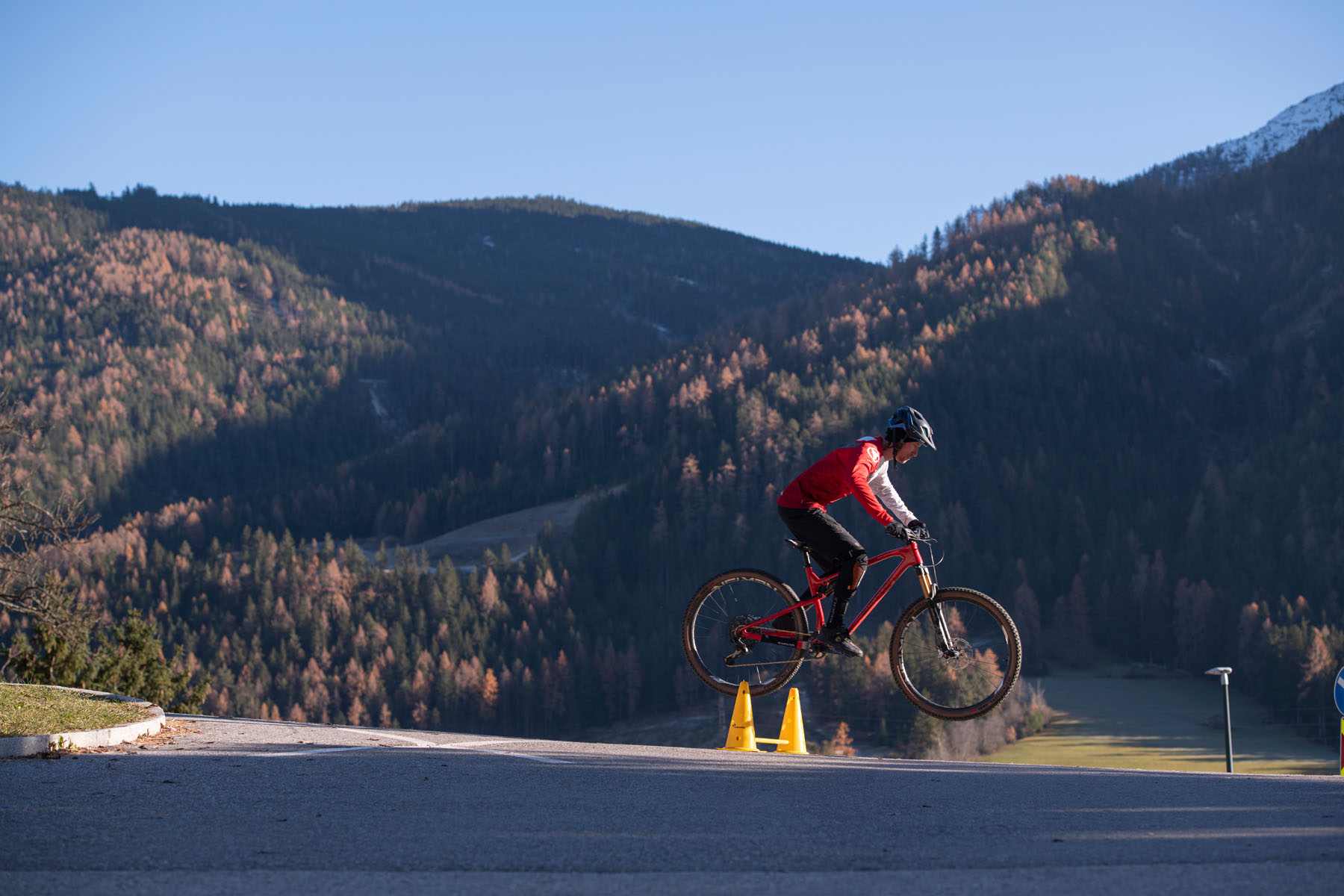
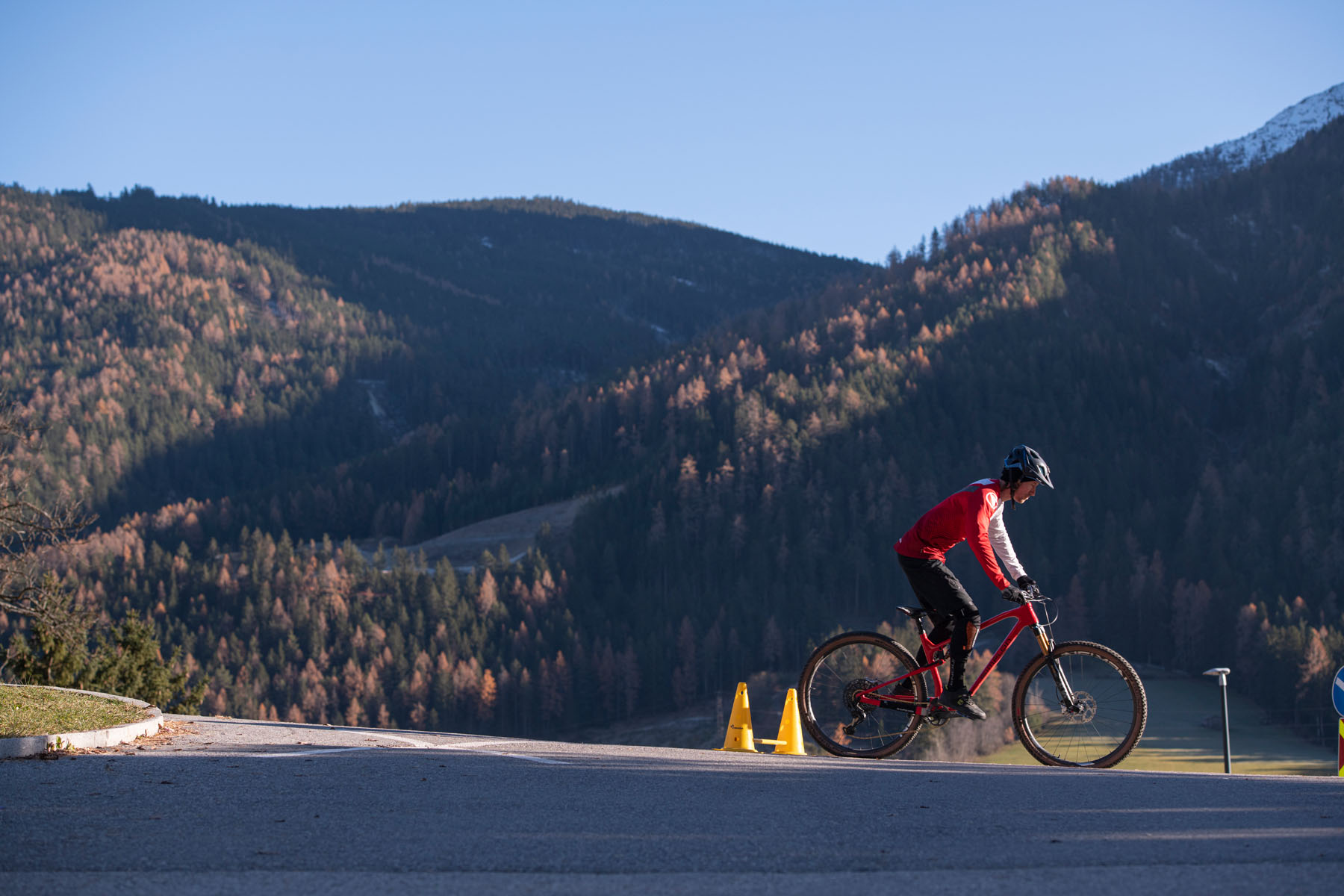
The piggy hop, also known as “Schweinehopp,” is a jumping technique in which the front and rear wheels lift off the ground and land simultaneously. This technique can be used particularly well at high speed to jump over not-too-high obstacles. The piggy hop can be incorporated superbly during riding, for example to jump over puddles. In addition, the technique is considered an important foundation when jumping drops and Tables. The starting position is the trail behavior. The upper body goes deep and the legs bend. The fork and damper compress. Finally, you jump explosively upward. It is especially important to ensure that the front and rear wheels really leave the ground simultaneously. During landing, both wheels also make contact with the ground simultaneously.
Log Hop
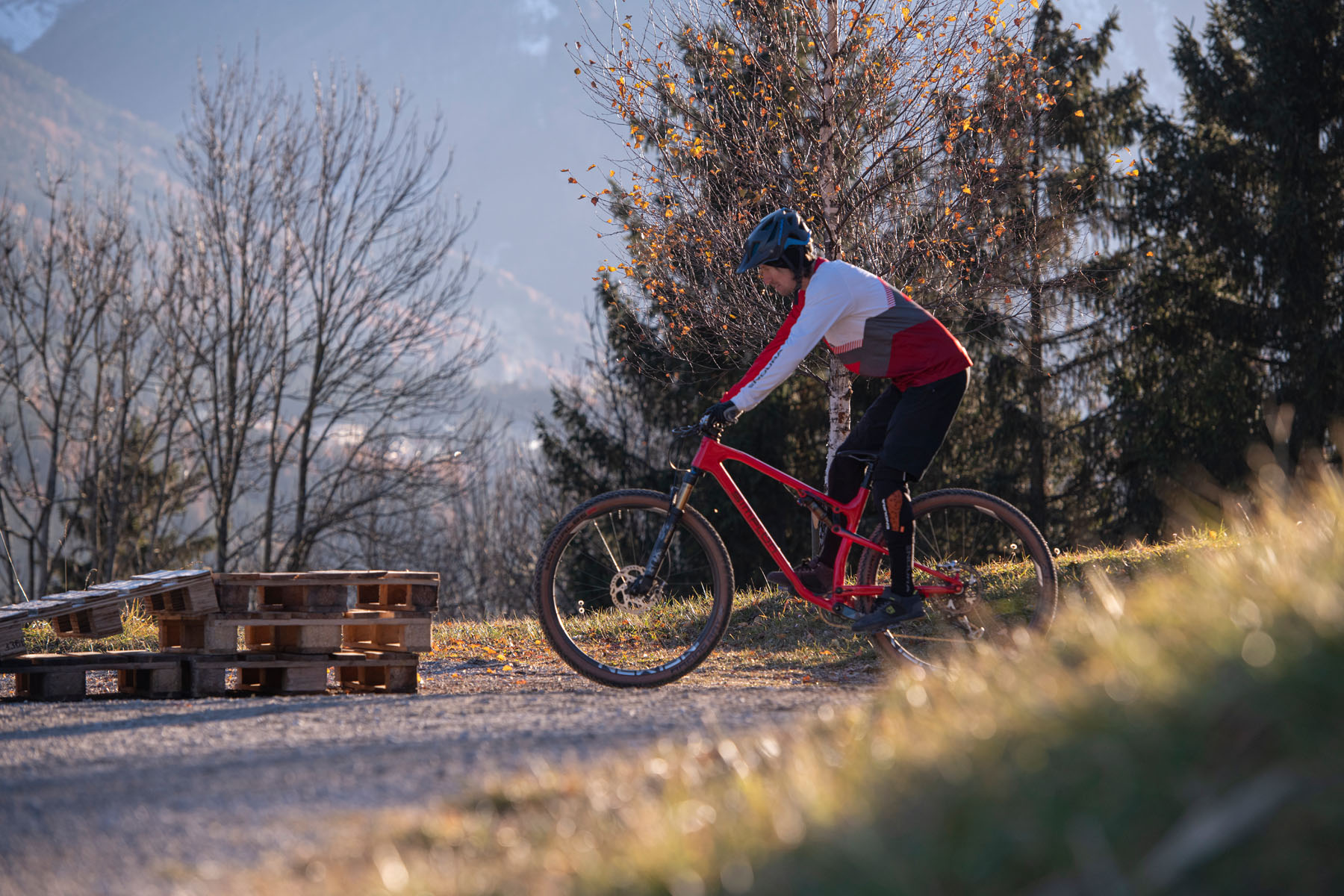


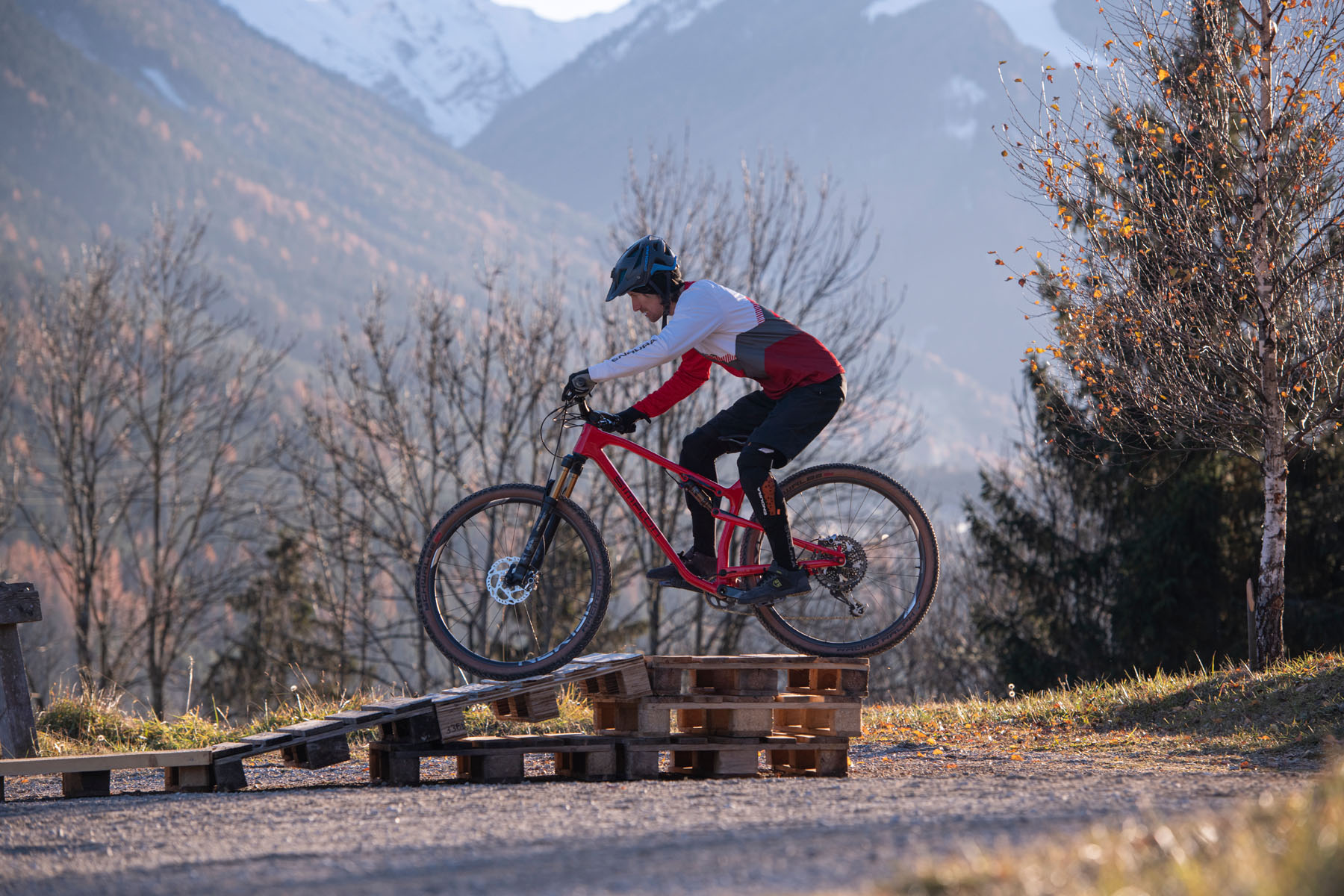
If you now combine lifting the front wheel with the Piggy Hop at slow speeds, you end up withm so-called Log Hop. This Skill is extremely practical for overcoming tree trunks or boulders without having to jump over them with speed. You roll slowly toward the obstacle, lift the front wheel onto the obstacle through a down-up movement (variant 1). As soon as the front wheel touches down, you start a piggy hop, and oon you are on the other side.
Bunny Hop

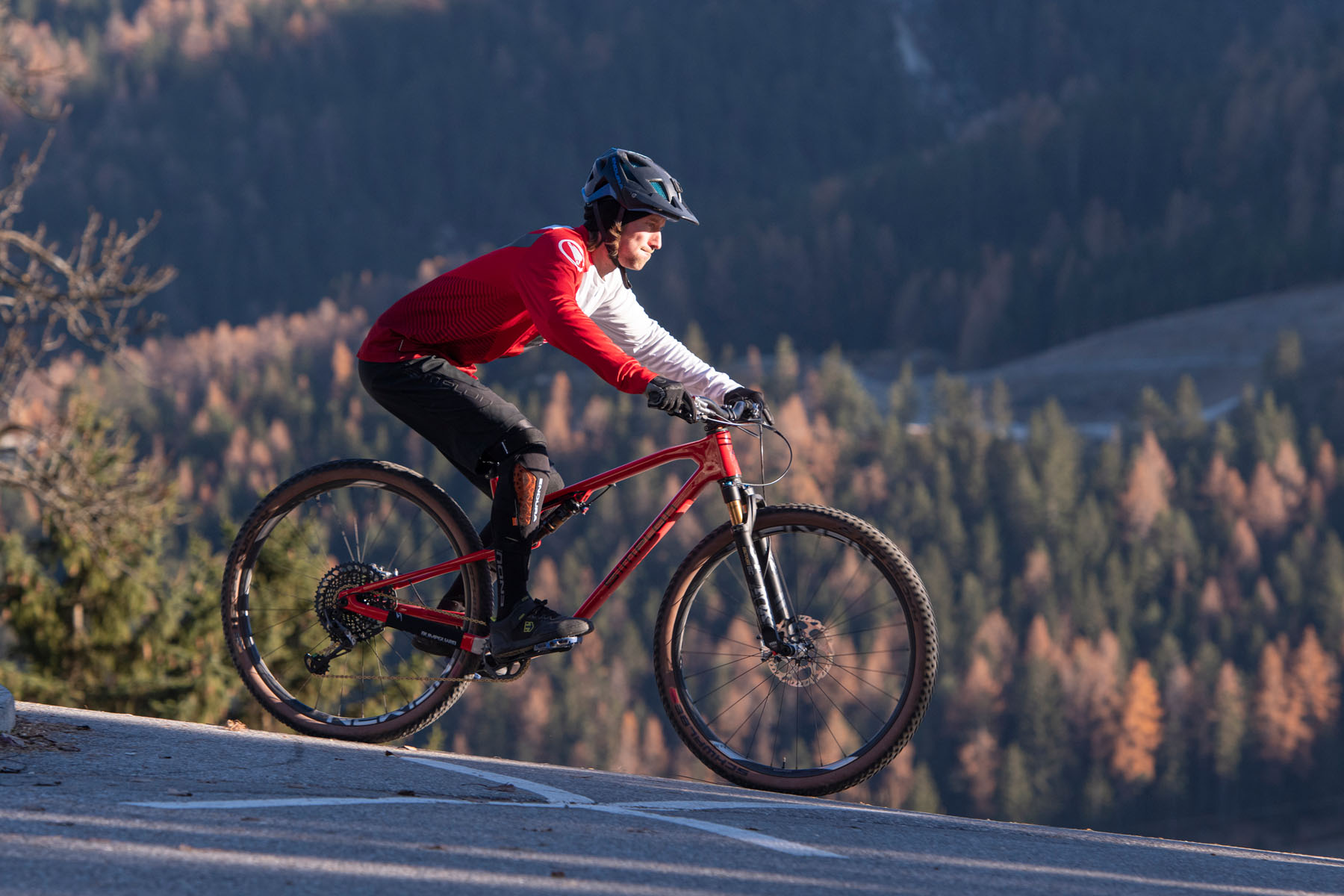
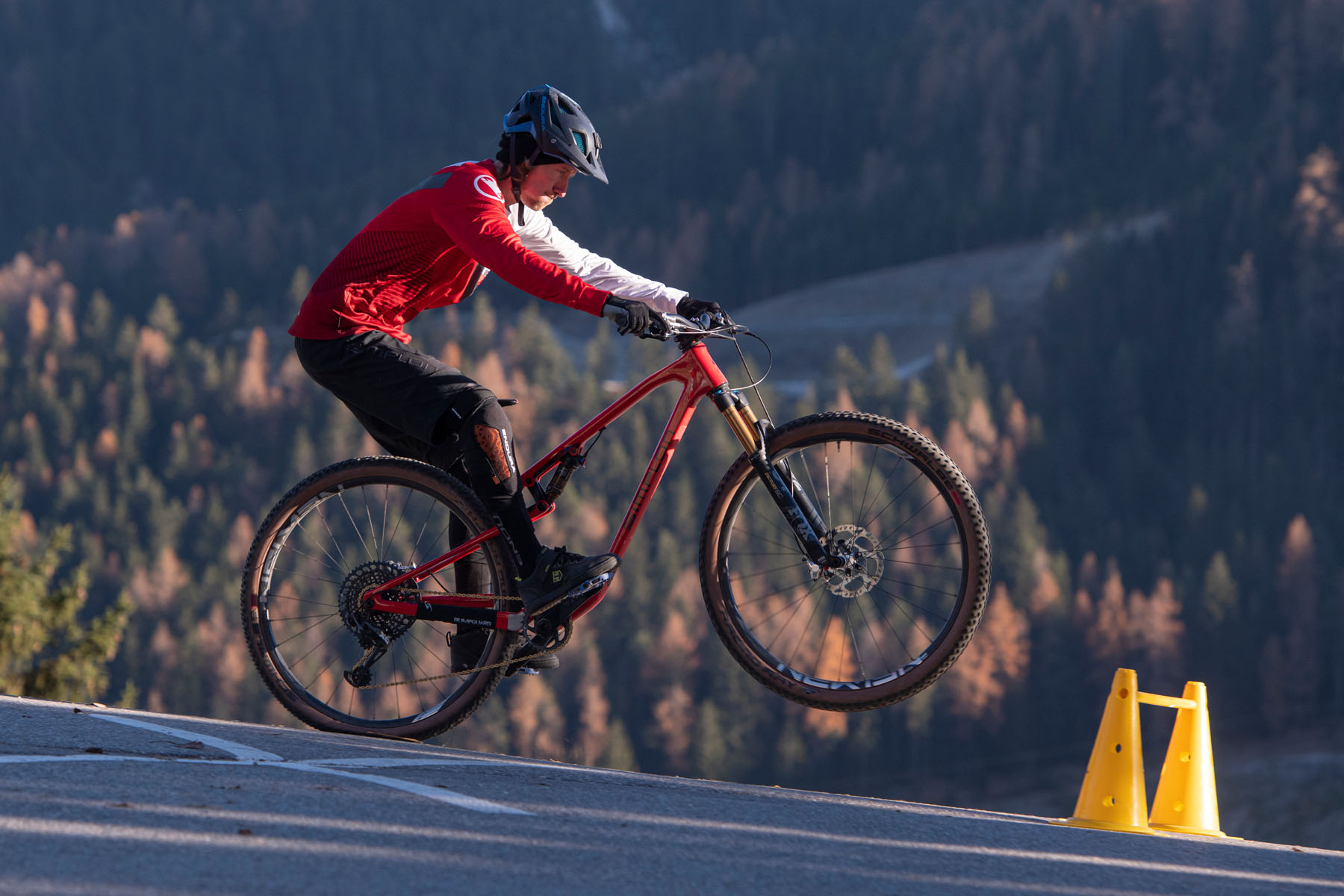


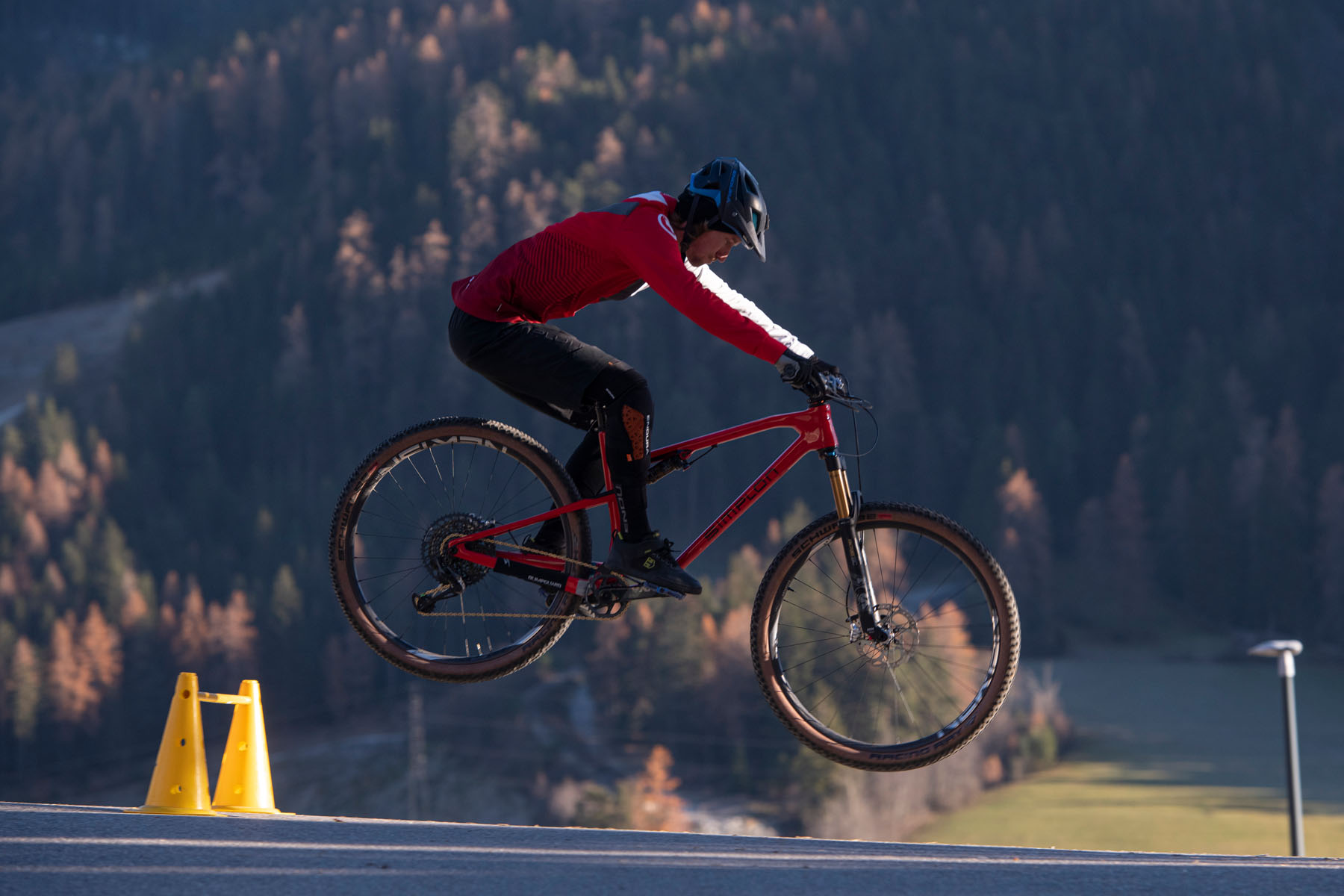
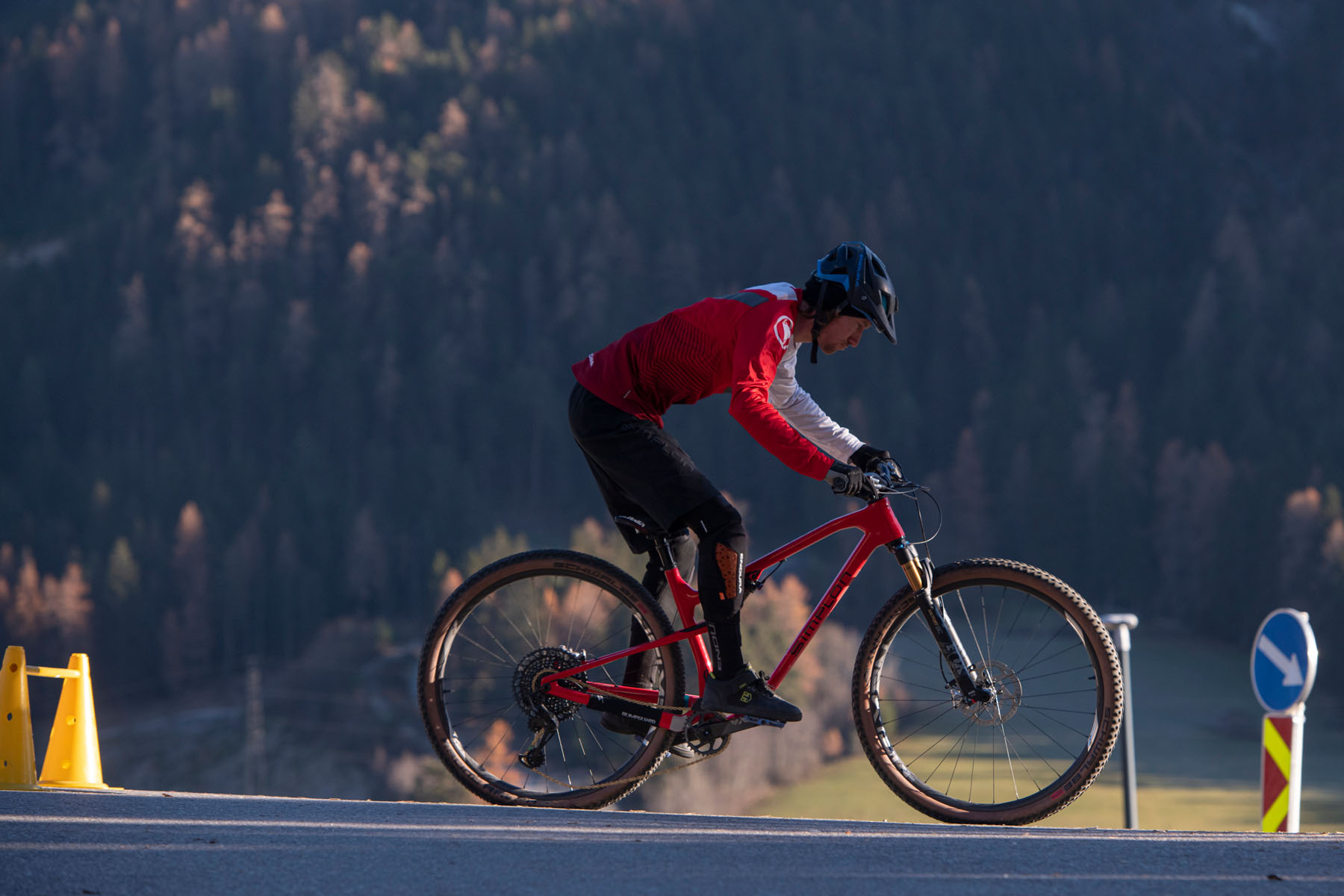
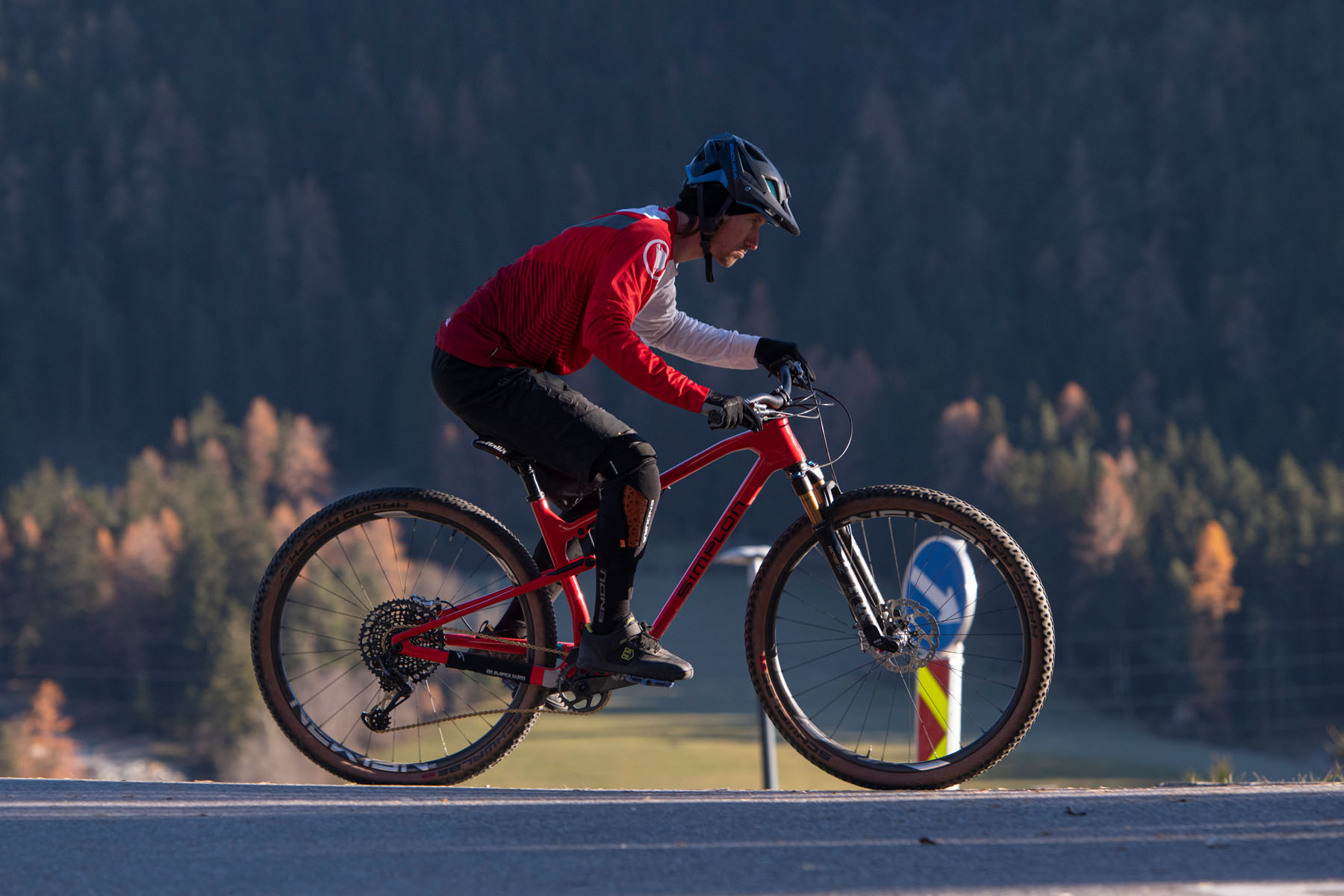
The Bunny Hop is one of the master skills and man erreicht im Gegensatz zum Piggy Hop you reach height more easily in order to jump over larger obstacles. This jumping technique is particularly often used to jump over obstacles such as root fields or tree trunks. The Bunny Hop is just as relevant for doubles and tables. You lose no speed, and the flight phase is shorter than with the Piggy Hop. With the Bunny Hop, the front wheel lifts off first, followed by the rear wheel. The front wheel also makes contact with the ground again first when landing. In addition to looking forward, the manual impulse is the most important thing with the Bunny Hop sten. From dem trail behavior the hips go centrally deep and impulsively backward. The center of gravity shifts backward and the front wheel rises. (If the bike is on the smaller side relative to the body, you don’t have to go as far back and you go straight back and up.) The arms should do not pull on the handlebars. Now follows an explosive leg extension upward. At the same time, the handlebars are guided toward the hips with stretched arms. The bike is brought relatively upright and centrally as much as possible under the center of gravity. The toes point diagonally downward. The handlebars are at hip level. The upper body bends forward over the handlebars before the front wheel wieder aktiv nach vorne und schließlich in direction of the ground wird. Dadurch entsteht die typische Wellenbewegung des Bunny Hops. The landing is cushioned from arms and legs. As the end position, the position of the trail behavior is resumed.
In general, it is important to first perfect lifting the front wheel almost perfectly before starting the bunny hop. The height of the front wheel and control of the body positioning with a high front wheel is crucial for the bunny hop success.